Introduction to Laser Proximity Sensing
Laser proximity sensors represent a pinnacle of non-contact measurement technology in industrial automation. These devices operate by emitting a focused beam of laser light towards a target object. The sensor then detects the reflection of this beam. Unlike traditional inductive or capacitive sensors, laser sensors are not influenced by the color, material, or surface characteristics of the target to the same degree, offering superior precision and flexibility. The core principle often involves time-of-flight measurement or triangulation to calculate the distance to the object with remarkable accuracy, often down to micrometer levels. This makes them indispensable in applications where precision is non-negotiable.
Core Operating Principles and Technology
The functionality of a laser proximity sensor hinges on sophisticated optical and electronic components. A laser diode generates a coherent, monochromatic light beam. This beam is projected onto the target. The reflected light is captured by a high-sensitivity receiver, typically a position-sensitive device (PSD) or a CMOS/CCD array. In a triangulation-based sensor, the position of the reflected light spot on the receiver changes proportionally with the target's distance. An internal processor analyzes this positional shift to compute the exact distance. Time-of-flight sensors, on the other hand, measure the phase shift or the direct time delay between the emitted and received pulse. Advanced models incorporate background suppression technology, which allows them to ignore reflections from surfaces beyond a set range, ensuring reliable detection even against complex backgrounds.
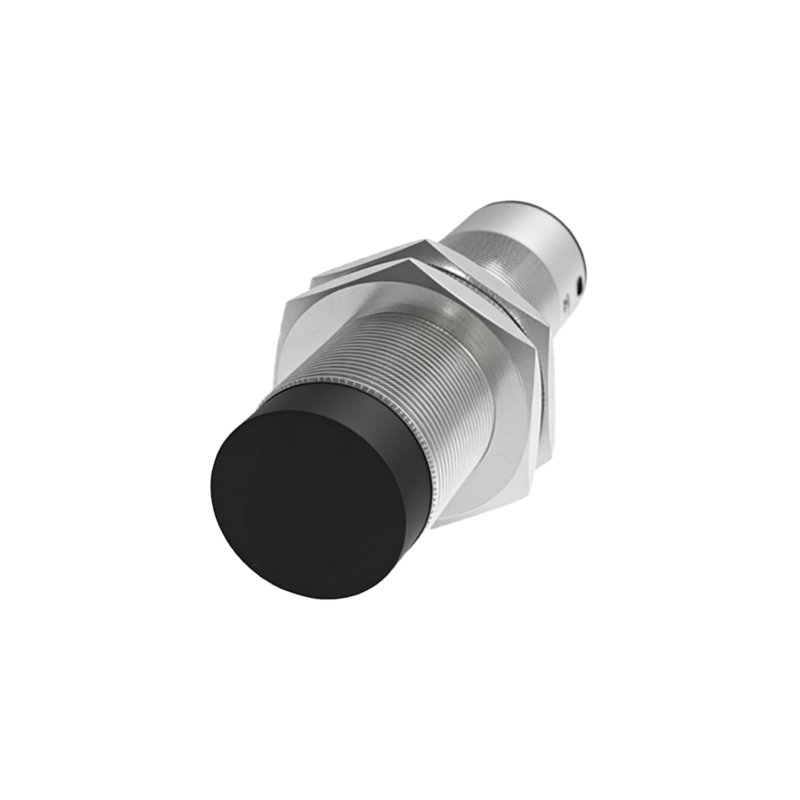
Key Advantages Over Other Sensor Types
Laser proximity sensors offer a compelling set of benefits that justify their widespread adoption. Their primary advantage is exceptional measurement resolution and repeatability, enabling tasks like precise positioning and dimensional inspection. The small, focused laser spot allows for the detection of very small objects or precise edges. They boast long sensing ranges compared to standard photoelectric sensors, with some models capable of detecting objects several meters away. Furthermore, their response time is extremely fast, suitable for high-speed production lines. Since they are optical devices, they are immune to electromagnetic interference from motors or welders, and they do not require physical contact, eliminating wear and tear on both the sensor and the target.
Common Industrial Applications and Use Cases
The versatility of laser proximity sensors is demonstrated across numerous sectors. In automotive manufacturing, they are used for robot guidance, gap and flush measurement on car body panels, and part presence verification on assembly lines. The electronics industry relies on them for wafer handling, component placement, and solder paste inspection due to their micron-level accuracy. In packaging and material handling, they control roll diameter, detect stacked material height, and ensure precise filling levels. They are also crucial in logistics for palletizing, dimensioning parcels, and automated guided vehicle (AGV) navigation. Any application demanding precise, non-contact distance or presence detection is a potential use case for these sensors.
Critical Selection Criteria and Installation Tips
Selecting the right laser proximity sensor requires careful consideration of several parameters. The required measuring range and resolution are the foremost criteria. The type of output needed—analog (4-20mA, 0-10V) for continuous distance measurement or digital (PNP/NPN) for switch-point detection—must match the control system. Environmental factors are crucial; one must consider ambient light conditions, potential contamination from dust or oil (requiring appropriate IP ratings), and operational temperature ranges. Correct installation is key to performance: ensuring a stable mount to avoid vibration, aligning the sensor perpendicular to the target surface for optimal reflection, and keeping the lens clean are fundamental best practices to ensure long-term reliability and accuracy.
Future Trends and Developments
The evolution of laser proximity sensing technology continues at a rapid pace. Future trends point towards miniaturization, allowing sensors to fit into increasingly compact machinery. Integration with Industrial Internet of Things (IIoT) platforms is becoming standard, enabling predictive maintenance through continuous performance monitoring and data analytics. Enhanced connectivity via IO-Link provides detailed parameterization and diagnostics. Furthermore, the development of more robust and cost-effective models is making high-precision laser sensing accessible for a broader range of applications, from heavy industry to collaborative robotics. Advances in laser safety (e.g., Class 1 lasers) also simplify integration by reducing the need for extensive safety enclosures.