Introduction to Photoelectric Sensors
Photoelectric sensors are indispensable components in industrial automation, serving as the "eyes" of machinery by detecting the presence, absence, or position of objects without physical contact. These sensors operate on the principle of converting light signals into electrical signals, utilizing a light source (typically LED or laser) and a receiver. When an object interrupts or reflects the light beam, the sensor triggers an output signal. This non-contact detection method ensures high reliability, longevity, and precision, making photoelectric sensors ideal for harsh environments where mechanical wear or contamination is a concern. Industries ranging from manufacturing and packaging to automotive and pharmaceuticals rely on these sensors for tasks such as counting, sorting, and quality control. Their versatility allows them to adapt to various applications, including detecting transparent materials, measuring distances, and ensuring safety in automated systems.
Types and Operating Principles
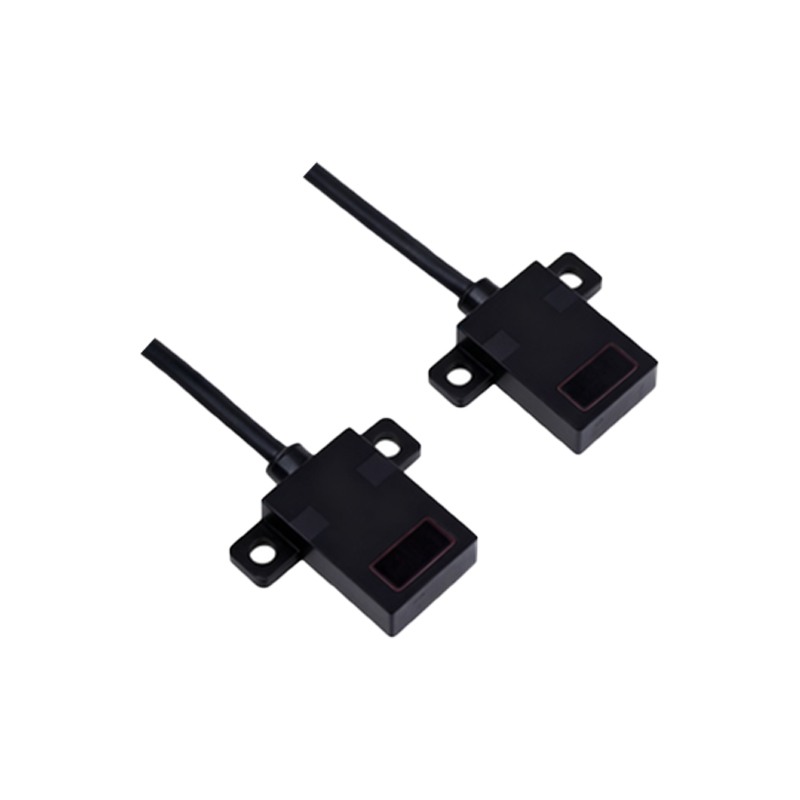
Photoelectric sensors are categorized based on their sensing modes: through-beam, retro-reflective, and diffuse-reflective. Through-beam sensors consist of separate transmitter and receiver units; the object is detected when it breaks the light beam between them, offering long-range and high-accuracy detection. Retro-reflective sensors use a single unit with both transmitter and receiver, along with a reflector; the object is sensed when it interrupts the reflected light beam, providing a balance of range and ease of installation. Diffuse-reflective sensors rely on the object itself to reflect light back to the receiver, making them suitable for close-range applications where space is limited. Advanced variants include background suppression sensors, which ignore reflections from distant surfaces, and color sensors, which distinguish between hues based on light wavelength. Each type leverages specific optical properties, such as light intensity or time-of-flight, to achieve precise detection across diverse materials and conditions.
Key Features and Technical Specifications
When selecting a photoelectric sensor, engineers must consider several technical parameters to ensure optimal performance. Sensing range, defined as the maximum distance at which an object can be reliably detected, varies from a few centimeters to over 100 meters depending on the model and type. Response time, typically in milliseconds, determines how quickly the sensor reacts to changes, critical for high-speed automation lines. Environmental factors like temperature, humidity, and exposure to dust or chemicals influence the choice of housing materials, such as stainless steel or IP-rated plastics. Output options include digital signals (e.g., NPN/PNP transistors) or analog signals for continuous measurement, while connectivity features like IO-Link enable real-time data exchange and diagnostics. Additionally, features like adjustable sensitivity, built-in timers, and programmable logic enhance flexibility, allowing sensors to be tailored for specific tasks without external controllers.
Applications in Industrial Automation
In modern factories, photoelectric sensors play a pivotal role in streamlining operations and improving efficiency. On conveyor systems, they detect product positions to coordinate robotic arms for picking and placing, ensuring seamless material flow. In packaging lines, sensors verify label placement, check fill levels, and count items, reducing waste and maintaining quality standards. Automotive assembly lines use them for part verification and alignment, preventing errors in complex processes. Safety applications include light curtains that halt machinery when a worker enters a hazardous zone, protecting personnel from injuries. Beyond traditional manufacturing, these sensors are integral to smart warehouses for inventory tracking and in renewable energy systems for monitoring solar panel alignment. Their ability to operate in real-time with minimal maintenance makes them a cornerstone of Industry 4.0 initiatives, where data-driven automation enhances productivity.
Advantages Over Other Sensor Technologies
Compared to inductive or capacitive sensors, photoelectric sensors offer distinct benefits that justify their widespread adoption. Their non-contact nature eliminates mechanical wear, leading to longer service life and reduced downtime. They can detect a broader range of materials, including glass, plastic, and liquids, which may be invisible to other sensor types. High-speed detection capabilities suit fast-paced production environments, while precise measurement functions enable tasks like width or thickness monitoring. However, challenges such as interference from ambient light or dust accumulation require mitigation through techniques like modulated light signals or protective enclosures. Innovations in miniaturization and energy efficiency continue to expand their applications, with emerging trends focusing on integration with IoT platforms for predictive maintenance and adaptive control systems.
Future Trends and Innovations
The evolution of photoelectric sensors is driven by advancements in optics, electronics, and connectivity. Next-generation sensors incorporate AI algorithms to analyze light patterns, enabling them to distinguish between complex shapes or textures. Enhanced communication protocols, such as Ethernet-APL, facilitate seamless integration into industrial networks for centralized monitoring. Miniaturized designs allow installation in tight spaces, while energy-harvesting technologies reduce power dependency. Research into new light sources, like VCSELs (Vertical-Cavity Surface-Emitting Lasers), promises higher accuracy and lower costs. As industries embrace digital twins and autonomous systems, photoelectric sensors will evolve into smart nodes that provide not only detection but also diagnostic insights, contributing to resilient and sustainable automation ecosystems.