Introduction to Retro-Reflective Photoelectric Sensors
Retro-reflective photoelectric sensors, often referred to as opposed-mode sensors, represent a fundamental and widely adopted technology in industrial automation. These devices operate on a straightforward yet highly effective principle: a transmitter emits a beam of light, typically infrared, visible red, or laser, towards a dedicated reflector. This specialized reflector, constructed with a prismatic surface, is designed to return the light beam directly back to its source along the same path. A receiver, co-located with the transmitter within the same housing, detects this returned beam. An object is sensed when it interrupts this established light path between the sensor and the reflector. This configuration offers a significant advantage over the through-beam (or opposed) type, which requires separate emitter and receiver units, by simplifying installation and reducing wiring complexity.
Core Operating Principles and Components
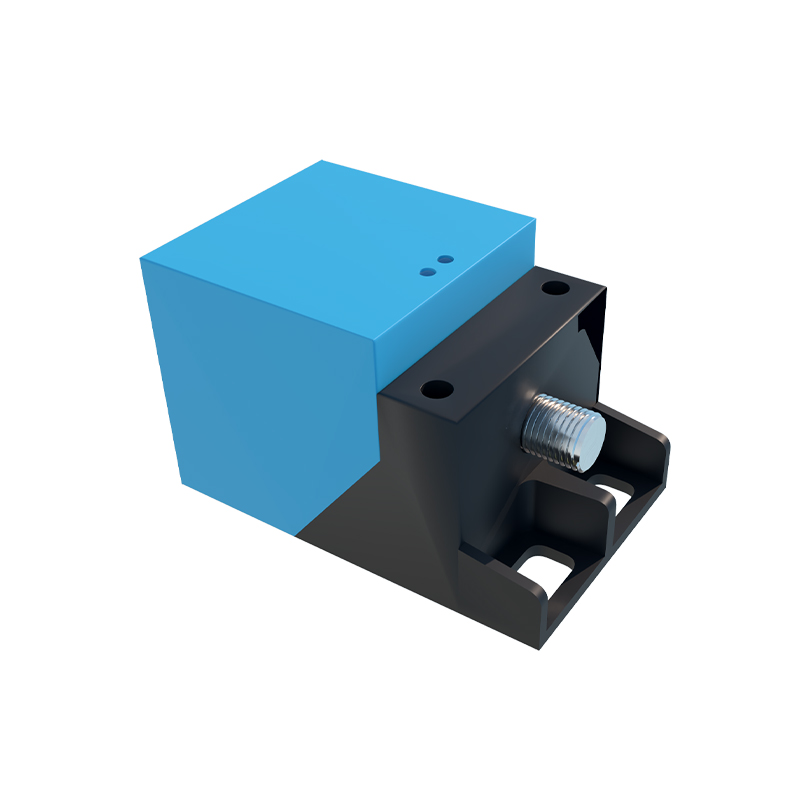
The efficacy of a retro-reflective sensor hinges on its internal components and their interaction. The light source, usually an LED, generates the detection beam. Modern sensors frequently employ modulated LED pulses, allowing the receiver circuit to be tuned to a specific frequency. This modulation makes the sensor highly immune to ambient light interference from factory lighting or sunlight. The reflector is a critical external component. Its prismatic design ensures the light is returned precisely to the origin point, even if the alignment is not perfectly square. The receiver, a phototransistor or photodiode, converts the received light intensity into an electrical signal. The sensor's electronics then process this signal, comparing it to a preset threshold to determine the presence or absence of an object, triggering a clean, digital output signal (PNP/NPN or relay).
Key Advantages in Industrial Settings
Retro-reflective sensors offer several compelling benefits that explain their pervasive use. First is the simplified installation and alignment process. With only one device to mount and wire on the machine side, and a passive reflector on the opposite side, setup time and cost are reduced. They provide a longer sensing range compared to diffuse (proximity) sensors, often capable of detecting objects several meters away, making them suitable for larger machinery. Their ability to detect virtually any object that interrupts the beam—regardless of color, material, or surface finish—provides great versatility. Furthermore, the modulated light principle ensures stable operation in challenging environments with dust, steam, or variable ambient light conditions.
Common Challenges and Polarized Filters
A notable challenge with standard retro-reflective sensors is the potential for false triggering by highly reflective objects. A shiny metal part, for instance, can act as its own reflector, bouncing the beam back to the receiver even when it should be blocking the path, causing the sensor to fail to detect the object. To overcome this, many sensors are equipped with a polarizing filter. This filter polarizes the emitted light. The specialized reflector is designed to rotate this polarization before returning it. The receiver has a cross-polarized filter that only allows light with the rotated polarization to pass. A shiny object, however, does not rotate the polarization, so its reflected light is blocked by the receiver's filter, preventing false detection.
Typical Applications Across Industries
The application range for retro-reflective sensors is extensive. In material handling, they are ubiquitous for detecting the presence of boxes on conveyors, monitoring stack heights, and ensuring proper positioning in palletizers. In packaging machinery, they count products, verify label presence, and control film wrapping processes. Within the automotive assembly sector, they are used for part verification, robot cell guarding (as part of a safety light curtain system, though dedicated safety components are required for primary guarding), and door/window positioning. They also serve as effective break-beam detectors for access control and in automated storage and retrieval systems for position verification.
Critical Selection Criteria for Engineers
Selecting the appropriate retro-reflective sensor requires careful consideration of several parameters. Sensing range is primary; one must choose a sensor with a rated range exceeding the actual installation distance, with a 20-30% margin for reliability. The type of light source (standard infrared, visible red for easier alignment, or laser for precise small-part detection) must match the application. The output configuration (e.g., NPN sinking, PNP sourcing, NO/NC) must be compatible with the PLC or controller input card. Environmental factors dictate the required housing material (metal or plastic) and Ingress Protection (IP) rating to withstand dust, water, or washdowns. Finally, for detecting reflective objects, the necessity of a polarized model is a decisive factor.
Installation and Alignment Best Practices
Proper installation is crucial for optimal performance. The sensor and reflector must be