Selecting the right proximity sensor for an application is a critical decision that impacts system performance, reliability, and cost. Unlike a simple component choice, it requires a systematic evaluation of the operating environment, target characteristics, and desired output. This guide outlines the fundamental principles and key parameters to consider for a successful selection process.
The first and most decisive step is understanding what you need to detect. Is the target metallic, non-metallic, liquid, or transparent? For metallic targets, inductive proximity sensors are the predominant choice. They generate an electromagnetic field and detect the eddy current losses caused by a metal object entering that field. Their operation is highly reliable, unaffected by dust, oil, or non-conductive materials, making them ideal for industrial automation—counting metal parts, detecting piston position in cylinders, or as end-of-travel limit switches.
For targets beyond metals, including plastics, wood, glass, liquids, and most organic materials, capacitive proximity sensors are the solution. They function by detecting changes in capacitance caused by any material that alters the dielectric constant of the field between the sensor's electrodes. This makes them versatile for level detection in tanks (liquid or granular solids), detecting filled bottles on a conveyor, or sensing the presence of materials through a non-metallic container wall.
A third major category is the photoelectric sensor, which uses a light beam (visible red, infrared, or laser) to detect the presence or absence of an object. While not a "proximity" sensor in the pure field-disturbance sense, its diffuse (reflective) mode operates without a separate reflector, detecting the reflection from the target itself. It excels at sensing non-metallic objects at longer ranges, detecting colors or contrasts, and handling clear materials with specialized models. Ultrasonic sensors, which use sound waves, are another option for precise distance measurement or detecting sound-absorbing materials.
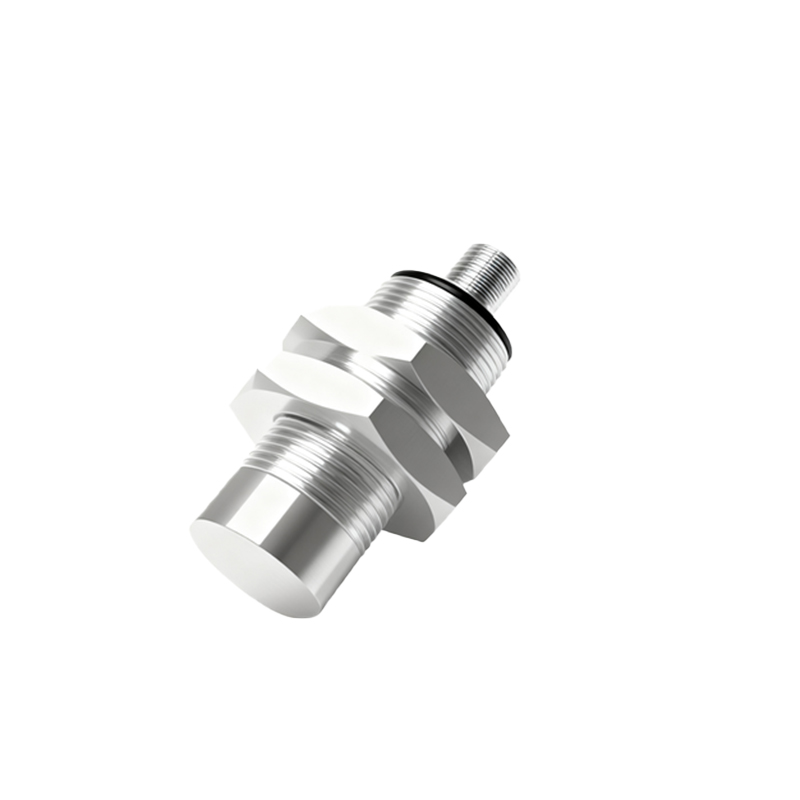
Once the sensor technology is narrowed down, several critical performance specifications must be matched to the application.
Sensing Distance: The rated operating distance (Sn) is specified for a standard target (e.g., mild steel for inductive). Real-world sensing distance can vary with target material, size, and shape. Always derate the nominal distance and consider a safety factor (typically 70-80% of Sn) to ensure reliable operation despite voltage fluctuations, temperature changes, or part tolerances.
Target Size and Material: The sensor must be sensitive enough for the smallest target expected. For inductive sensors, the effective sensing distance reduces for non-ferrous metals like aluminum or copper compared to steel. Capacitive sensors are influenced by the target's density and dielectric constant.
Output Type: The electrical output must interface with your controller (PLC, relay, etc.). The two primary types are Digital (Discrete): either NPN (sinking) or PNP (sourcing) transistor outputs, and Analog (Proportional): current (4-20 mA) or voltage (0-10V) outputs that vary with distance. Choose NPN/PNP based on your control system's input card requirements. Analog outputs are used for continuous positioning or thickness measurement.
Environmental Factors: The sensor's housing must withstand the installation environment. Key ratings include Ingress Protection (IP) rating for dust and water resistance (e.g., IP67 for temporary immersion), temperature range, and resistance to chemicals, oils, or welding spatter. In high-vibration environments, sensors with robust housing and potted electronics are essential.
Mounting and Physical Form: Consider the available space. Cylindrical barrel sensors are common, but rectangular, slot-style, or ring sensors exist for specific needs. Flush-mounted (shielded) inductive sensors can be embedded in metal without affecting their field, whereas non-flush (unshielded) types offer longer ranges but require side clearance.
Response Frequency/Switching Frequency: This specifies how many on/off cycles per second the sensor can handle. A high-frequency sensor is mandatory for high-speed counting or sensing small gaps on a fast-moving conveyor.
Electrical Characteristics: Ensure compatibility with your power supply (commonly 10-30V DC or 90-250V AC). Consider current consumption and whether a 2-wire, 3-wire, or 4-wire (for analog) connection is needed. Don't forget about short-circuit and reverse polarity protection features.
A structured selection workflow is recommended. Start by defining the target material and the primary objective (detect, count, measure distance). Choose the core technology (Inductive, Capacitive, Photoelectric, Ultrasonic). Then, specify the required sensing distance, output type, and electrical connection. Finally, select the appropriate housing material, size, and environmental protection rating. Consulting with sensor manufacturers' catalogs, selection tools, and application engineers can provide valuable guidance for edge cases.
By methodically analyzing