In the realm of industrial automation, proximity switch sensors stand as fundamental components, enabling non-contact detection and forming the backbone of countless control and safety systems. This guide delves into the core principles, types, applications, and critical selection criteria for these indispensable devices, tailored for engineers and technicians navigating the complexities of modern manufacturing and machinery.
At its essence, a proximity sensor detects the presence or absence of an object within its sensing range without any physical contact. This is achieved through the emission of an electromagnetic field or a beam of electromagnetic radiation (like infrared light). The target object, when entering this field, causes a change in the signal, which is then converted by the sensor's circuitry into a binary output signal—typically a switch closure (ON) or opening (OFF). This non-contact nature eliminates mechanical wear and tear, ensuring high reliability, long operational life, and fast response times, which are paramount in high-speed automation.
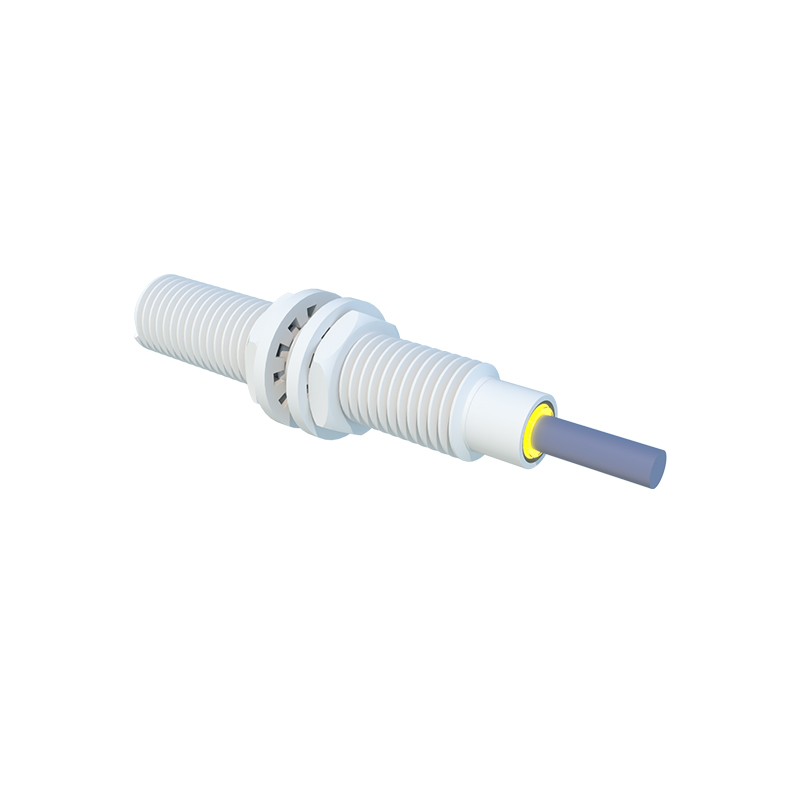
The primary categories of proximity sensors are defined by their underlying detection technology. Inductive proximity sensors are the workhorses for detecting metallic objects, primarily ferrous metals like steel and iron. They generate an oscillating electromagnetic field. When a metal target enters this field, it induces eddy currents, causing a change in oscillation amplitude that triggers the output switch. These sensors are robust, resistant to environmental contaminants like dust and oil, and are ideal for harsh industrial environments, commonly used in metal detection on conveyor lines, machine tool position sensing, and robotic end-effector positioning.
Capacitive proximity sensors, on the other hand, can detect both metallic and non-metallic materials, including liquids, plastics, glass, and wood. They function by generating an electrostatic field. Any object with a dielectric constant different from air will alter the capacitance of the sensing circuit, triggering the output. This versatility makes them suitable for level detection of liquids or granular materials, presence detection of non-metallic objects, and even as touch-sensitive controls.
Ultrasonic sensors use sound waves beyond the human hearing range. They emit ultrasonic pulses and measure the time taken for the echo to return from a target. This time-of-flight principle allows for precise distance measurement and detection of objects regardless of color, transparency, or material composition. They excel in applications requiring precise distance control, transparent object detection, and level sensing in challenging conditions with dust or vapor.
Photoelectric sensors operate on light beam interruption or reflection. They consist of an emitter (light source, often LED-based infrared or visible light) and a receiver. In the through-beam type, the object breaks the beam between separate emitter and receiver units, offering the longest sensing range. Retro-reflective types use a reflector to bounce the beam back, and the object breaks this reflected path. Diffuse sensors have the emitter and receiver in one housing, detecting light reflected directly off the target object. Photoelectric sensors are highly versatile for detecting small objects, color differentiation, and long-range applications.
Selecting the appropriate proximity sensor requires a meticulous analysis of several parameters. The sensing range, or the maximum distance at which the sensor can reliably detect a standard target, is crucial. Engineers must also consider the target material, size, and shape. The sensor's housing material (often nickel-plated brass or stainless steel) and ingress protection (IP) rating determine its suitability for environments with moisture, coolants, or washdown requirements. Output configuration (PNP vs. NPN, normally open vs. normally closed) must be compatible with the programmable logic controller (PLC) or control system. Factors like switching frequency, temperature tolerance, and electrical noise immunity are equally vital for stable operation.
In practical applications, proximity sensors are ubiquitous. They provide precise position feedback for cylinders in pneumatic and hydraulic systems. They ensure safety as part of interlock systems on machine guards. They count products on packaging lines, control robotic arm movements, and verify part presence in assembly stations. Their role in enabling Industry 4.0 initiatives is growing, with IO-Link enabled sensors providing not just binary status but also diagnostic data and parameterization capabilities for predictive maintenance.
Installation and maintenance, while straightforward, demand attention. Proper mounting, ensuring adequate clearance from metal surrounds (to avoid shielding effects), and correct wiring are essential. Regular checks for accumulated debris on the sensing face and verification of output signals can prevent unexpected downtime.
In conclusion, proximity switch sensors are more than simple switches; they are the sensory organs of automated systems. A deep understanding of their technologies and application nuances empowers engineers to design more efficient, reliable, and intelligent machinery. As automation evolves, so too will these sensors, incorporating smarter diagnostics and connectivity, continuing to be pivotal in the advancement of industrial productivity.