In the realm of electrical engineering and industrial automation, sensors play a pivotal role in enabling precise control, monitoring, and safety. Among the diverse array of sensing technologies, Hall effect sensors and proximity sensors stand out due to their reliability, versatility, and widespread applications. This article delves into the principles, types, and practical uses of these sensors, highlighting their significance in contemporary systems.
Hall effect sensors operate based on the Hall effect, discovered by Edwin Hall in 1879. When a current-carrying conductor is placed in a magnetic field perpendicular to the current flow, a voltage difference—known as the Hall voltage—is generated across the conductor. This phenomenon is harnessed in Hall effect sensors to detect magnetic fields, position, speed, and current. These sensors are typically categorized into two main types: linear Hall effect sensors, which output a voltage proportional to the magnetic field strength, and digital Hall effect sensors, which switch states in the presence of a magnetic field threshold. Key advantages include non-contact operation, high durability, and immunity to environmental factors like dust, moisture, or oil, making them ideal for harsh conditions. Common applications include brushless DC motor control, automotive systems (e.g., wheel speed sensing, throttle position), and current measurement in power electronics.
Proximity sensors, on the other hand, are designed to detect the presence or absence of an object within a specific range without physical contact. They utilize various technologies, with inductive, capacitive, and magnetic types being prevalent. Inductive proximity sensors detect metallic objects by generating an electromagnetic field and monitoring changes in inductance. Capacitive proximity sensors can detect both metallic and non-metallic materials by measuring changes in capacitance caused by the object's dielectric properties. Magnetic proximity sensors, often based on reed switches or Hall effect elements, respond to magnetic fields from permanent magnets or electromagnets. These sensors are valued for their fast response times, long operational life, and ability to function in demanding environments. In industrial settings, proximity sensors are integral to automation processes, such as object detection on conveyor belts, position sensing in machinery, and safety interlocks. They also find use in consumer electronics, automotive parking assistance, and robotics.
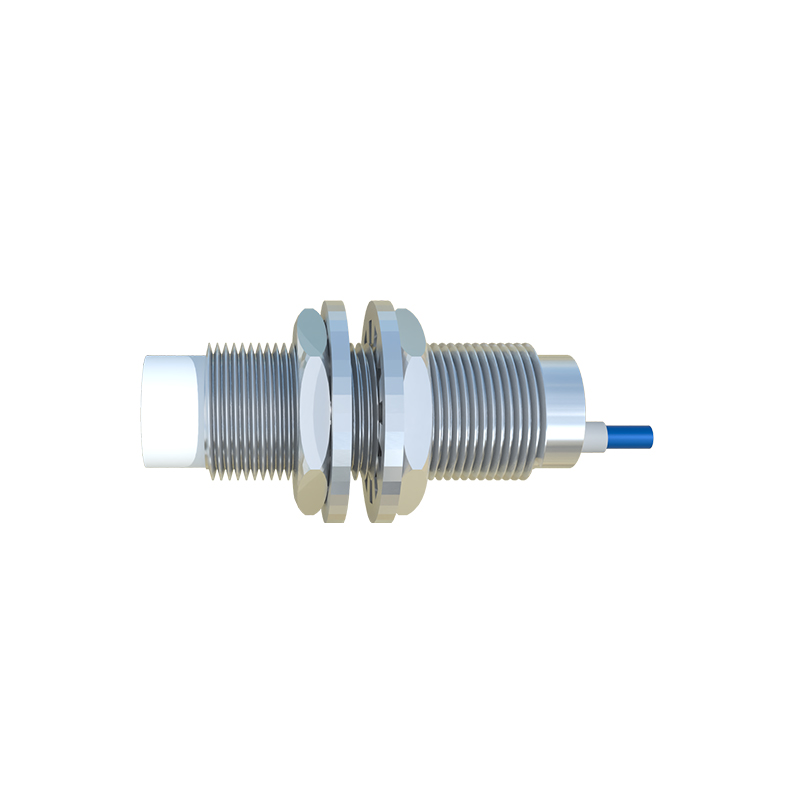
Comparing Hall effect sensors and proximity sensors reveals distinct operational domains. Hall effect sensors are primarily magnetic field detectors, excelling in applications involving motion sensing and current measurement where magnetic interaction is key. Proximity sensors offer broader material detection capabilities, with inductive and capacitive variants catering to specific object types. However, there is overlap; for instance, magnetic proximity sensors may incorporate Hall effect technology. The choice between them depends on factors like target material, sensing distance, environmental conditions, and cost considerations.
In practice, integrating these sensors requires attention to electrical interfacing, signal conditioning, and calibration. Engineers must select appropriate sensor specifications, such as sensitivity, response time, and output type (analog or digital), to match system requirements. Advancements in microelectronics and IoT have further enhanced sensor capabilities, enabling smart sensors with embedded diagnostics and communication protocols like IO-Link or CAN bus. This evolution supports predictive maintenance and real-time data analytics, driving efficiency in industries from manufacturing to renewable energy.
Despite their robustness, challenges persist. Hall effect sensors may be affected by external magnetic interference, while proximity sensors can face limitations with non-standard materials or extreme temperatures. Mitigation strategies include shielding, filtering, and using redundant sensing arrays. Ongoing research focuses on improving sensitivity, miniaturization, and energy efficiency, with emerging trends like graphene-based Hall sensors and wireless proximity networks pushing the boundaries.
In summary, Hall effect sensors and proximity sensors are cornerstone technologies in electrical engineering, each offering unique benefits for detection and control tasks. Their continued development aligns with the growing demand for automation, safety, and precision across sectors. By understanding their principles and applications, engineers can leverage these tools to innovate and optimize modern electrical systems, ensuring reliability and performance in an increasingly automated world.