In modern industrial automation and quality control systems, laser synchronous detection sensors have emerged as critical components for achieving unparalleled precision, speed, and reliability. These sophisticated devices operate on the principle of synchronizing a laser emission source with a highly sensitive photodetector, enabling real-time, non-contact measurement and inspection of objects. Unlike conventional sensors, the synchronous mechanism ensures that the detector is precisely timed to capture the reflected or transmitted laser light, effectively filtering out ambient noise and interference. This results in exceptionally accurate data acquisition even in challenging environments with variable lighting conditions, vibrations, or airborne particulates.
The core technology hinges on the modulation of the laser beam. Typically, the laser diode is driven by a pulsed or amplitude-modulated signal at a specific frequency. The corresponding receiver circuit is synchronized to this exact frequency, creating a phase-locked detection window. When the emitted laser light strikes a target, its reflection is captured only during these synchronized intervals. This method, often referred to as synchronous demodulation or time-of-flight (ToF) in specific configurations, allows the sensor to distinguish the signal from background optical noise with high fidelity. Key performance metrics include measurement resolution, which can reach micrometer levels; response time, often in the microsecond range; and operating range, which can extend from a few millimeters to several meters depending on the laser power and optics design.
Industrial applications are vast and transformative. In automotive manufacturing, these sensors are deployed for robotic guidance, weld seam tracking, and precise gap measurement between body panels. In electronics assembly, they verify component placement on printed circuit boards (PCBs) and inspect solder joint quality. The packaging industry relies on them for fill-level control, label positioning, and tamper-evident seal inspection. Furthermore, in logistics and warehousing, laser synchronous sensors facilitate high-speed dimensioning, parcel sorting, and autonomous vehicle navigation by creating detailed 3D profiles of objects.
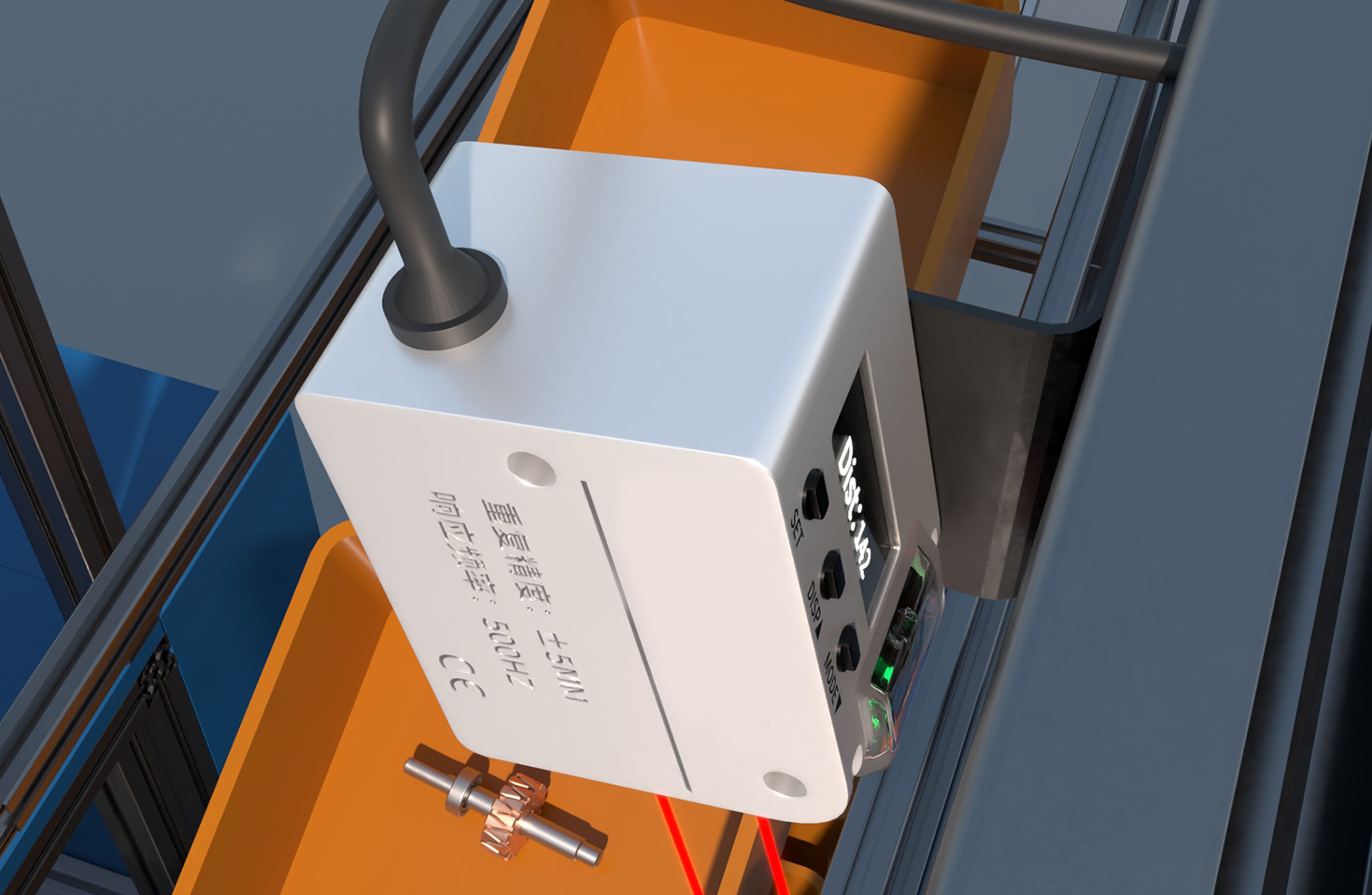
The advantages over traditional photoelectric or ultrasonic sensors are substantial. The coherent nature of laser light provides a sharp, focused beam, enabling detection of very small objects or fine features. Synchronous detection grants immunity to ambient light from factory lamps or sunlight, a common drawback of standard sensors. Enhanced signal-to-noise ratio directly translates to higher repeatability and long-term stability, reducing false triggers and maintenance downtime. Modern iterations integrate smart features such as Ethernet/IP, PROFINET, or IO-Link connectivity for seamless integration into Industry 4.0 frameworks, allowing for remote configuration, diagnostics, and data logging.
Selecting the appropriate laser synchronous sensor requires careful consideration of several parameters. The wavelength of the laser, commonly in the visible red (650 nm) or infrared (850 nm, 905 nm) spectra, affects visibility and material interaction. The type of output—digital switch, analog voltage/current, or serial data—must match the control system's requirements. Environmental ratings for ingress protection (IP67/IP69K) and resistance to chemicals or temperature extremes are crucial for harsh industrial settings. Additionally, form factors range from compact, cylindrical housings for space-constrained installations to ruggedized block-style units for heavy machinery integration.
Future trends point toward miniaturization, increased intelligence, and multi-functional capabilities. The integration of embedded processors and machine learning algorithms will enable sensors to not only capture data but also perform preliminary analysis, such as identifying defect patterns. Advancements in laser safety (Class 1) and eye-safe designs will broaden their use in collaborative robot (cobot) workcells. As industrial demands for precision and traceability grow, laser synchronous detection sensors will continue to be pivotal in enabling smarter, more adaptive, and highly efficient manufacturing ecosystems, forming the bedrock of advanced optical metrology and automated process control.
