Laser sensors have become indispensable in modern industrial automation, offering unparalleled precision in measurement, detection, and positioning tasks. At their core, these devices operate on the principle of emitting a focused beam of light—typically from a laser diode—and analyzing the reflected signal. The hardware architecture is sophisticated, integrating optical, electronic, and mechanical components to ensure reliability in demanding environments.
The primary optical component is the laser source itself. Industrial-grade sensors predominantly use visible red lasers or Class 1/Class 2 infrared lasers for safety and performance. The laser diode is coupled with precision lenses that collimate the light into a tight, consistent beam. The quality of these lenses directly impacts the sensor's spot size and measurement accuracy over long distances. For instance, in distance measurement applications using triangulation or time-of-flight principles, even minor optical aberrations can lead to significant errors.
Following the emission path, the photodetector is the critical receiver hardware. Silicon photodiodes or position-sensitive detectors (PSDs) are common. They convert the reflected light's intensity or position into an electrical signal. The speed and sensitivity of this detector determine the sensor's response time and ability to detect low-reflectivity surfaces. Advanced sensors often incorporate adaptive gain control circuits here to maintain signal integrity across varying target colors and materials.
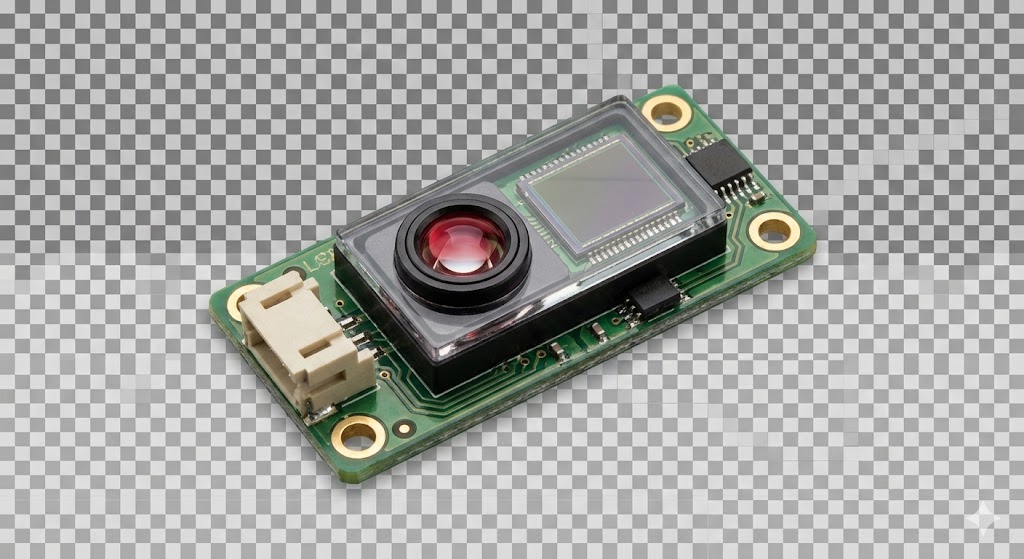
The signal processing unit is the computational heart. This typically involves a dedicated microcontroller or an application-specific integrated circuit (ASIC). Its role is to filter noise, calculate measurements based on the received signal's phase, pulse timing, or triangulation geometry, and output a standardized signal. Common outputs include analog (4-20 mA, 0-10 V), digital (PNP/NPN), or serial communication protocols like IO-Link and Ethernet/IP. Robust processors enable features like background suppression, which allows the sensor to ignore objects beyond a set distance, and teach-in programming for easy setup.
Hardware robustness is non-negotiable in industrial settings. The housing, usually made from stainless steel or hardened plastics with an IP67 or IP69K rating, protects against dust, water jets, and physical impacts. Connectors are M8 or M12 threaded types, ensuring vibration-resistant electrical connections. Thermal management is also crucial; stable operation across a wide temperature range (e.g., -10°C to 60°C) is achieved through careful component selection and heat sinking.
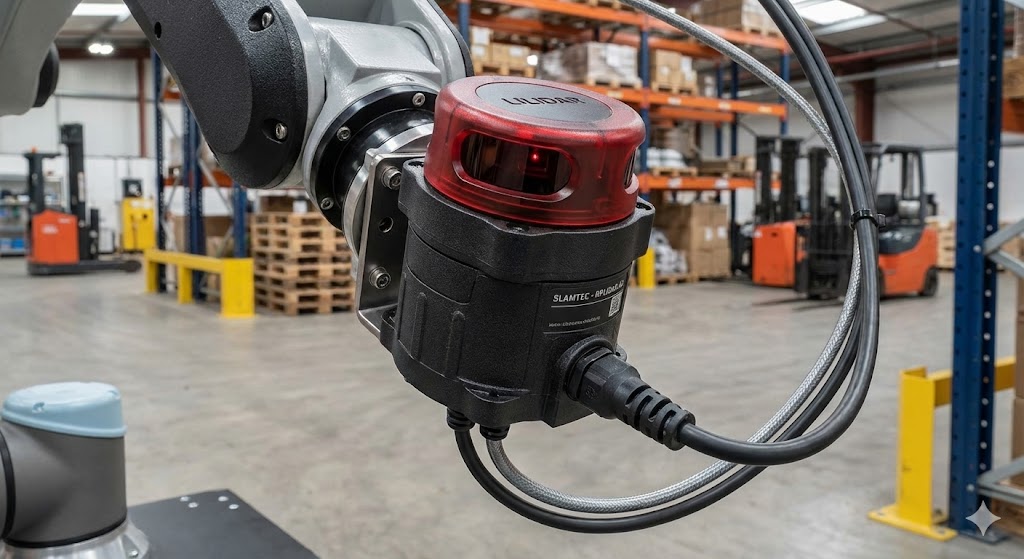
Applications dictate specific hardware configurations. For example, a laser distance sensor used in automated warehousing for pallet measurement requires a long-range, eye-safe laser and a high-speed processor to update measurements in real time as objects move on a conveyor. In contrast, a precision laser micrometer for dimensional inspection in manufacturing might use a line laser and a CMOS array detector, with hardware optimized for micron-level resolution.
When selecting a laser sensor, engineers must evaluate key hardware specifications: measuring range, spot size, repeatability, linearity, and response frequency. Understanding the interplay between the laser's wavelength, the detector's characteristics, and the processing algorithms is essential for matching the sensor to the application's demands. Regular maintenance, such as cleaning the optical window to prevent contamination from oil or dust, is vital for sustained accuracy.
In summary, the performance of a laser sensor is a direct function of its hardware design. From the stability of the laser diode to the resilience of the housing, each component must be engineered to work in harmony. As Industry 4.0 advances, we see hardware trends integrating more onboard intelligence and diagnostics, but the fundamental principles of precise optics, fast electronics, and rugged construction remain the bedrock of reliable laser sensing technology.