In the realm of industrial automation and machinery, proximity sensors are indispensable components. They detect the presence or absence of objects without physical contact, relying on electromagnetic fields, light, or sound. When a sensor fails, a common and cost-effective solution is to replace its sensing element or core components rather than the entire unit. The choice of replacement material is paramount, directly impacting the sensor's performance, longevity, and application suitability. This article delves into the fundamental materials used in the core construction of various proximity sensor types.
The most prevalent category is the inductive proximity sensor. Its core sensing element is a coil wound around a ferrite core. The primary material here is ferrite, a ceramic compound made from iron oxide (Fe₂O₃) blended with other metallic elements like nickel, zinc, or manganese. Ferrite is chosen for its high magnetic permeability and low electrical conductivity, which allows for the efficient generation and concentration of an oscillating electromagnetic field. When a metallic object enters this field, eddy currents are induced, causing a change in oscillation amplitude that the sensor's circuitry detects. For replacement coils or cores, specific ferrite grades (e.g., Mn-Zn or Ni-Zn) are selected based on the required operating frequency and temperature range. The housing protecting this coil is typically made from materials like PBT (Polybutylene Terephthalate) or PPS (Polyphenylene Sulfide) plastics, prized for their durability, temperature resistance, and minimal interference with the electromagnetic field.
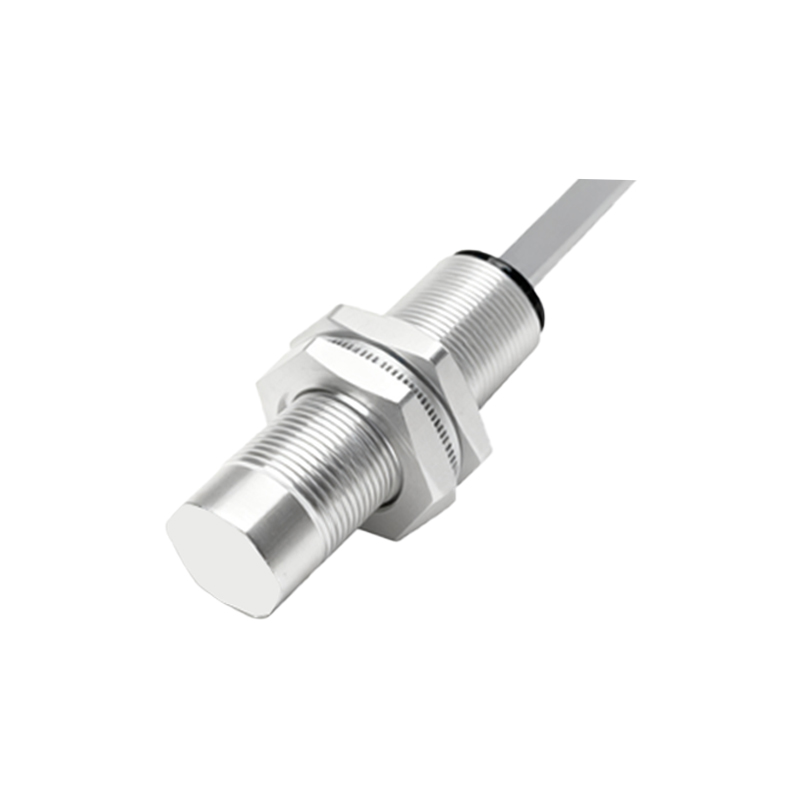
Capacitive proximity sensors, capable of detecting both metallic and non-metallic materials, have a different material focus. Their sensing face acts as one plate of a capacitor. This electrode is commonly made from conductive materials such as plated brass, stainless steel, or even a conductive polymer coating. The choice depends on the target material and the need for corrosion resistance. The dielectric material between the electrode and the target is crucial; often, the sensor's front face is made from a stable, non-conductive plastic like PTFE (Teflon) or ceramic. These materials have consistent dielectric properties, ensuring reliable detection sensitivity. When replacing parts, matching the original electrode material and dielectric constant is essential to maintain calibration.
For photoelectric sensors, the core materials are optoelectronic. The key components are the light emitter and the receiver. Emitters are almost exclusively Light Emitting Diodes (LEDs). The semiconductor material of the LED determines the light wavelength. For standard diffuse or through-beam sensors, visible red or infrared LEDs are common, typically using Aluminum Gallium Arsenide (AlGaAs) substrates. For more specialized applications requiring precise detection or resistance to ambient light, lasers (using materials like Gallium Arsenide) or specific wavelength LEDs (e.g., blue for detecting transparent objects) are used. The receiver is usually a phototransistor or photodiode made from silicon, which is sensitive to a broad spectrum. The lenses are made from optical-grade plastics like polycarbonate or PMMA (acrylic), chosen for clarity and impact resistance. In harsh environments, the housing might be stainless steel (e.g., SUS304 or SUS316) with a glass window.
Ultrasonic proximity sensors rely on piezoelectric materials for their transducers. The core element is a piezoelectric ceramic crystal, commonly lead zirconate titanate (PZT). This material converts electrical energy into ultrasonic sound waves and vice versa. The performance in terms of frequency, sensitivity, and temperature stability is heavily dependent on the precise composition and polarization of this ceramic element. Replacement transducers must match the resonant frequency (e.g., 200 kHz or 400 kHz) of the original. The protective membrane in front of the crystal is often made from epoxy resin or specialized plastics that acoustically couple well with the environment while providing chemical resistance.
Beyond the active sensing materials, housing and connection materials are critical for reliability. For demanding industrial environments, nickel-plated brass or stainless steel (AISI 303, 304, 316) housings are standard for inductive and capacitive sensors, offering excellent mechanical strength and corrosion resistance. Cable jackets are typically made from PVC or PUR (Polyurethane), with PUR offering superior resistance to oils, chemicals, and abrasion.
In conclusion, replacing the core of a proximity sensor is not a one-material-fits-all task. It requires a precise understanding of the sensor's operating principle and the specific material properties that enable its function. Whether it's the ferrite core in an inductive sensor, the PZT crystal in an ultrasonic unit, or the AlGaAs LED in a photoelectric device, selecting the correct replacement material is a technical decision that ensures the sensor regains its specified sensing range, repeatability, and resilience in its operational environment. Always consult the manufacturer's datasheet for material specifications when sourcing replacement parts to guarantee compatibility and performance.