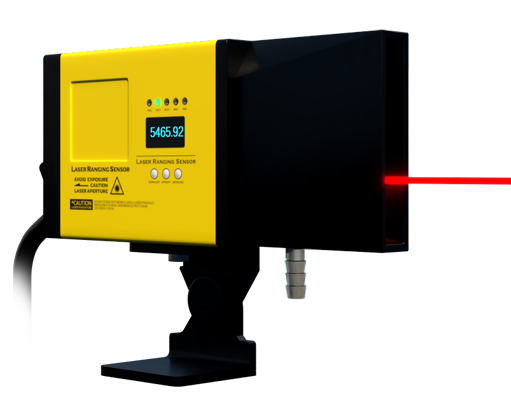
In the dynamic landscape of industrial automation, precision and reliability are paramount. Anti-shake laser sensors have emerged as a critical technology, addressing the challenges posed by environmental vibrations, mechanical movements, and operational disturbances that can compromise measurement accuracy. These advanced sensors integrate sophisticated algorithms and hardware designs to mitigate the effects of shake, ensuring stable and consistent performance in demanding applications.
Traditional laser sensors, while effective in controlled environments, often struggle with instability when subjected to external vibrations—common in manufacturing floors, robotics, or transportation systems. This instability can lead to erroneous readings, reduced product quality, and increased downtime. Anti-shake laser sensors overcome these limitations by incorporating real-time signal processing and adaptive filtering techniques. By analyzing the frequency and amplitude of disturbances, these sensors dynamically adjust their output, canceling out noise and maintaining focus on the target object. This capability is particularly vital in high-speed assembly lines, where even minor deviations can result in significant defects.
The core technology behind anti-shake laser sensors lies in their use of MEMS (Micro-Electro-Mechanical Systems) gyroscopes or accelerometers, combined with laser triangulation or time-of-flight principles. These components work in tandem to detect and compensate for unwanted movements. For instance, in a robotic welding application, the sensor continuously monitors its own position relative to the workpiece, correcting for any tremors caused by machinery or external forces. This ensures precise seam tracking and uniform weld quality. Additionally, many models feature built-in environmental compensation for temperature and humidity variations, further enhancing their robustness.

Applications of anti-shake laser sensors span diverse industries. In automotive manufacturing, they are used for gap and flush measurement between body panels, where vibrations from conveyor belts or robots could otherwise skew results. In logistics, these sensors enable accurate dimensioning of packages on moving belts, optimizing storage and shipping processes. The pharmaceutical sector benefits from their ability to inspect tablet coatings or vial fill levels without interference from production line oscillations. Moreover, in aerospace, they contribute to the alignment of critical components, where precision is non-negotiable for safety and performance.

When selecting an anti-shake laser sensor, engineers should consider key parameters such as measurement range, resolution, response time, and the specific frequency range of vibrations in their environment. Modern sensors often offer customizable settings via software interfaces, allowing users to fine-tune sensitivity and filtering based on application needs. It is also essential to evaluate the sensor's durability, including IP ratings for dust and water resistance, to ensure longevity in harsh industrial settings.
Looking ahead, advancements in AI and machine learning are poised to enhance anti-shake capabilities further. Predictive algorithms can learn from historical vibration patterns, enabling proactive adjustments and reducing latency. As Industry 4.0 evolves, the integration of these sensors with IoT platforms will facilitate real-time monitoring and data analytics, driving smarter, more adaptive automation systems. In conclusion, anti-shake laser sensors represent a significant leap forward in measurement technology, offering unparalleled stability and accuracy. By mitigating the impact of environmental disturbances, they empower industries to achieve higher efficiency, reduce waste, and maintain competitive edges in an increasingly automated world.