Proximity sensors are fundamental components in modern automation and industrial systems, detecting the presence or absence of objects without physical contact. Among their various specifications, the diameter direction is a critical, yet often overlooked, parameter that significantly influences sensor selection, performance, and integration. Understanding this concept is essential for engineers, technicians, and designers to ensure reliable operation in diverse applications.
The term "diameter direction" primarily refers to the physical orientation and spatial characteristics of the sensor's active sensing area relative to its cylindrical housing. Most inductive and capacitive proximity sensors feature a cylindrical form factor. The sensing field emanates from the front face of this cylinder. However, the effective range and shape of this field are not perfectly uniform in all radial directions around the sensor's central axis. The diameter direction implies considering the sensor's performance as it relates to its physical diameter and how the sensing field projects from it.
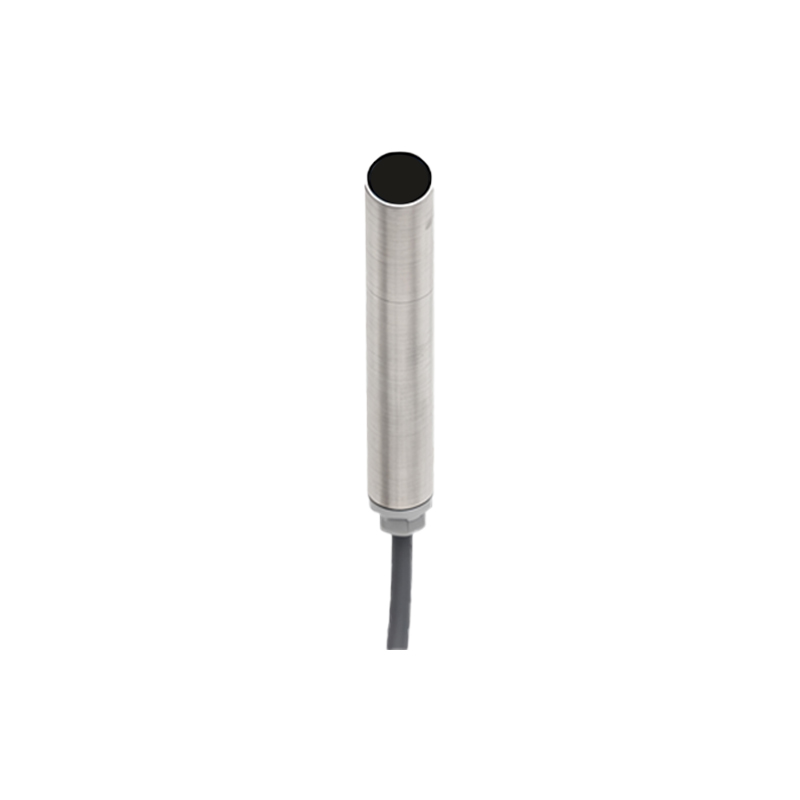
A key aspect is the effective sensing distance (Sn). While datasheets provide a nominal sensing range, this range can be slightly affected by the target's approach angle and the specific point on the sensor's face. For a standard shielded (flush-mountable) sensor, the magnetic or electrostatic field is more concentrated directly ahead. For an unshielded (non-flush) sensor, the field is broader and can extend slightly to the sides. Therefore, the "diameter direction" consideration involves understanding that the declared sensing distance is most accurate when the target approaches along the central axis of the sensor's diameter. Off-axis approaches, or targets that are smaller than the sensor's face diameter, may require adjustments in mounting or sensitivity.
Mounting considerations are deeply tied to diameter direction. The sensor's body diameter determines the size of the mounting hole. But beyond just mechanical fit, the surrounding material matters. Installing a sensor in a metal bracket or panel requires understanding if it is shielded. A shielded sensor's field is focused forward, minimizing side interference from the mounting metal, making it ideal for flush installation. An unshielded sensor's field extends radially from its sides; if mounted flush in metal, the metal will disrupt the field, causing malfunction. Thus, the choice between shielded and unshielded types is a direct decision about controlling the field's behavior in the diameter direction.
Furthermore, the diameter influences the repeat accuracy and hysteresis. A sensor with a larger diameter often has a larger sensing coil or electrode, which can contribute to a more stable and repeatable detection zone. The hysteresis, the difference between the switch-on and switch-off points, must be evaluated in the context of the target's path. If a target moves not directly head-on but on a tangential path relative to the sensor's diameter, the effective hysteresis band might differ.
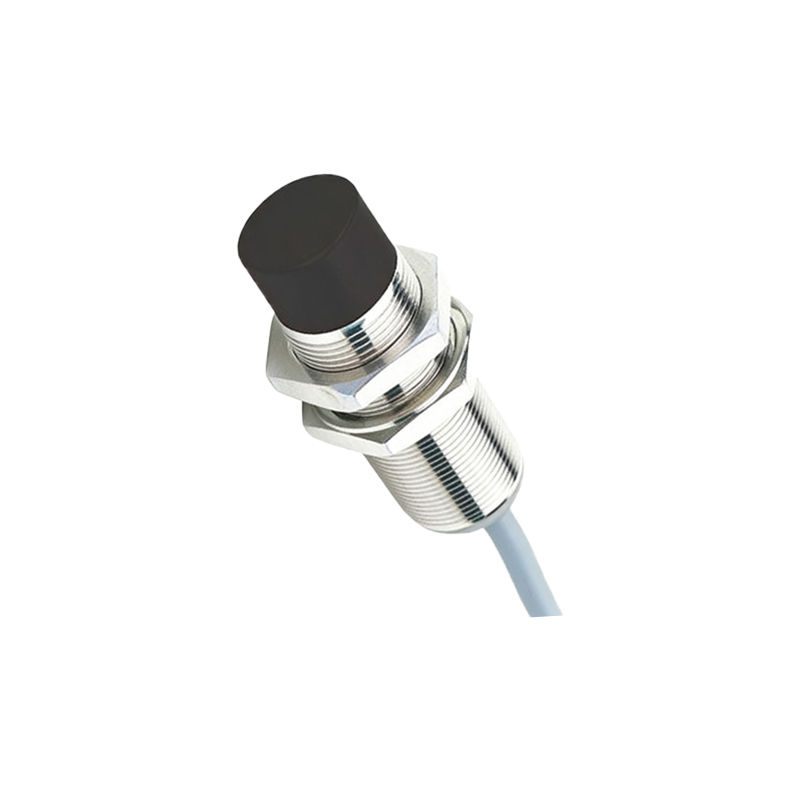
In practical applications, ignoring the diameter direction can lead to failures. For example, in a conveyor system detecting metal bolts, a sensor with a small diameter might miss a bolt if it doesn't pass directly over the center. A larger-diameter sensor, or one mounted at an optimal angle (considering the direction of target travel across its face), provides a larger "catch" area. In robotic end-effectors, where space is constrained, the sensor's diameter and its directional sensing profile determine how close it can be mounted to other components without causing mutual interference or false triggers.
When selecting a sensor, always cross-reference the diameter with other specs. A larger diameter doesn't automatically mean a longer range. Focus on the sensing range relative to the sensor's own diameter. Also, consider the target material and size. For detecting small objects, the active sensing area's size (related to the front-face diameter) is crucial; a target should ideally be at least 70-80% of the sensor's face diameter for reliable detection.
In conclusion, the "diameter direction" is a multifaceted concept encompassing the physical geometry of the sensor, the shape and reach of its electromagnetic field, and its interaction with targets and the mounting environment. It bridges the gap between the simple dimensional spec and the real-world sensing performance. Successful implementation requires viewing the sensor not just as a black box with a range, but as a cylindrical device whose diameter fundamentally dictates how it "sees" the world in the space directly in front of and immediately around its housing. By carefully evaluating this parameter, one can optimize detection reliability, avoid installation errors, and select the most cost-effective and robust sensor for any given automation challenge.