In the dynamic landscape of industrial automation, proximity switch sensors are fundamental components for non-contact object detection. While inductive, capacitive, and photoelectric sensors are considered conventional workhorses, a class of devices known as unconventional or specialized proximity sensors is addressing more complex and demanding applications. These sensors leverage unique physical principles or combine technologies to solve problems where standard models fall short.
So, what exactly are unconventional proximity switch sensors? They are detection devices that operate on principles distinct from the standard electromagnetic induction (inductive), electric field disturbance (capacitive), or light beam interruption (photoelectric). Their design is often tailored for extreme environments, specific material properties, or unique detection requirements that challenge the limitations of conventional units.
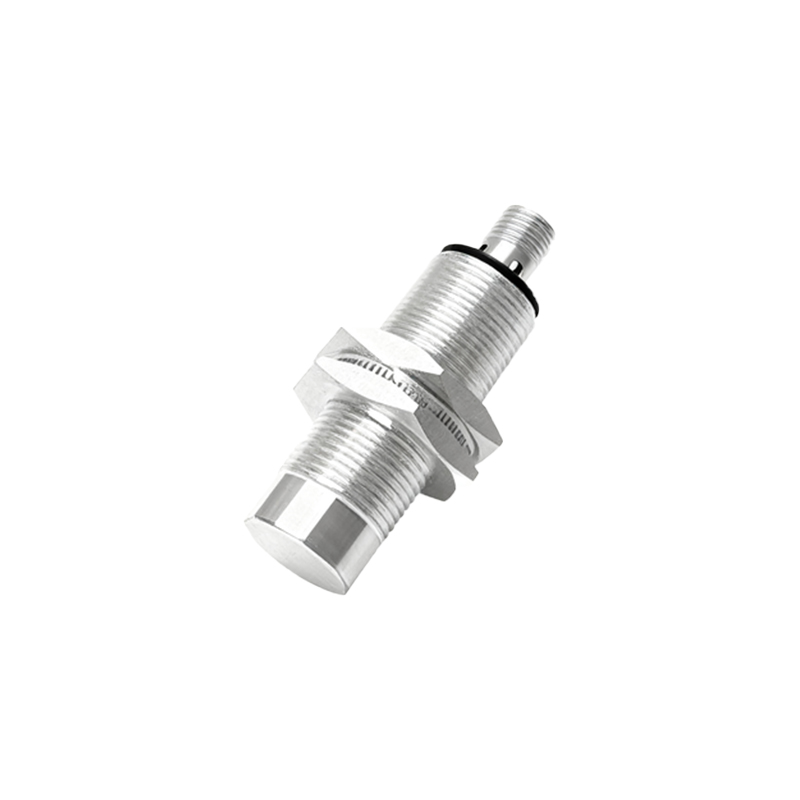
One prominent category is ultrasonic proximity sensors. These devices emit high-frequency sound waves and measure the time for the echo to return. Unlike photoelectric sensors, they are largely unaffected by target color, transparency, or ambient light conditions, making them ideal for detecting liquid levels, transparent films, or objects in dusty or foggy atmospheres. Their detection range can be significantly longer than many inductive or capacitive sensors.
Another critical type is the magnetic proximity sensor, specifically those using Hall-effect or magnetoresistive elements. While simple reed switches are common, advanced versions detect the strength and polarity of a magnetic field. They are indispensable for sensing the position of permanent magnets embedded in cylinders (piston position in hydraulic/pneumatic systems) or for high-speed rotary encoding where physical contact is impossible. Their reliability in the presence of oil, dirt, and vibration is a key advantage.
Fiber-optic proximity sensors represent a hybridization. Here, the sensing element is a flexible fiber-optic cable connected to an amplifier that houses the light source and receiver. The sensing tip can be extremely small, immune to electromagnetic interference (EMI), and capable of operating in high-temperature, high-pressure, or highly corrosive environments where electronic components cannot be placed directly. They excel in detecting minute objects or in tight spaces within machinery.
Emerging technologies are pushing boundaries further. Radar-based proximity sensors, using microwave or millimeter-wave radar, are used for long-range detection and through-wall sensing in certain non-metallic materials. Laser triangulation sensors offer extremely high precision for distance measurement and profile detection, far beyond standard diffuse photoelectric sensors. Furthermore, sensors incorporating vision systems or time-of-flight (ToF) principles are blurring the line between simple proximity detection and complex dimensional inspection.
The selection and application of these unconventional sensors require careful engineering analysis. Key parameters extend beyond simple sensing distance. Engineers must consider the target material's acoustic reflectivity (for ultrasonic), magnetic properties, surface optical characteristics, and the environmental factors like temperature extremes, pressure, washdown requirements, and potential signal interference. The output type (PNP/NPN analog, IO-Link, etc.) and housing material are also critical for integration into modern networked control systems.
In practice, an ultrasonic sensor might monitor the fill level of a corrosive chemical in a polypropylene tank, where capacitive sensors fail due to non-conductivity and photoelectrics are foiled by condensation. A high-temperature Hall-effect sensor could provide critical feedback on turbine blade proximity in a power generation facility. A miniature fiber-optic sensor might detect the presence of a tiny pharmaceutical vial on a high-speed packaging line.
The evolution towards Industry 4.0 and smart factories is increasing the demand for these sophisticated sensors. Their ability to provide reliable data in harsh conditions, detect challenging materials, and offer precise measurement rather than simple presence/absence detection makes them enablers of predictive maintenance, higher quality control, and more flexible automation. Understanding their capabilities is no longer a niche skill but a necessary competency for engineers designing robust and future-proof industrial systems. The initial higher cost is often justified by unparalleled reliability, reduced downtime, and enabling processes that are otherwise not feasible with conventional sensing technology.