In the realm of industrial automation, inductive proximity sensors are renowned for their robustness, reliability, and precision in detecting metallic objects. Their operating principle is well-established: an oscillator generates a high-frequency electromagnetic field from a coil in the sensor's face. When a metallic target enters this field, eddy currents are induced within the metal, causing a measurable change in the oscillation amplitude. This change triggers the sensor's output circuit, signaling the presence of the object. This technology excels in harsh environments, is resistant to dirt, oil, and moisture, and requires no physical contact, making it ideal for countless applications from machine tools to material handling.
However, a common misconception persists: that inductive sensors are exclusively for metals. The core challenge with non-metallic materials like plastics, wood, glass, ceramics, or cardboard is their lack of electrical conductivity. They do not generate significant eddy currents, rendering a standard inductive sensor seemingly ineffective. Yet, the need to detect such materials is pervasive. From verifying the presence of a plastic bottle on a filling line, confirming a wooden pallet at a transfer point, to ensuring a glass pane is in position for processing, reliable non-metallic detection is crucial.
So, how can inductive sensing technology be adapted or leveraged for these applications? The answer lies not in detecting the non-metallic object itself, but in detecting a metallic element associated with it. This is the cornerstone of most practical solutions. One widespread method is the use of a metal tag or foil. A small piece of metal, often a ferrous screw, a stainless steel washer, or an adhesive aluminum foil patch, is attached to or embedded within the non-metallic object. The inductive sensor is then programmed to detect this metallic marker. This approach is simple, cost-effective, and highly reliable, turning the problem back into a standard metal detection task. It is extensively used in pallet detection (where pallets often have metal brackets or nails), in packaging (detecting foil seals or metallic inks), and in assembly processes where a plastic component has an integrated metal insert.
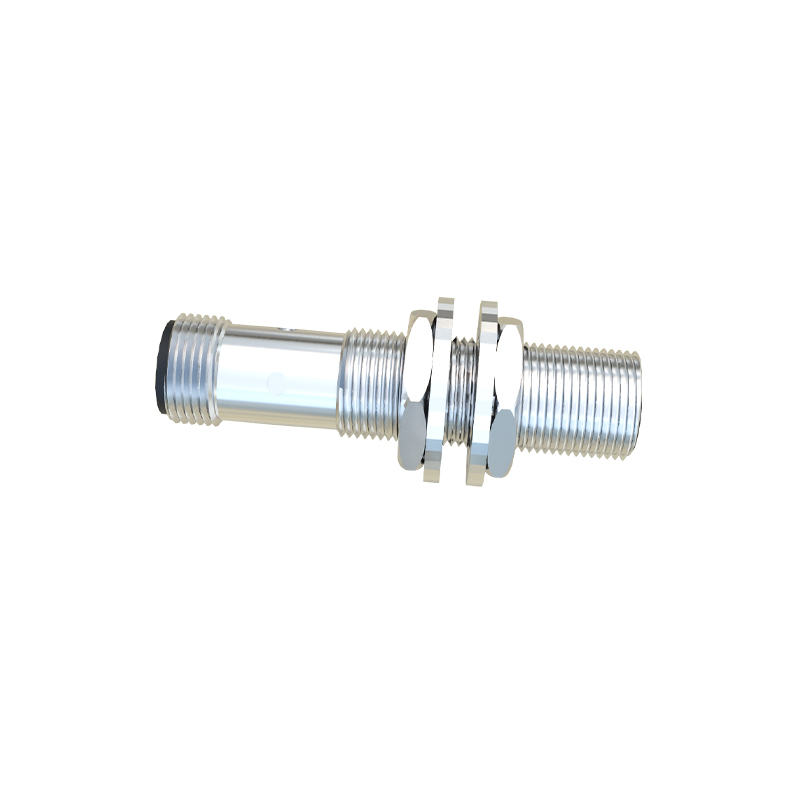
For applications where attaching a physical tag is not feasible, alternative sensing principles that are inherently capable of detecting non-metallics, such as capacitive or ultrasonic sensors, are typically recommended. However, advanced inductive sensor technology has pushed boundaries. Specialized factor-1 inductive sensors are calibrated to detect mild steel at their nominal sensing distance. While they still require a conductive target, their refined electronics can sometimes detect very thin foils or specific metallized coatings on non-metallic surfaces, though this is highly application-specific and requires careful testing.
Another critical consideration is the background or carrier material. Often, a non-metallic object is transported on a metallic conveyor or within a metal fixture. Here, a shielded (flush-mountable) inductive sensor is essential. Its electromagnetic field is concentrated in front of its face, preventing it from being influenced by the adjacent metal background. This allows it to reliably detect the presence or absence of the non-metallic object by, for example, sensing the gap between the object and the conveyor, or detecting a metal component on the object's far side. Conversely, an unshielded (non-flush) sensor has a more extended field and could be falsely triggered by the background metal, making it unsuitable for such setups.
When integrating an inductive sensor for non-metallic object detection via a metal marker, several engineering best practices must be followed. First, sensor selection is paramount. Choose a sensor with an appropriate sensing distance (Sn) that accounts for the size and material of the metal tag. Ferrous metals like iron and steel are detected at the full nominal range, while non-ferrous metals like aluminum or copper typically reduce the effective sensing distance, sometimes by 30-60%. The sensor's housing material (e.g., stainless steel, PBT plastic) must also suit the environmental conditions (chemical exposure, temperature, physical impact). Second, precise installation and alignment are crucial to ensure the metal tag passes consistently within the sensor's active field. Vibration or misalignment can cause unreliable operation. Finally, thorough testing and commissioning under real-world conditions—accounting for temperature swings, supply voltage variations, and the presence of other electromagnetic noise—are non-negotiable steps to ensure long-term stability.
In conclusion, while the classic inductive proximity sensor is fundamentally a metal detector, its role in systems involving non-metallic objects is indispensable. By employing the simple yet effective strategy of using a metallic identifier, engineers can leverage the inherent durability and speed of inductive sensing to solve a wide array of detection challenges. The key to success is a clear understanding of the physical principles, careful application analysis, and the strategic integration of a detectable metal element. In this way, inductive sensors continue to be a versatile and powerful