Eddy current displacement sensors represent a critical category of non-contact measurement devices widely employed in industrial automation, aerospace, and scientific research. Operating on the principle of electromagnetic induction, these sensors generate a high-frequency alternating magnetic field from a probe coil. When this field interacts with a conductive target material, it induces circular currents known as eddy currents within the target. These eddy currents, in turn, generate their own opposing magnetic field, which alters the impedance of the probe coil. The sensor's electronics precisely measure this change in impedance, which is directly correlated to the distance between the probe and the target. This relationship allows for highly accurate displacement, vibration, and position measurements.
A primary advantage of eddy current sensors is their ability to function without physical contact with the target. This eliminates issues like wear, friction, and mechanical loading, ensuring long-term reliability and stability. They are exceptionally well-suited for measuring conductive materials, including various metals like steel, aluminum, copper, and alloys. The measurement is largely unaffected by non-conductive intervening materials such as oil, grease, dust, or thin non-metallic coatings, making them robust in challenging industrial environments. Furthermore, they offer excellent frequency response, capable of tracking very high-speed vibrations and dynamic motions, which is essential for applications like rotor dynamics analysis and active vibration control.
The performance of an eddy current sensor is influenced by the electrical conductivity and magnetic permeability of the target material. Different materials affect the strength of the induced eddy currents and the magnetic field's penetration depth. To ensure optimal accuracy, sensors are often calibrated for a specific target material. Modern sensors incorporate advanced temperature compensation circuits to minimize drift caused by ambient temperature fluctuations, a crucial feature for precision measurements. The typical output is an analog voltage or current signal, such as 0-10 VDC or 4-20 mA, which is easily integrated into data acquisition systems, PLCs, and control units.
Applications for these sensors are vast and varied. In the automotive and aerospace industries, they are indispensable for measuring crankshaft deflection, turbine blade tip clearance, and bearing vibration. Within manufacturing, they monitor runout, eccentricity, and thermal expansion of rotating machinery like spindles and motors. They play a key role in condition monitoring and predictive maintenance programs, detecting unbalance, misalignment, and bearing wear in pumps, compressors, and generators before catastrophic failure occurs. In research and development laboratories, they provide precise data for material testing, vibration analysis, and micrometrology.
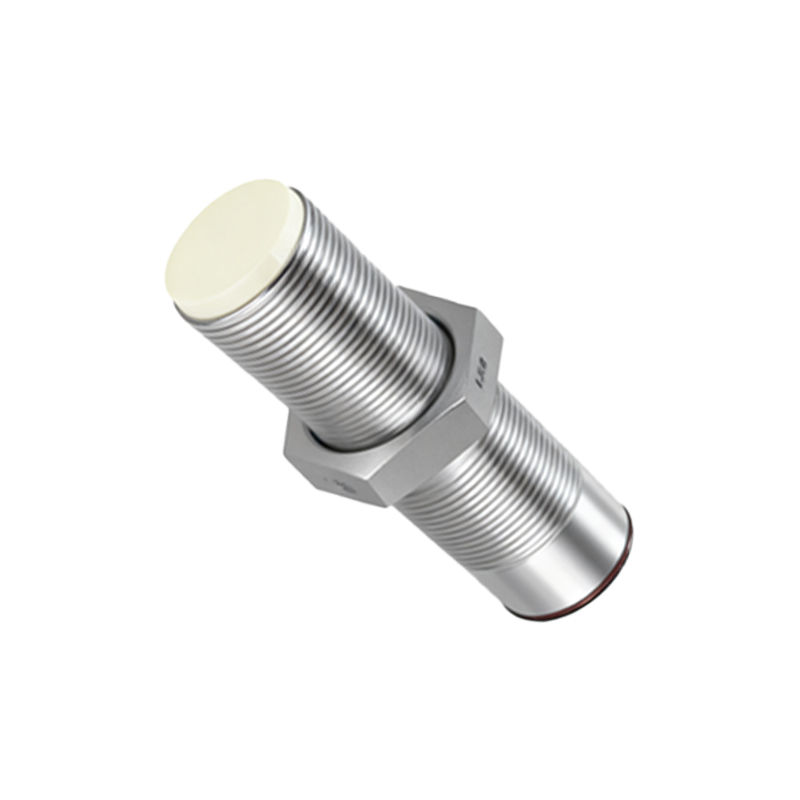
Selecting the appropriate eddy current sensor requires careful consideration of several parameters. The measurement range, typically from less than a millimeter to several tens of millimeters, must match the application. Resolution, the smallest detectable change in distance, can reach sub-micron levels in high-performance models. Linear range, the portion of the measurement range where output is linear to displacement, is a critical specification. Environmental factors like temperature extremes, pressure, and exposure to chemicals dictate the required probe housing and cable specifications. Proper installation is also vital; the sensor must be mounted securely to avoid vibration, and the target area should be larger than the probe's sensing face to ensure a consistent signal.
In summary, eddy current displacement sensors offer a unique combination of non-contact operation, high resolution, and robustness. Their fundamental electromagnetic principle provides a reliable method for precise displacement and vibration measurement across countless demanding applications. From ensuring the safe operation of jet engines to maintaining the quality in high-speed production lines, these sensors are a foundational technology in modern precision measurement and control systems. Continued advancements in electronics and digital signal processing are further enhancing their accuracy, stability, and integration capabilities for the future.