Laser sensors are fundamental components in modern industrial automation, measurement, and control systems. Their precision and reliability are paramount. However, a common and critical issue affecting their long-term performance is signal attenuation. Understanding the causes of laser sensor attenuation is essential for system design, maintenance, and ensuring operational integrity. This article delves into the primary physical and environmental factors leading to attenuation in laser sensing systems.
The core principle of a laser sensor involves emitting a coherent light beam towards a target and detecting the reflected or scattered signal. Attenuation refers to the reduction in the intensity or power of this light beam as it travels from the transmitter to the target and back to the receiver. This loss of signal strength can degrade measurement accuracy, reduce effective range, and ultimately lead to sensor failure. The causes can be broadly categorized into intrinsic factors related to the sensor itself and extrinsic factors related to the operating environment.
Intrinsic Factors and Component Degradation
Over time, the internal components of a laser sensor naturally degrade. The laser diode, the heart of the emitter, is susceptible to gradual output power decline. This phenomenon, known as laser diode aging, is caused by defects within the semiconductor material that proliferate with operational hours and thermal cycling. Even with optimal driving currents, the photon emission efficiency decreases. Similarly, the photodetector (e.g., photodiode or CCD) in the receiver can experience reduced sensitivity. Prolonged exposure to the laser light itself or ambient light can cause photodetector fatigue, increasing dark current and lowering the signal-to-noise ratio. Furthermore, optical elements like lenses, windows, and beam splitters are prone to contamination and coating damage. Dust, oils, or chemical vapors inside the sensor housing can coat these surfaces, scattering and absorbing the laser light before it even exits the sensor. Microscopic scratches or hazing on protective windows also contribute significantly to internal signal loss.
Extrinsic Environmental Factors
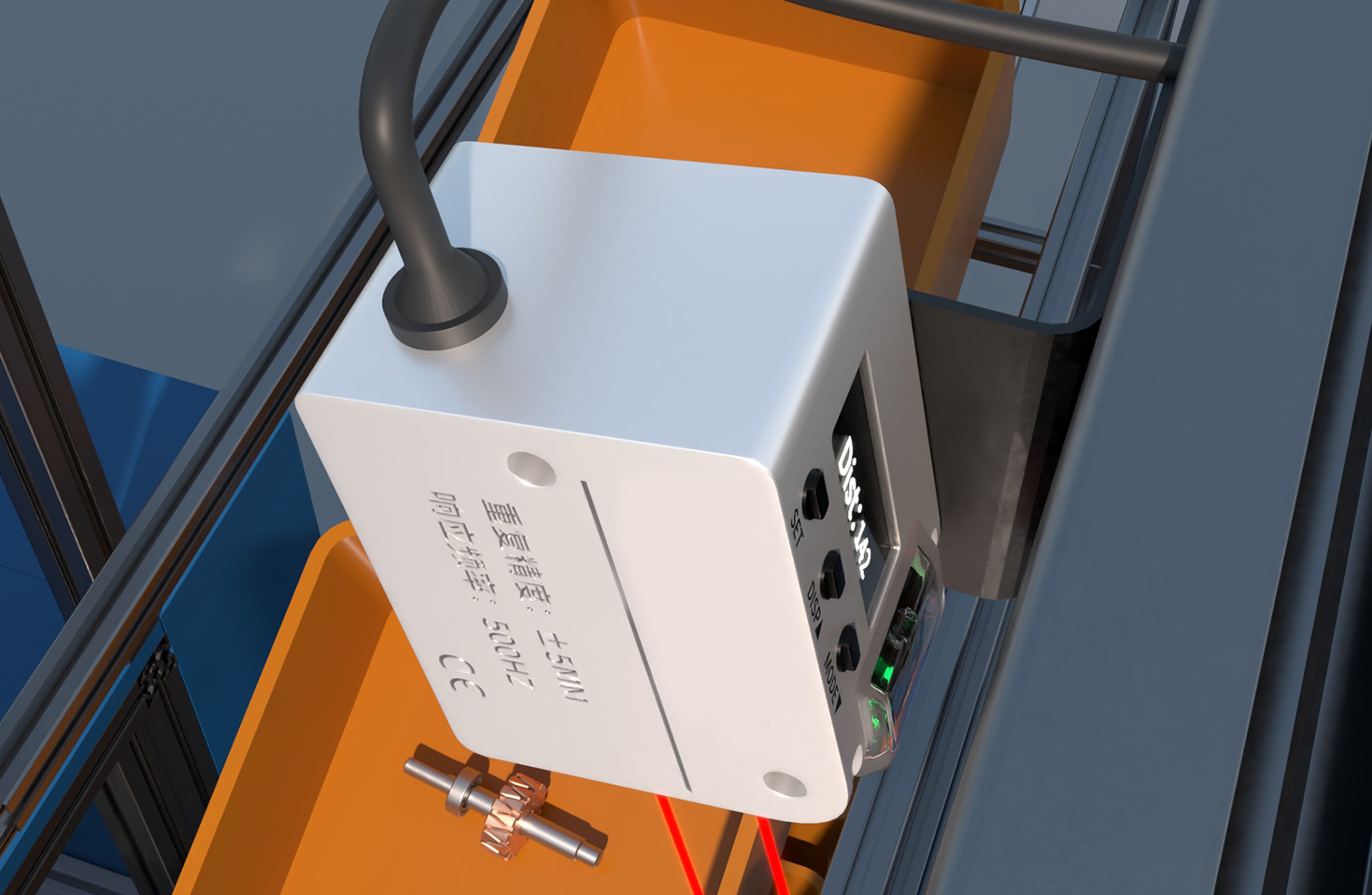
The medium through which the laser beam travels is a major contributor to attenuation. In industrial settings, the presence of particulates like dust, smoke, mist, or powder is a leading cause. These particles scatter the laser light in various directions (Mie scattering), preventing a significant portion of the photons from reaching the target or returning to the receiver. In applications involving liquid or gas analysis, absorption by the medium itself is critical. Different molecules have specific absorption spectra; for instance, water vapor strongly absorbs certain infrared laser wavelengths. Operating a sensor with a wavelength that overlaps with an absorption line of a prevalent atmospheric or process gas will result in severe attenuation.

Optical Interference and Beam Path Issues

Beyond absorption and scattering, other path-related phenomena induce attenuation. Beam divergence is a fundamental characteristic where the laser spot size increases with distance. While designed for, excessive divergence due to a misaligned or damaged collimating lens means the energy is spread over a larger area, reducing the intensity per unit area at the target. For diffuse reflection sensors, this directly weakens the return signal. Specular reflection on highly polished or shiny targets can cause an angle-of-incidence problem. If the incident angle is not perpendicular, the beam may reflect away from the receiver aperture entirely, mimicking complete attenuation. Vibration can cause momentary misalignment or path length variations, leading to intermittent signal dropout. Thermal gradients in the environment can cause beam wander or distortion due to refractive index changes in the air, effectively bending the beam off its intended path.
Mitigation and Maintenance Strategies
Proactive measures can minimize attenuation. Regular maintenance, including cleaning optical surfaces with appropriate materials and procedures, is the simplest yet most effective practice. Ensuring the sensor is specified correctly for the environment—selecting a wavelength less susceptible to absorption by present gases or using a polarized lens for reflective targets—is a design-stage solution. Implementing protective measures such as air knives or purged enclosures can keep optical windows clear of contaminants. Periodic calibration and performance verification against a known standard can help identify gradual attenuation trends before they impact process quality. For critical applications, sensors with built-in power monitoring can provide early warnings of laser diode degradation.
In conclusion, laser sensor attenuation is a multifaceted issue stemming from component aging, environmental interactions, and optical path challenges. It is not a question of *if* but *when* attenuation will occur. A deep understanding of these mechanisms empowers engineers to select the right sensor technology, design robust installations, and implement effective maintenance schedules, thereby maximizing sensor lifespan and ensuring the continued accuracy and reliability of automated systems. Recognizing the signs of attenuation early is key to preventing unscheduled downtime and maintaining process integrity.