In the realm of industrial automation and precision measurement, German line laser sensors stand as a paragon of engineering excellence. These sophisticated devices, renowned for their meticulous design and robust performance, are integral to a multitude of applications, from quality control on assembly lines to complex 3D scanning and robotic guidance. The core technology hinges on projecting a highly focused, straight laser line onto a target surface. Any variation in the surface profile—be it height, depth, or contour—causes a distortion in the reflected line. A high-resolution CMOS or CCD camera, precisely calibrated and aligned, captures this distorted line. Advanced onboard processors then analyze the image using triangulation algorithms, converting the minute deviations into precise, quantitative distance or profile data with micron-level accuracy.
The superiority of German-engineered line laser sensors is deeply rooted in a tradition of precision manufacturing and rigorous quality standards. Key manufacturers like Micro-Epsilon, Sick, and Baumer have set industry benchmarks. Their sensors are characterized by exceptional stability, minimal thermal drift, and high resistance to ambient light interference, ensuring reliable operation even in challenging industrial environments. For instance, in automotive manufacturing, these sensors perform critical tasks such as weld seam inspection, gap and flush measurement between body panels, and tire profile analysis. In electronics, they verify component placement on PCBs and measure solder paste volume. The logistics sector utilizes them for parcel dimensioning and pallet profiling, while the metals industry relies on them for thickness gauging and surface defect detection.
A significant advantage lies in their non-contact measurement capability. This eliminates any risk of damaging delicate surfaces and allows for high-speed inspection, which is crucial for modern, fast-paced production lines. Modern German line lasers often integrate smart features like integrated Ethernet interfaces (e.g., PROFINET, EtherNet/IP), intuitive configuration software, and programmable logic for real-time decision-making. This facilitates seamless integration into Industry 4.0 and IoT frameworks, enabling predictive maintenance and data-driven process optimization.
When selecting a line laser sensor, engineers must consider several parameters: measurement range, resolution, laser line length, scanning frequency (or profile rate), and the required interface. Environmental factors such as exposure to dust, coolant, or vibrations also dictate the need for specific housing ratings (e.g., IP67). German manufacturers typically offer extensive product portfolios with customizable options to meet these diverse needs. The initial investment is often justified by the long-term ROI through reduced waste, improved product quality, and minimized downtime.
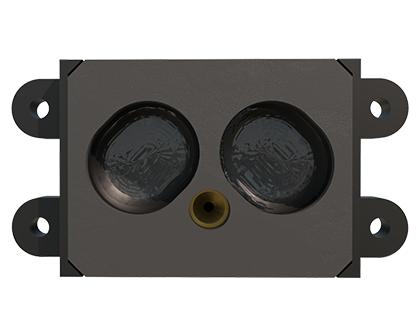
Looking ahead, the evolution continues towards even higher speeds, greater accuracy, and enhanced data fusion capabilities. The integration of AI for direct image analysis on the sensor edge is an emerging trend, promising smarter, more autonomous inspection systems. In conclusion, German line laser sensors embody a critical convergence of optical precision, mechanical robustness, and digital intelligence. They are not merely measurement tools but foundational enablers of automation, quality assurance, and efficiency, solidifying Germany's leadership in high-end industrial sensor technology and driving innovation across the global manufacturing landscape.
