Proximity sensors are integral components in modern electrical and automation systems, enabling non-contact detection of objects within a defined range. Their performance directly impacts the efficiency, safety, and reliability of applications ranging from industrial machinery to consumer electronics. To evaluate and select the right sensor for a specific task, engineers must thoroughly understand its key performance indicators (KPIs).
One of the primary KPIs is sensing distance, often referred to as the nominal sensing range. This indicates the maximum distance at which the sensor can reliably detect a standard target. It is crucial to consider both the rated distance and the practical operating distance, as environmental factors like temperature, humidity, and target material can influence actual performance. For instance, inductive sensors excel with metallic objects but may have reduced range for non-ferrous metals, while capacitive sensors can detect a wider variety of materials, including liquids and plastics, albeit with different distance specifications.
Repeatability is another critical metric, defined as the sensor's ability to consistently detect an object at the same point under unchanged conditions. High repeatability ensures precision in applications such as robotic assembly or positioning systems, where even minor deviations can lead to errors. Typically expressed as a percentage of the sensing distance, superior sensors offer repeatability within ±1% or better.
Response time, or switching frequency, measures how quickly the sensor can react to the presence or absence of an object. It is usually given in milliseconds (ms) or as a frequency in Hertz (Hz). Fast response times are essential in high-speed automation lines, packaging machinery, or safety systems where delays could cause bottlenecks or hazards. For example, a sensor with a 0.1 ms response time can handle up to 10,000 operations per second, making it suitable for rapid production environments.
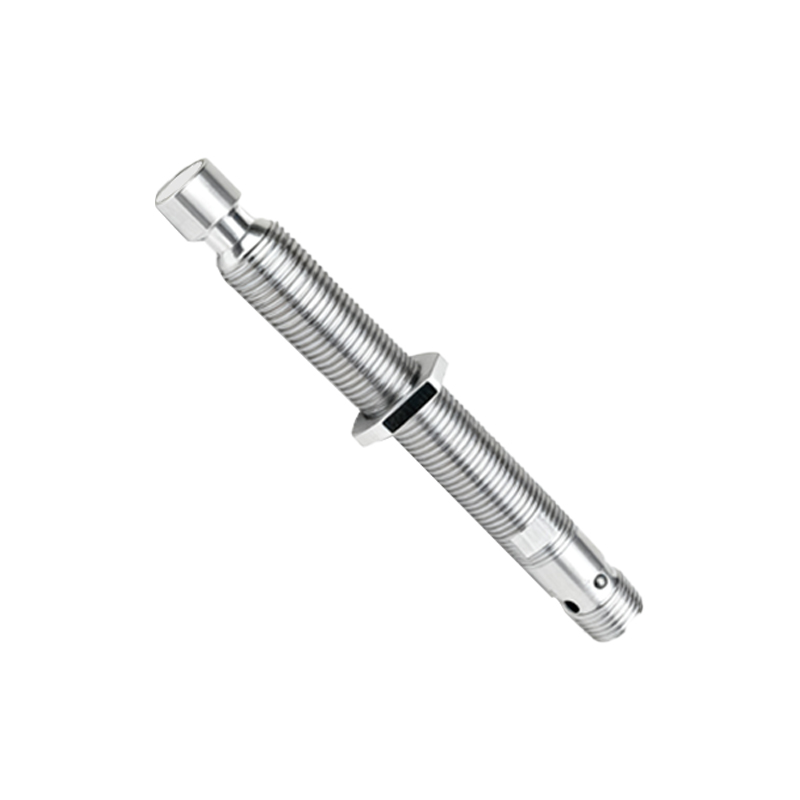
Environmental resistance is a KPI that encompasses the sensor's durability against external conditions. This includes ingress protection (IP) ratings for dust and water resistance, temperature tolerance, and resistance to vibrations, shocks, or chemical exposure. In harsh industrial settings, sensors with high IP ratings (e.g., IP67 or IP69K) and wide operating temperature ranges (e.g., -25°C to 70°C) are preferred to ensure longevity and minimal maintenance.
Electrical characteristics, such as supply voltage, output type (e.g., NPN, PNP, analog, or IO-Link), and current consumption, also define sensor performance. Compatibility with existing control systems is vital; for instance, a 24V DC sensor with a PNP output may be standard in European machinery, while NPN is common in Asian markets. Additionally, low current consumption enhances energy efficiency, which is increasingly important in sustainable design.
Finally, long-term stability and hysteresis are often overlooked but significant indicators. Stability refers to the sensor's ability to maintain its performance over time without drift, while hysteresis is the difference between the switch-on and switch-off points. Minimal hysteresis ensures accurate detection without false triggers, especially in applications involving slow-moving or oscillating objects.
In summary, selecting an ecological proximity sensor—designed with energy-efficient materials and minimal environmental impact—requires balancing these KPIs against application needs. By analyzing sensing distance, repeatability, response time, environmental resistance, electrical specs, and stability, engineers can optimize system performance while contributing to greener industrial practices. As technology advances, smart sensors with self-diagnostics and connectivity features are setting new benchmarks, making KPI understanding more dynamic than ever.