In the realm of industrial automation and control systems, proximity switches stand as fundamental components for non-contact detection. Among the various configurations, the three-wire proximity switch, often referred to in industry parlance, is a cornerstone of modern sensing technology. This article delves into the operational principles, wiring methodologies, and critical application considerations for these ubiquitous sensors, providing a detailed technical overview for electrical engineers and industry professionals.
At its core, a proximity switch is a sensor capable of detecting the presence or absence of an object without physical contact. It achieves this through the generation of an electromagnetic field or beam of radiation. The three-wire variant is distinguished by its requirement for three distinct electrical connections: a positive supply voltage (typically labeled V+ or Brown wire), a negative or ground connection (0V or Blue wire), and a switched output signal (often Black or White wire). This configuration is a significant evolution from two-wire switches, offering enhanced performance and flexibility.
The operation hinges on an internal oscillator circuit. When a metallic object (the "target") enters the sensor's active field, it induces eddy currents on the object's surface. This causes a change in the oscillation amplitude or frequency within the sensor. A subsequent signal conditioning circuit detects this change and triggers a solid-state switching element—either a PNP (sourcing) or NPN (sinking) transistor—to change state. The output transistor effectively connects the output wire either to the positive supply (PNP) or to the ground (NPN), thereby providing a clear digital signal to a Programmable Logic Controller (PLC), relay, or other control device.
Wiring is a critical aspect. For a PNP (sourcing) sensor, the load (e.g., a PLC input) is connected between the output wire and ground (0V). When activated, the sensor sources current from V+ to the load. Conversely, for an NPN (sinking) sensor, the load is connected between the positive supply and the output wire. When activated, the sensor sinks current from the load to ground. Misidentification of the sensor type (PNP vs. NPN) or incorrect wiring is a common source of system failure. Engineers must meticulously consult the datasheet, as wire color codes, while often standardized (Brown=V+, Blue=0V, Black=Output), can vary by manufacturer.
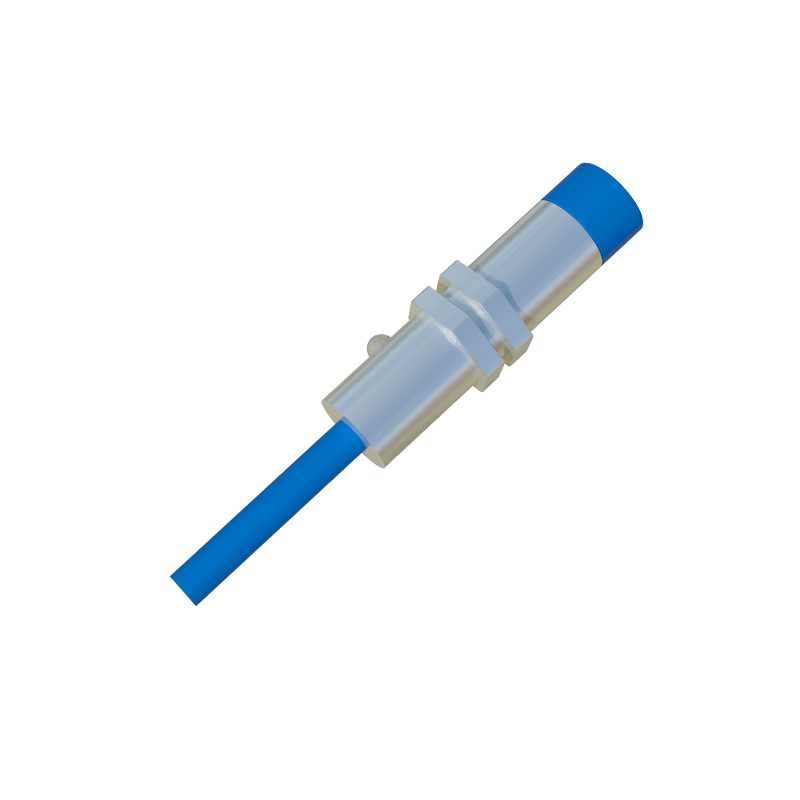
Key technical specifications demand careful evaluation during selection. Sensing distance, or "rated operating distance," is specified for a standard target and can be reduced for non-ferrous metals. The choice between shielded (flush-mountable) and unshielded (non-flush) designs affects the sensor's installation and its immunity to adjacent metallic interference. Output current rating must not be exceeded, and most sensors incorporate short-circuit and overload protection. Furthermore, considerations for operating voltage range (commonly 10-30V DC), switching frequency (response speed), and environmental factors like temperature, humidity, and ingress protection (IP rating) are paramount for reliable operation in harsh industrial environments.
Applications are vast and varied. Three-wire proximity switches are indispensable in conveyor systems for part counting and position verification, in machine tools for tool positioning and end-of-travel limits, in robotic cells for gripper status detection, and in packaging machinery for product presence sensing. Their solid-state design ensures a long operational life with no moving parts to wear out, and their high switching speed enables precise control in fast-paced automation sequences.
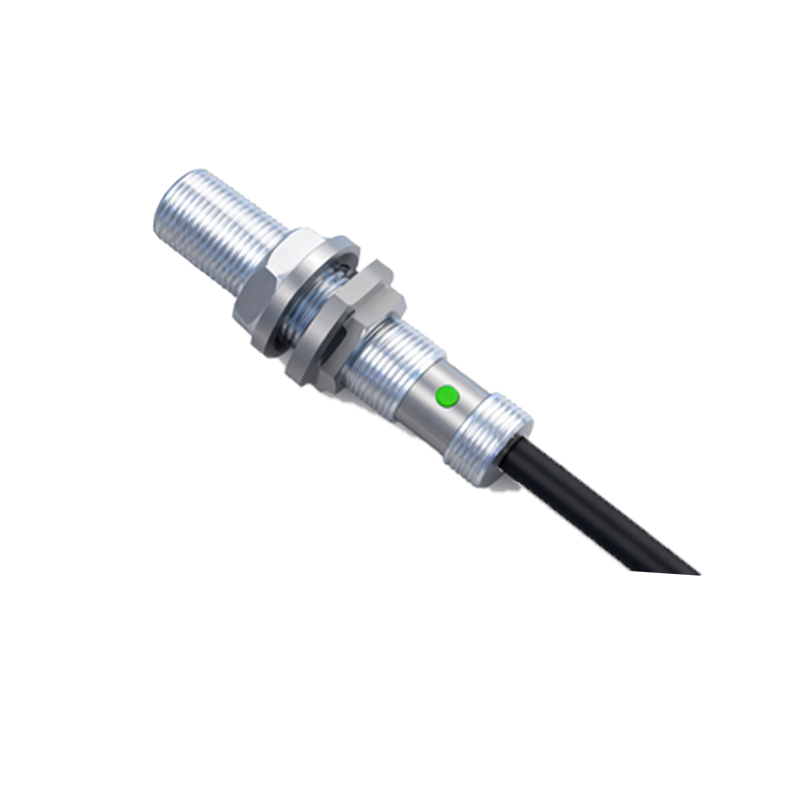
Troubleshooting typically involves a systematic approach. A multimeter is essential. First, verify the supply voltage between the Brown and Blue wires. Next, check the output state. With no target present, the output voltage should be near 0V for a PNP or near supply voltage for an NPN. When a target is introduced, the voltage should swing to the supply voltage (PNP) or to 0V (NPN). Inconsistent behavior may indicate a faulty sensor, incorrect wiring, power supply issues, or electrical noise interference, which may necessitate the use of shielded cables and proper grounding practices.
In conclusion, the three-wire proximity switch is a robust, versatile, and highly reliable component in the electrical engineer's toolkit. A thorough understanding of its operating principle—from oscillator to output transistor—coupled with diligent attention to wiring details and application requirements, is crucial for designing and maintaining efficient and fault-resistant control systems. As automation complexity grows, the foundational role of these sensors remains unchallenged, making mastery of their function and implementation a non-negotiable skill for industry professionals.