In the realm of industrial automation and process control, proximity sensors designed specifically for metal detection represent a cornerstone technology. These non-contact sensing devices are engineered to detect the presence or absence of metallic objects without any physical interaction, thereby ensuring reliability, longevity, and precision in demanding environments. Unlike general-purpose sensors, metal detection proximity sensors are optimized to respond to ferrous and non-ferrous metals, making them indispensable in sectors such as automotive manufacturing, material handling, packaging, and machine tooling.
The fundamental operating principle of these sensors is based on electromagnetic fields. The most common types are inductive proximity sensors. An inductive proximity sensor generates an oscillating electromagnetic field from its sensing face. When a metallic object enters this field, eddy currents are induced on the surface of the metal. This causes a change in the oscillation amplitude or frequency within the sensor's internal circuit. The sensor's electronics detect this change and trigger a solid-state output signal, typically switching a load on or off. The sensing range, known as the nominal sensing distance (Sn), is a critical specification and varies based on the sensor's design and the target metal's properties. For instance, steel is the standard reference material, and sensing distances for metals like aluminum or copper are often reduced due to their different electrical conductivity and magnetic permeability.
Key technical considerations for selecting a metal detection proximity sensor include:
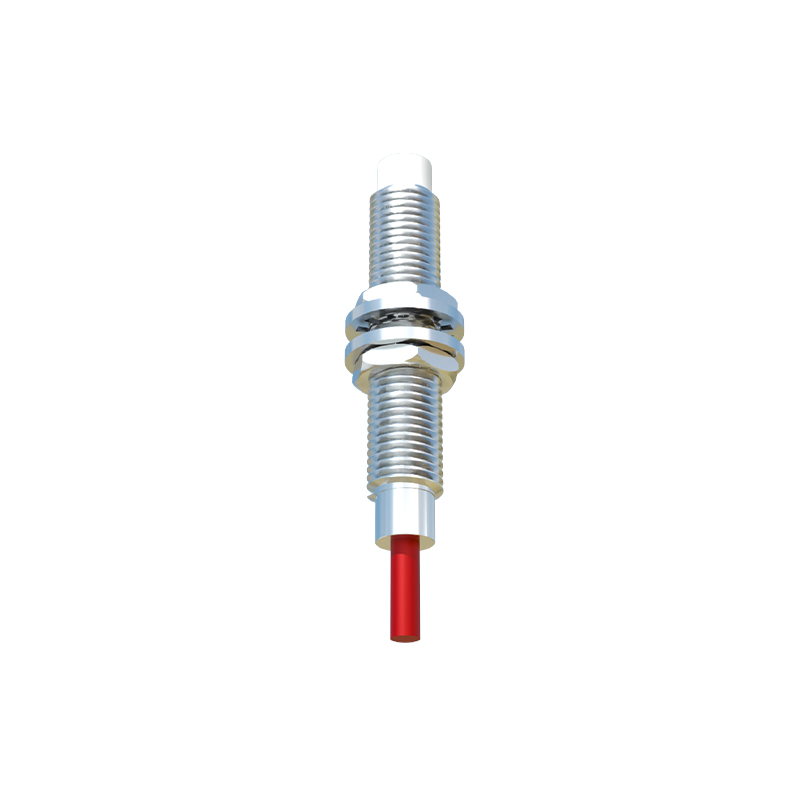
1. Sensing Distance: Engineers must account for the required installation gap and the specific type of metal being detected. Factors like temperature fluctuations can influence this distance.
2. Output Type: Sensors are available with digital outputs (PNP/NPN, NO/NC) or analog outputs (4-20 mA, 0-10V) for distance-proportional measurement. The choice depends on the control system interface.
3. Frequency Response: This denotes how quickly the sensor can detect objects passing by, measured in Hertz (Hz). High-speed applications, like counting small parts on a conveyor, require a high switching frequency.
4. Environmental Robustness: Industrial settings expose sensors to coolant, oil, metal chips, vibration, and extreme temperatures. Enclosure ratings (e.g., IP67, IP69K) and housing materials (often stainless steel or nickel-plated brass) are vital for durability.
5. Shielded vs. Unshielded Design: Shielded sensors can be flush-mounted in metal without affecting their sensing field, while unshielded sensors offer a longer sensing range but require non-metallic surroundings.
Advanced features are continually enhancing sensor capabilities. Temperature compensation circuits maintain stable performance across a wide operating range. Short-circuit and overload protection safeguards connected control systems. Some models incorporate IO-Link communication, enabling digital parameter setting, real-time diagnostics, and process data monitoring directly into Industry 4.0 networks. This facilitates predictive maintenance and reduces machine downtime.
Application examples are vast. In automotive assembly, these sensors verify the presence of engine blocks or brake components. In packaging machinery, they detect metallic foils or confirm the position of metalized lids. Within CNC machining centers, they serve as tool presence detectors or part position verifiers, preventing costly collisions and ensuring machining accuracy. On high-speed bottling lines, sensors detect metal caps to control capping machinery.
Installation and alignment are critical for optimal performance. The sensor must be positioned correctly relative to the target's approach direction. Engineers should follow manufacturer guidelines for mounting distances, especially when multiple sensors are used in close proximity to prevent mutual interference. Regular maintenance, though minimal, involves keeping the sensing face clean from debris and verifying the electrical connections.
In conclusion, metal detection proximity sensors are highly specialized components that combine electromagnetic theory with rugged engineering. Their selection and application require a clear understanding of the target material, environmental conditions, and the specific requirements of the automated task. By providing a reliable, wear-free switching solution, they form an essential link in creating efficient, safe, and intelligent industrial systems, driving productivity and quality control in modern manufacturing landscapes.