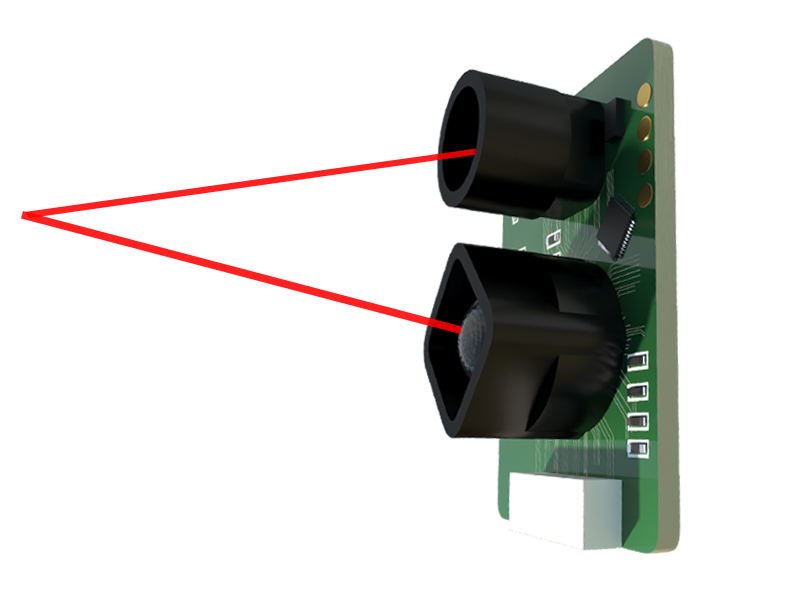
Laser sensors represent a cornerstone of modern industrial automation and precision measurement. Operating on the principle of emitting a focused beam of coherent light, these devices detect the presence, distance, displacement, or profile of a target object by analyzing the properties of the reflected light. The core technology hinges on the interaction between the emitted laser and the target. Common measurement principles include triangulation, time-of-flight (ToF), and laser interferometry, each suited to specific accuracy and range requirements.
The fundamental advantage of laser sensors lies in their exceptional precision, speed, and non-contact nature. Unlike mechanical probes or capacitive sensors, they do not physically touch the measured object, eliminating the risk of damage or wear. This allows for high-speed inspection of delicate, hot, or moving components. The focused beam enables precise measurement of small features and can be used over relatively long distances with minimal divergence.
Several key types of laser sensors dominate the market. Laser distance sensors, often using ToF or phase-shift methods, are ubiquitous for measuring ranges from millimeters to hundreds of meters. Laser displacement sensors, typically based on triangulation, provide micron-level accuracy for measuring height, thickness, or vibration. Laser profile sensors, or line lasers, project a line onto a target and use a camera to capture the deformation of that line, creating a detailed 2D or 3D cross-sectional profile for shape inspection. Furthermore, laser photoelectric sensors are used for simple presence detection, where the breaking or reflection of a beam triggers a switch.
The industrial applications of laser sensors are vast and critical. In manufacturing, they ensure quality control by measuring component dimensions, checking for surface defects, and verifying assembly completeness. Robotics rely on them for precise guidance, object recognition, and collision avoidance. In logistics, they read barcodes, measure parcel dimensions, and manage automated storage systems. The automotive industry uses them for body-in-white gap measurement, paint thickness inspection, and autonomous vehicle LiDAR systems. They are also indispensable in semiconductor fabrication, flat panel display production, and aerospace manufacturing, where tolerances are extremely tight.
Selecting the appropriate laser sensor requires careful consideration of several parameters. The required measurement range and resolution are primary factors. The reflectivity, color, and surface texture of the target material significantly affect performance; a diffuse surface is ideal, while shiny or transparent materials may require specialized sensors with suppressors for secondary reflections. Environmental conditions like ambient light, dust, fog, or temperature swings must be accounted for, often necessitating protective housings or specific laser wavelengths. Finally, the output signal type—analog voltage, digital, or fieldbus communication—must integrate with the existing control system.
Installation and calibration are crucial for optimal performance. Proper alignment of the sensor to the target is essential. Vibration or thermal expansion of the mounting fixture can introduce error. Regular maintenance, primarily keeping the lens clean from dust and oil, ensures long-term reliability and accuracy. Users must also adhere to laser safety classifications (Class 1, 2, or 3R are common for sensors) to protect operators from accidental exposure.
The future of laser sensor technology points toward even greater miniaturization, lower cost, and enhanced intelligence. The integration of advanced algorithms allows sensors to perform complex evaluations internally, reducing the load on central controllers. The development of multi-spectral or hyperspectral imaging lasers could enable material identification alongside dimensional measurement. As Industry 4.0 and smart factories evolve, laser sensors will become more networked, providing not just raw data but actionable insights for predictive maintenance and process optimization.
In conclusion, laser sensors are indispensable tools that provide the eyes for automated systems. Their ability to deliver fast, accurate, and reliable non-contact measurements makes them vital across countless industries, driving efficiency, quality, and innovation. Understanding their operating principles, types, and application considerations is key to leveraging their full potential in solving complex measurement and inspection challenges.