In the landscape of industrial automation and control systems, proximity sensors stand as fundamental components, enabling non-contact detection of objects with precision and reliability. Their ability to sense the presence or absence of a target without physical contact eliminates mechanical wear, enhances operational speed, and ensures longevity in harsh environments. For electrical and automation engineers, a deep understanding of the various proximity sensing technologies is crucial for optimal system design and troubleshooting. This article delves into the core methodologies, operational principles, and practical considerations for the major types of proximity sensors.
The foundational principle behind proximity sensing involves the interaction between a sensor and a target object, typically through electromagnetic fields, light, or sound. The most prevalent technologies in industrial settings are inductive, capacitive, ultrasonic, and photoelectric sensors.
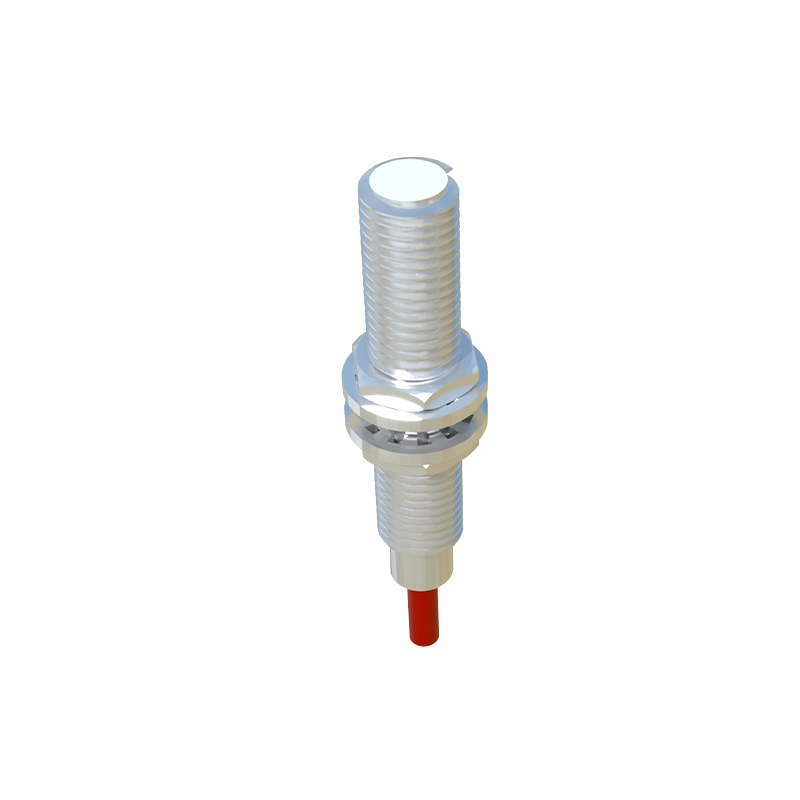
Inductive proximity sensors are the workhorses for detecting metallic objects. They operate on the principle of electromagnetic induction. The sensor contains a coil driven by an oscillator, generating a high-frequency electromagnetic field at its active face. When a conductive metal target enters this field, eddy currents are induced on the target's surface. This causes a load on the oscillator, leading to a change in the oscillation amplitude. An evaluation circuit within the sensor detects this change and triggers a solid-state output switch. Key advantages include high switching frequency, robustness against dirt, dust, and moisture (often rated IP67 or higher), and insensitivity to non-metallic materials. Typical sensing ranges vary from a few millimeters to about 60 millimeters, depending on the sensor size and target material (ferrous metals are detected at greater ranges than non-ferrous). Common applications include position sensing of machine parts, limit switching, and counting metallic objects on conveyor lines.
Capacitive proximity sensors, in contrast, can detect both metallic and non-metallic materials, including liquids, plastics, wood, and granular substances. They function by generating an electrostatic field. The sensor forms one plate of a capacitor, with the target object acting as the other plate. As the target approaches, the capacitance between the sensor and the target increases. An internal circuit monitors this capacitance change. Once it exceeds a predefined threshold, the output state changes. These sensors are ideal for level detection in tanks (liquid or solid), material handling of non-metals, and presence detection through thin non-metallic walls. However, they can be susceptible to environmental factors like humidity and temperature, which may affect the dielectric constant and require careful installation and tuning.
Ultrasonic sensors utilize sound waves beyond the human hearing range (typically 20 kHz to several hundred kHz). They emit short bursts of ultrasonic pulses and measure the time taken for the echo to return from a target object. By calculating the time-of-flight, the sensor can determine both presence and distance, making them excellent for precise ranging and level measurement. They are largely material-independent and perform well in challenging environments with dust, smoke, or light interference. Drawbacks include a slower response time compared to inductive sensors and potential inaccuracies due to temperature variations affecting the speed of sound or from soft, sound-absorbing targets.
Photoelectric sensors operate on the principle of light beam transmission and reception. They consist of an emitter (usually an LED or laser diode) and a receiver. Three primary modes exist: through-beam, retro-reflective, and diffuse (proximity) mode. In the diffuse mode, relevant for proximity sensing, the emitter and receiver are housed in the same unit. The sensor detects light reflected directly from the target itself. The detection range depends on the target's size, color, and surface texture (light-colored, reflective surfaces are detected at longer ranges). Photoelectric sensors offer very long sensing ranges and can detect virtually any material. They are, however, the most susceptible to environmental interference from ambient light, dirt on the lens, or highly transparent targets.
Selecting the appropriate proximity sensor requires a systematic evaluation of several application parameters. First, identify the target material: metal mandates inductive, while non-metals point toward capacitive, ultrasonic, or photoelectric. Second, consider the required sensing distance and ensure a 10-20% safety margin from the sensor's nominal range. Third, assess the environmental conditions: presence of oil, coolant, washdown procedures (requiring high IP ratings), temperature extremes, and electrical noise. Fourth, define the output requirements: digital (PNP/NPN) or analog (4-20mA, 0-10V), and the required switching frequency. Finally, physical constraints like sensor size, mounting style (flush or non-flush for inductive), and connection type (cable or connector) are critical.
Installation and wiring are equally important. Maintain adequate clearance between sensors to prevent mutual interference, especially for inductive types. Ensure stable power supply voltages and proper shielding of cables in electrically noisy environments. Regular maintenance, primarily lens cleaning for photoelectric sensors and checking for physical damage or buildup, ensures