Proximity sensors are pivotal components in modern industrial automation, providing non-contact detection of objects within their operational range. These sensors, which include inductive, capacitive, and photoelectric types, generate output signals that often require amplification or switching to control higher-power loads. A common and efficient method to achieve this is by driving MOSFETs (Metal-Oxide-Semiconductor Field-Effect Transistors) with proximity sensor outputs. This approach leverages the MOSFET's fast switching capabilities, high input impedance, and low power consumption, making it ideal for interfacing with sensor circuits in harsh industrial environments.
The fundamental principle involves using the proximity sensor's output to gate the MOSFET. Typically, proximity sensors produce a low-current signal (e.g., NPN or PNP transistor outputs) that may not directly drive inductive loads like motors or solenoids. By integrating a MOSFET, the sensor signal can switch higher currents or voltages, enabling control of industrial actuators, relays, or lighting systems. For instance, an inductive proximity sensor detecting metal parts on a conveyor belt can trigger a MOSFET to activate a pneumatic cylinder or stop a motor, enhancing safety and precision in manufacturing lines.
Circuit design considerations are critical for reliable operation. When connecting a proximity sensor to a MOSFET, engineers must account for voltage levels, current requirements, and switching speed. Most industrial proximity sensors operate at 12-24V DC, while MOSFETs may need gate-source voltages within specific thresholds (e.g., 5-20V) for optimal performance. A pull-up or pull-down resistor is often used to ensure the MOSFET remains off when the sensor is idle, preventing false triggering. Additionally, protection components like flyback diodes or snubber circuits are essential when driving inductive loads to suppress voltage spikes that could damage the MOSFET or sensor.
In practice, selecting the right MOSFET involves evaluating parameters such as drain-source voltage (Vds), continuous drain current (Id), and gate charge. For example, in a high-speed packaging machine using capacitive proximity sensors to detect non-metallic materials, a logic-level MOSFET with low gate charge can switch quickly, reducing energy loss and heat generation. Thermal management, through heatsinks or proper PCB layout, is also vital to maintain longevity in continuous operation.
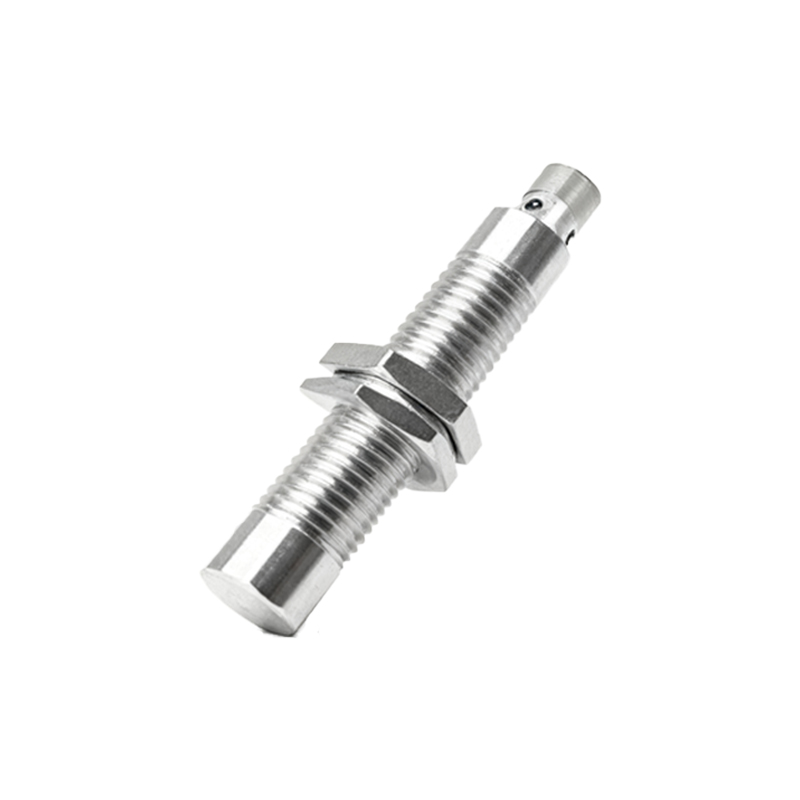
Moreover, advancements in smart sensors and integrated driver ICs have simplified this interface. Some modern proximity sensors come with built-in MOSFET drivers or open-collector outputs that directly connect to MOSFET gates, minimizing external components. This integration improves system reliability and reduces design complexity, especially in space-constrained applications like robotic arms or automated guided vehicles.
Overall, driving MOSFETs with proximity sensors is a robust solution for industrial control systems. It enhances the sensor's capability to handle power-intensive tasks while maintaining efficiency and durability. As Industry 4.0 evolves, this combination supports real-time monitoring and automation, contributing to smarter factories with reduced downtime and improved productivity. Engineers should prioritize thorough testing under operational conditions to ensure compatibility and safety, adhering to standards such as IEC 60947 for industrial switching devices.