In the realm of automation and control, two technologies stand out for their non-contact operation and widespread utility: proximity sensors and infrared (IR) remote control systems. While often perceived as distinct, they share fundamental principles rooted in light-based detection and communication. This article delves into their operational mechanics, key applications, and the growing trend of their integration within sophisticated electronic ecosystems.
Proximity sensors, specifically photoelectric or optical proximity sensors, function by emitting a beam of light—typically infrared, visible red, or laser—and detecting changes in the received light signal. The most common types are through-beam, retro-reflective, and diffuse-reflective sensors. Through-beam sensors consist of separate emitter and receiver units; an object is detected when it interrupts the light beam. Retro-reflective sensors use a single unit housing both emitter and receiver, relying on a reflector to bounce the light back; detection occurs when the beam is blocked. Diffuse-reflective sensors, often simply called proximity sensors, detect an object by measuring the light reflected directly from its surface. The core advantage lies in their ability to detect objects without physical contact, making them ideal for counting, positioning, and presence detection in harsh or clean environments where contamination is a concern. Industries such as packaging, material handling, automotive assembly, and food processing heavily rely on these robust and reliable devices.
Infrared remote control, a ubiquitous technology in consumer electronics, operates on a similar principle of modulated light transmission. An IR remote contains an IR Light Emitting Diode (LED) that emits pulses of infrared light in a specific, coded pattern corresponding to a command (e.g., volume up, channel change). This modulation, often using protocols like NEC, RC-5, or Sony SIRC, prevents interference from ambient IR light. The receiving device, equipped with an IR photodiode or sensor module, decodes this pulsed signal and executes the command. While its range is typically limited to a line-of-sight range of about 10 meters and can be susceptible to interference from strong light sources, its simplicity, low cost, and standardization have cemented its role in controlling televisions, air conditioners, media players, and smart home devices.
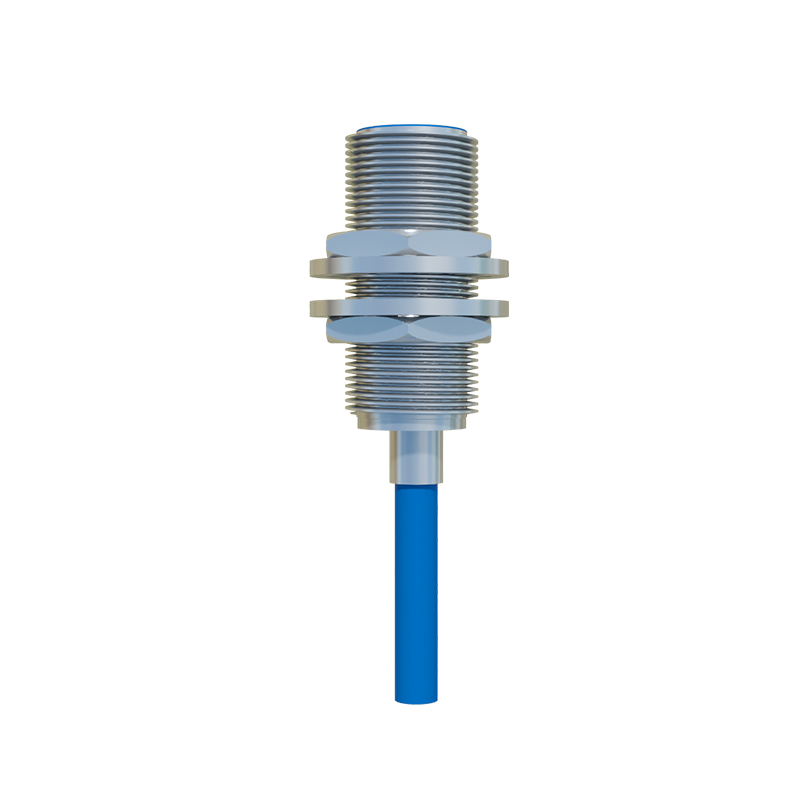
The convergence of these technologies is increasingly evident in modern design. Consider a smart television: it uses an IR receiver for standard remote functions. However, it may also incorporate a simple IR proximity sensor to detect when a user is near, enabling features like turning on the screen or displaying a menu automatically. This enhances user experience through intuitive interaction. In more advanced applications, such as robotics or automated guided vehicles (AGVs), arrays of IR proximity sensors are used for obstacle detection and navigation, while IR communication might be used for short-range data transfer or receiving high-level commands from a central controller.
From an engineering perspective, selecting between or integrating these technologies involves careful consideration of several parameters. For sensing, key factors include sensing distance, response time, object characteristics (color, material, surface finish), and environmental conditions (ambient light, dust, fog). For IR communication, factors like data rate, protocol, immunity to noise, and power consumption are paramount. Modern ICs and modules have simplified implementation. Microcontrollers can easily generate modulated IR signals using dedicated libraries and drive an IR LED via a transistor. On the receiver end, integrated IR receiver modules (like the VS1838B) output demodulated digital signals directly to a microcontroller, simplifying decoding.

The future evolution of these light-based technologies is intertwined with broader trends. While Bluetooth and Wi-Fi are supplanting IR for complex remote control applications due to their bidirectional capability and non-line-of-sight operation, IR remains dominant for simple, low-power, point-to-point commands. Proximity sensing, however, is expanding beyond simple detection. Time-of-Flight (ToF) sensors, which measure the round-trip time of a light pulse, provide precise distance measurement, enabling gesture recognition and advanced object profiling. Furthermore, the integration of VCSEL (Vertical-Cavity Surface-Emitting Laser) light sources is enhancing the performance, reliability, and miniaturization of both proximity and sensing systems.
In conclusion, proximity sensors and infrared remote control represent foundational pillars of optoelectronics. Their principle of converting light signals into actionable data continues to drive innovation across industrial and consumer domains. Understanding their distinct operational paradigms, application landscapes, and synergistic potential is crucial for engineers designing the next generation of interactive and intelligent systems. As the Internet of Things (IoT) proliferates, these technologies, often in enhanced forms, will continue to serve as critical interfaces between the physical and digital worlds.