In the realm of industrial automation, the seamless interaction between sensing technology and actuation components forms the backbone of efficient and reliable systems. Among these critical pairings, the relationship between proximity sensors and pneumatic or hydraulic cylinders stands out as a particularly fundamental and symbiotic one. This article delves into the technical interplay, application principles, and best practices governing their integration.
At its core, a cylinder is a linear actuator that converts fluid power—typically compressed air or hydraulic oil—into a controlled mechanical force and motion. It performs the essential "work" in countless machines, from clamping and lifting to pressing and positioning. However, a cylinder operating in isolation is essentially blind. It can extend and retract based on valve commands, but without feedback on its actual position or state, precise control and system intelligence are impossible. This is where the proximity sensor becomes indispensable.
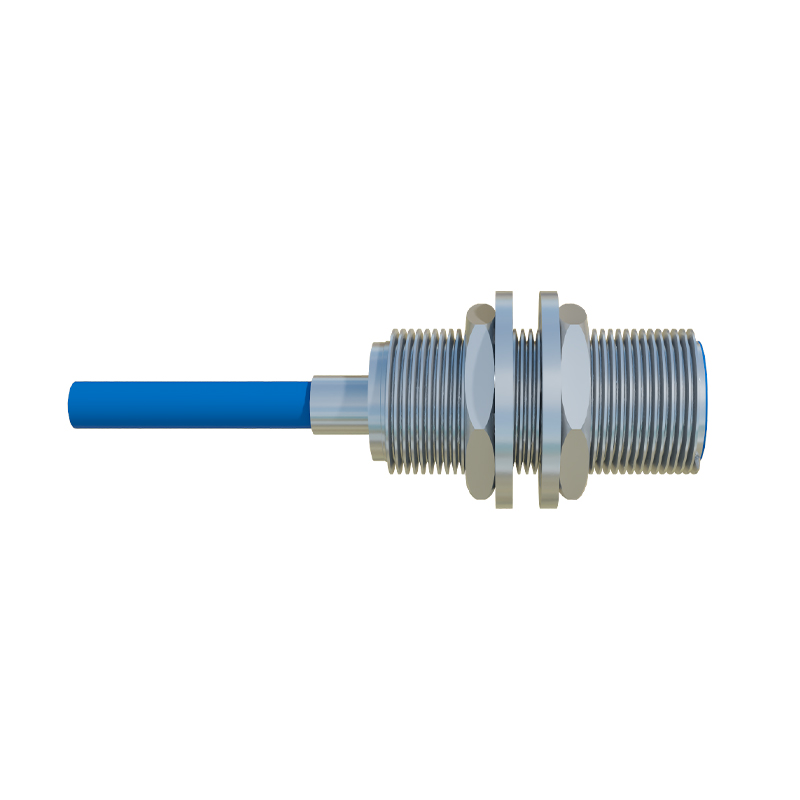
A proximity sensor is a non-contact electronic device designed to detect the presence or absence of a target object within its sensing range without physical contact. In the context of cylinders, the target is typically the piston itself or a metallic actuator ring attached to it. Inductive proximity sensors are overwhelmingly the standard choice for detecting cylinder piston position due to their robustness, reliability, and specific suitability for sensing ferrous metals (like the steel piston) even through a non-metallic cylinder barrel.
The operational synergy is elegantly straightforward. One or more proximity sensors are mounted externally on the cylinder body at predetermined points along its stroke length. As the piston moves, its metallic mass enters the electromagnetic field generated by the sensor. When the piston reaches the sensor's detection zone, it causes a change in the sensor's oscillation amplitude or field characteristics. This change triggers the sensor's solid-state output switch (PNP or NMP, sinking or sourcing), sending a discrete electrical signal to the programmable logic controller (PLC). This signal confirms a critical event: "piston has reached home position" or "piston has completed its full stroke."
This feedback loop unlocks a higher order of machine control and diagnostics. Firstly, it enables precise positional control. Instead of relying solely on timers to estimate when a cylinder stroke is complete—a method highly susceptible to variations in air pressure, load, or friction—the system uses the positive confirmation from the sensor. This ensures consistent cycle times and accurate end-of-stroke positioning, which is vital for processes like insertion, assembly, or welding.
Secondly, it provides critical diagnostic and safety information. The sensor signal acts as a verification that an intended action has indeed occurred. If a cylinder is commanded to extend but the "extended" sensor does not activate within a predefined time window, the PLC can flag a fault. This could indicate a mechanical jam, a loss of air pressure, a failed valve, or a detached piston rod. Such immediate fault detection prevents machine damage, improves maintenance response times, and enhances overall equipment safety.
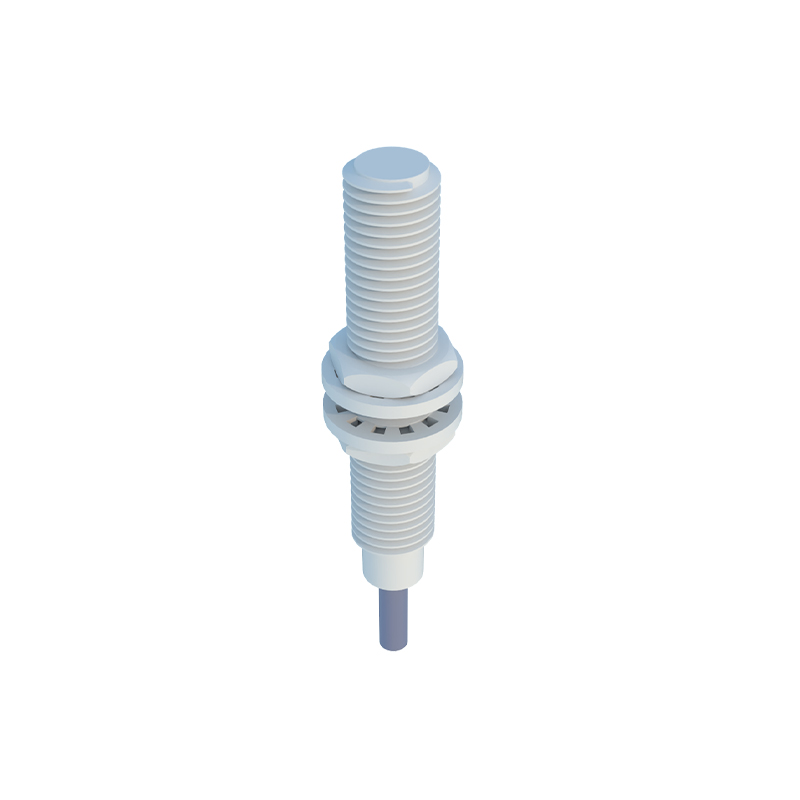
The integration follows key engineering considerations. Sensor selection must account for the cylinder's material (often aluminum barrel with steel end caps), the required sensing distance (ensuring reliable detection despite mounting tolerances), and the operating environment (resistance to coolant, chips, or vibration). Cylinders are frequently manufactured with built-in sensor slots or grooves, standardizing mounting and protecting the sensors. The emergence of "sensor-ready" cylinders with pre-machined mounts and even embedded sensor wiring conduits has significantly simplified installation and improved reliability.
Furthermore, the strategic placement of multiple sensors along a cylinder's stroke enables intermediate position detection. This allows for complex sequences where a cylinder might need to stop at several points or perform different actions based on its precise location, moving beyond simple end-to-end motion.
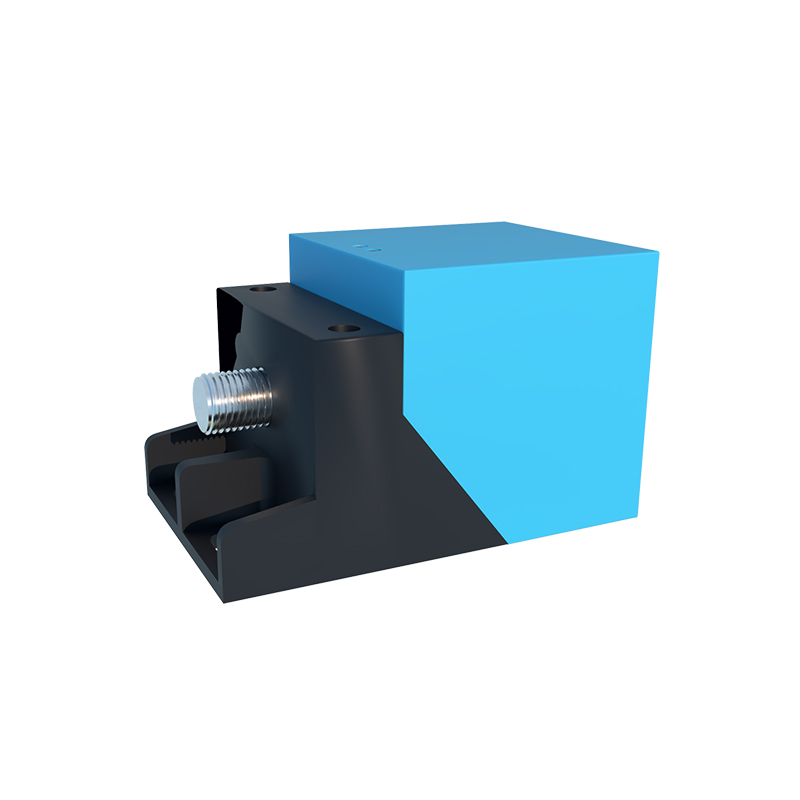
In advanced pneumatic systems, this sensor feedback is integral to closed-loop control strategies, although it's important to distinguish it from servo control. While not providing continuous analog position feedback like a linear transducer, the discrete signals from multiple proximity sensors offer a highly reliable and cost-effective method for state-based control and sequencing.
In conclusion, the relationship between the proximity sensor and the cylinder is not merely one of accessory to actuator; it is a partnership that transforms brute linear force into intelligent, controllable, and verifiable motion. The cylinder provides the muscle, while the proximity sensor provides the sensory perception. This combination is a cornerstone of modern automated machinery, ensuring that movements are not just commanded, but confirmed—a critical distinction that underpins efficiency, quality, and safety in automated industrial processes worldwide. Their continued co-evolution, with smarter sensors and more integrated cylinder designs, promises even greater levels of precision and diagnostic capability for the factories of the future.