In the realm of industrial automation and machine design, proximity sensors are indispensable components for non-contact object detection. A frequent and critical question posed by engineers and system integrators is: Can standard inductive proximity sensors reliably detect aluminum? The answer is not a simple yes or no, but rather a nuanced exploration of sensor technology, material properties, and application parameters.
Inductive proximity sensors operate on the principle of electromagnetic induction. The sensor generates an oscillating electromagnetic field from its active face. When a conductive metal object enters this field, eddy currents are induced on the object's surface. These eddy currents create a secondary magnetic field that opposes the sensor's original field, causing a change in the oscillation amplitude. This change is detected by the sensor's circuitry, triggering a switching output. The key factor here is the target material's ability to conduct electricity and allow for the generation of eddy currents. Aluminum, being an excellent conductor, certainly qualifies.
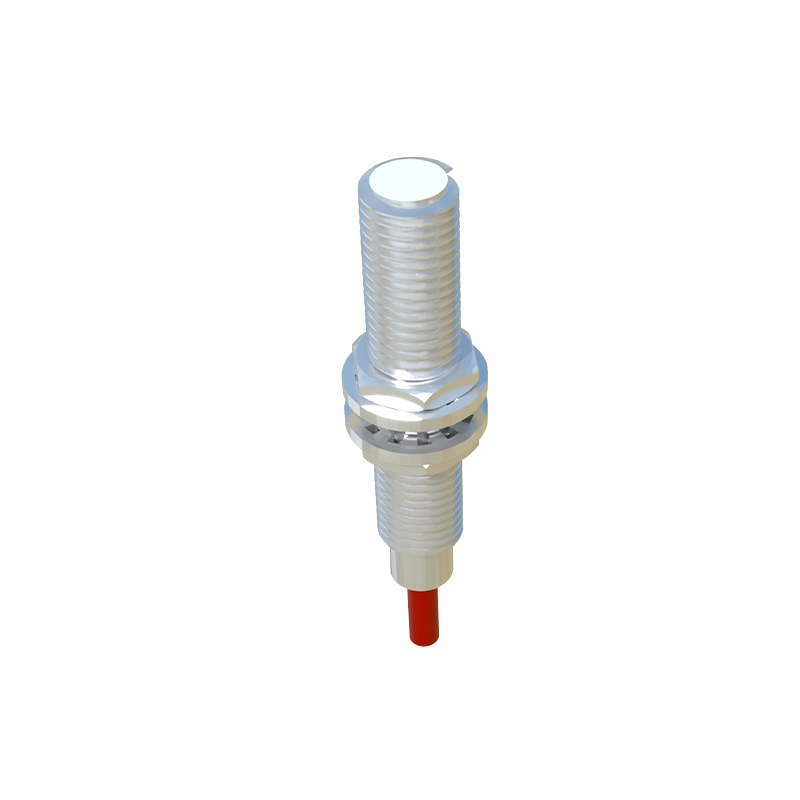
However, the detection capability for aluminum is significantly different from that for ferrous metals like steel or iron. For ferrous metals, both eddy currents and magnetic permeability contribute to the sensing effect. Magnetic permeability refers to a material's ability to support the formation of a magnetic field within itself. Steel has high permeability, which greatly amplifies the sensor's effective sensing range. Aluminum, in contrast, is non-ferrous and has a permeability of 1 (effectively the same as air or vacuum). It is detected solely through its conductivity. Consequently, the nominal sensing distance (Sn) specified for a sensor, typically calibrated for mild steel, is drastically reduced for aluminum.
The reduction factor is substantial. For a standard inductive proximity sensor, the effective sensing range for aluminum is typically only 30% to 50% of its rated range for steel. For instance, a sensor with an 8mm sensing distance for steel may only detect a solid aluminum target at a distance of 2.5mm to 4mm. This reduction must be meticulously accounted for during system design to avoid detection failures.
Several aluminum-specific factors further influence performance. The alloy type matters; pure aluminum (1000 series) has higher conductivity than many common alloys like 6061, which can slightly reduce the sensing distance. The target size must also be considered. For reliable detection, the aluminum target should meet or exceed the sensor's standard "standard target" size, usually a square of Fe360 steel with sides equal to the sensor's diameter or 3x the rated sensing distance. A smaller aluminum piece may not be detected at all at the reduced range. Surface condition, such as oxidation or anodizing, can also create a non-conductive barrier. While a thin, natural oxide layer may be penetrated by the electromagnetic field, a thick, hard-anodized coating can completely inhibit detection.
So, how can engineers ensure reliable aluminum detection? First, selection is paramount. Choose a sensor specifically designed or rated for non-ferrous metals. Some manufacturers offer "factor 1" sensors for aluminum, meaning their sensing distance for aluminum is approximately equal to that for steel, though often with a reduced overall range. Second, always derate the sensing distance. Consult the sensor's datasheet for the exact correction factor (often denoted as "Sr" for aluminum) and apply it rigorously. Third, perform real-world testing with the exact aluminum alloy, size, and surface finish to be used in the application. Never rely solely on theoretical calculations. Fourth, consider alternative technologies. Capacitive proximity sensors can detect both metallic and non-metallic materials and are less sensitive to the type of metal, though they can be influenced by moisture and other environmental factors. Ultrasonic sensors offer another robust, material-independent solution for distance-based detection.
In conclusion, standard inductive proximity sensors can detect aluminum, but with a significantly reduced and less predictable sensing range compared to steel. Successful implementation demands careful sensor selection, rigorous application of correction factors, and thorough testing. For critical applications where reliability is paramount, opting for a sensor explicitly designed for non-ferrous metals or exploring capacitive/ultrasonic alternatives is often the most prudent engineering decision. Understanding these principles is essential for designing robust, fail-safe automated systems that handle a diverse range of materials.