In the realm of industrial automation and control systems, inductive proximity sensors stand as a cornerstone technology for non-contact object detection. Among the various configurations available, the three-wire inductive proximity sensor is particularly prevalent due to its balance of performance, reliability, and ease of integration. This article delves into the operational principles, standard wiring configurations, key application areas, and critical selection criteria for these essential components.
Fundamentally, an inductive proximity sensor operates on the principle of electromagnetic induction. The sensor generates a high-frequency oscillating electromagnetic field via a coil wound around a ferrite core within its sensing face. When a metallic object enters this active field, eddy currents are induced on the surface of the target. These eddy currents draw energy from the oscillator circuit, resulting in a measurable amplitude reduction or a frequency shift of the oscillation. The sensor's internal circuitry detects this change and triggers a switching action in its solid-state output. It is crucial to note that these sensors are designed primarily for the detection of ferrous and non-ferrous metals, with their effective sensing range and performance characteristics varying based on the target material's properties, such as conductivity and permeability.
The "three-wire" designation refers to the most common DC-powered wiring scheme, which provides a robust and straightforward connection to programmable logic controllers (PLCs) and other control devices. The three wires are typically color-coded: brown for the positive supply voltage (V+), blue for the common negative or ground (0V), and black for the switched output signal. There are two primary output types: NPN (sinking) and PNP (sourcing). An NPN sensor switches the negative (0V) line to the load, meaning the output acts as a sink to ground. Conversely, a PNP sensor switches the positive voltage line to the load, acting as a source of current. The choice between NPN and PNP is largely dictated by the input circuit configuration of the controller being used. A key advantage of the three-wire design over two-wire versions is its ability to provide a discrete, low-leakage current signal, which minimizes the risk of false triggering and is compatible with a wider range of input modules.
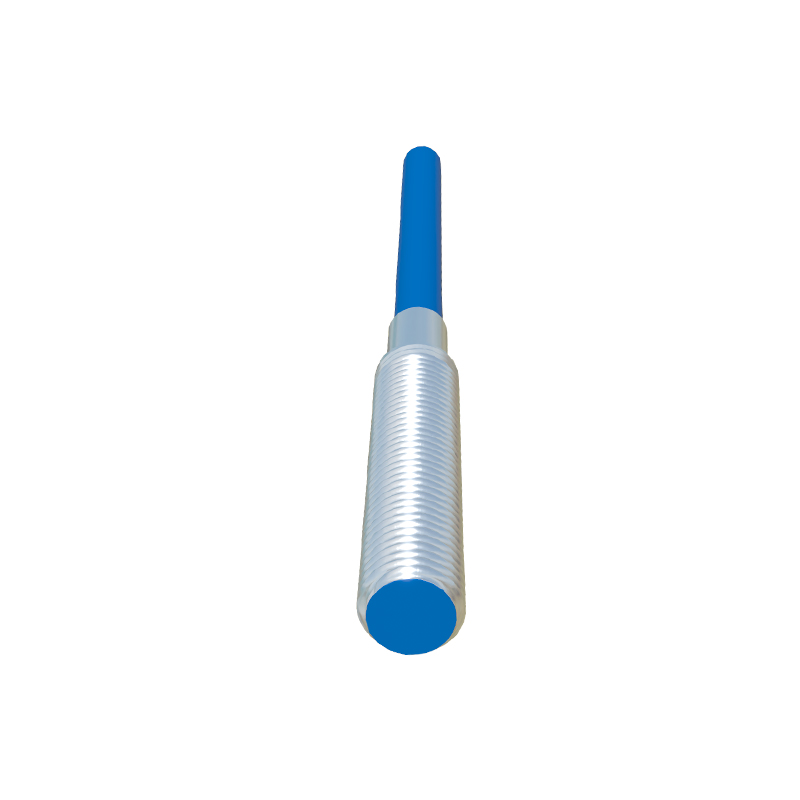
Three-wire inductive sensors are ubiquitous in manufacturing and process industries. Common applications include position verification of machine parts, end-of-travel limit sensing, counting metallic objects on conveyors, detecting the presence of tools in CNC machines, and monitoring the position of cylinders via built-in piston magnets. Their robust, often fully encapsulated metal or polymer housings make them ideal for harsh environments, offering resistance to dust, moisture, oils, and mechanical impact. Many models feature built-in protection against short-circuits, reverse polarity, and electrical transients, ensuring long-term operational stability.
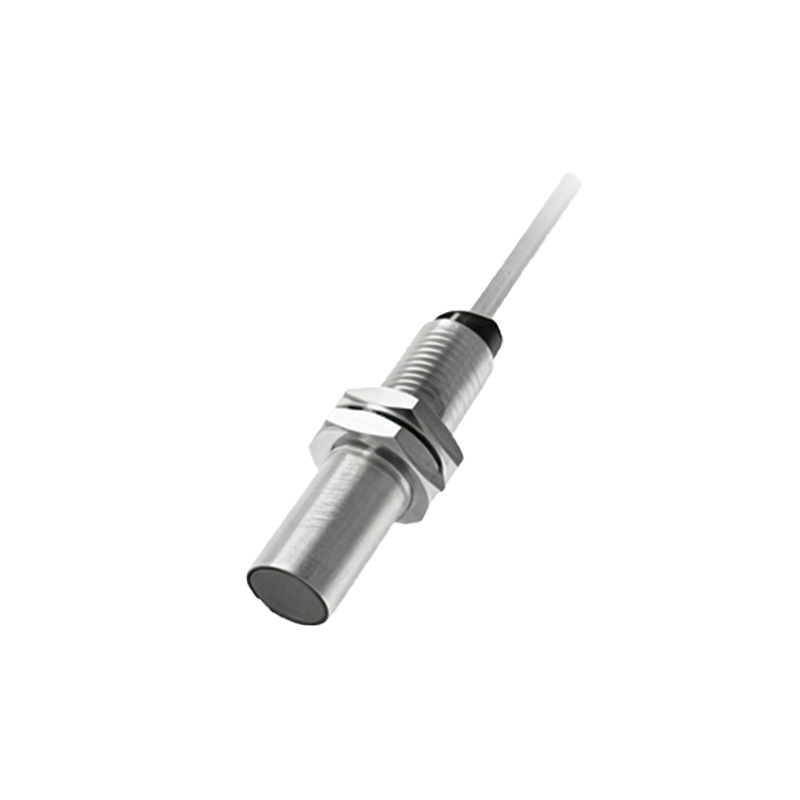
Selecting the appropriate three-wire inductive sensor requires careful consideration of several parameters. First, the nominal sensing distance, or Sn, must be chosen based on the required application clearance. It is standard practice to derate this distance for reliability, typically using 70-80% of Sn. The target material also significantly influences performance; sensors are often rated for a "factor of 1" for mild steel, with correction factors (less than 1) applied for metals like aluminum, brass, or stainless steel, which reduce the effective range. The housing style—tubular (e.g., M8, M12, M18, M30 threaded barrels) or rectangular block—must suit the mechanical mounting constraints. Other vital specifications include the supply voltage range (commonly 10-30V DC), output current capacity, switching frequency (for high-speed applications), and environmental protection ratings such as IP67 or IP69K. For demanding applications, special variants are available, including weld-field immune models for robotic welding, factor-1 models for all metals, and analog output versions for distance-proportional measurement.
In conclusion, the three-wire inductive proximity sensor is a versatile and indispensable workhorse in automation. Its non-contact operation ensures wear-free detection, while its simple wiring and rugged construction deliver dependable service in challenging conditions. A thorough understanding of its operating principles, output configurations, and performance specifications enables engineers and technicians to deploy these sensors effectively, enhancing system reliability, safety, and efficiency across countless industrial applications. Proper selection and installation are the final steps in leveraging this technology to create more responsive and intelligent automated systems.