In the demanding environments of modern industrial automation, the reliability and durability of sensing components are paramount. Among these, the two-wire waterproof proximity switch stands as a critical workhorse. This sensor type, designed for simplicity and resilience, offers a robust solution for object detection in conditions where moisture, dust, and harsh chemicals are ever-present challenges. Unlike their three-wire or four-wire counterparts, two-wire proximity sensors integrate directly into the control circuit with only two connection points, simplifying installation and reducing wiring complexity and cost. The core principle remains electromagnetic or capacitive sensing, detecting the presence or absence of a metallic or non-metallic target without physical contact.
The defining feature, as the name suggests, is its waterproof construction. This is not merely resistance to splashes but often compliance with stringent ingress protection ratings such as IP67, IP68, or IP69K. An IP67 rating guarantees protection against temporary immersion in water, while IP68 and IP69K indicate protection against prolonged immersion under pressure and high-pressure, high-temperature jet washes, respectively. This is achieved through meticulous design: a hermetically sealed housing typically made of stainless steel (like 304 or 316 grades) or ruggedized PBT plastic, a laser-welded or epoxy-potted sensing face, and high-quality cable glands or integrated PUR/PVC cables. This robust sealing prevents internal corrosion and ensures stable operation in environments like food and beverage processing, automotive wash tunnels, marine applications, and outdoor machinery.
The two-wire design itself is a significant advantage. It operates in series with the load (e.g., a PLC input, relay, or indicator lamp). When a target is detected, the sensor switches its internal impedance, allowing current to flow and thus signaling the "ON" state. This simplicity means there is no need for a separate power wire and signal wire; the same two wires carry both supply power and the switching signal. However, engineers must pay close attention to the residual current or leakage current in the "OFF" state and the voltage drop in the "ON" state, as these can affect the performance of sensitive control units. Proper selection considering the load's minimum operating current is crucial to avoid malfunction.
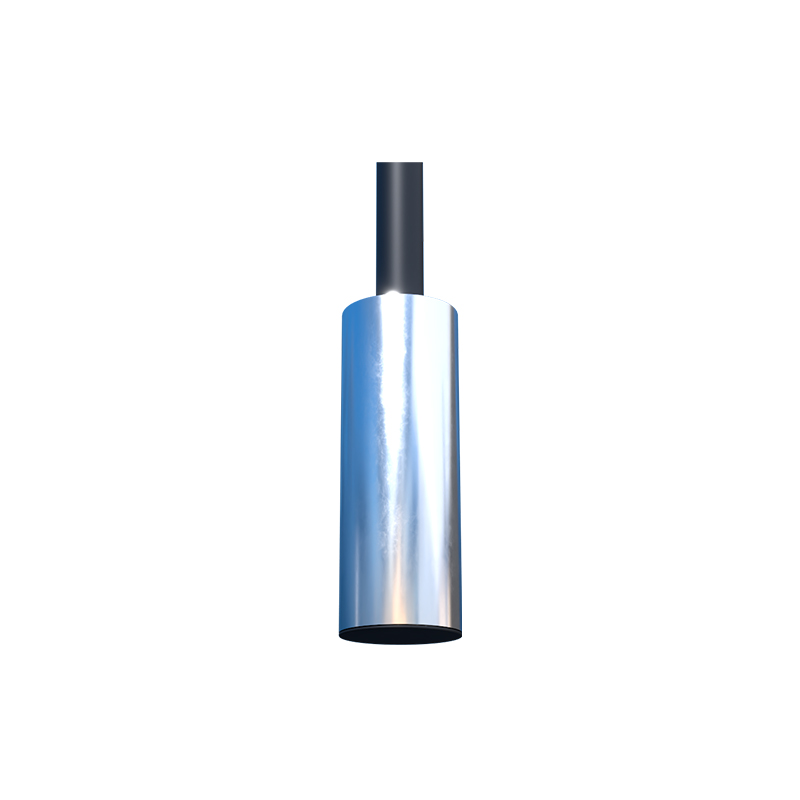
Selecting the right two-wire waterproof proximity sensor requires careful consideration of several parameters beyond just the IP rating. Sensing distance, often specified as the nominal range (Sn), must be chosen with a safety margin (typically 70-80% of Sn) to account for target variations and environmental factors. The choice between inductive (for metals) and capacitive (for metals, liquids, plastics, etc.) sensing technologies is fundamental. Output type is typically normally open (NO) or normally closed (NC), aligning with the safety and logic requirements of the control circuit. Operating voltage range (commonly 10-30V DC or 20-250V AC) must match the plant's standard. Temperature range is another vital factor, especially for processes involving extreme heat or cold.
Installation and maintenance, while straightforward, demand attention to detail. Mounting should avoid physical stress on the housing. For flush-mountable models, maintaining the recommended clearance from metal surrounds prevents false triggering. Regular checks should include verifying the seal integrity, especially around the cable entry point, and cleaning the sensing face of any buildup like grease or ice that could attenuate the sensing field. Diagnostic LEDs, now common even on two-wire models, provide invaluable visual feedback for troubleshooting.
In conclusion, the two-wire waterproof proximity switch represents an elegant fusion of simplicity and ruggedness. Its design philosophy prioritizes reliability under duress, making it an indispensable component for ensuring continuous operation in wet, dirty, or corrosive industrial settings. By understanding its operating principles, key specifications, and application nuances, engineers and maintenance personnel can leverage these sensors to build more resilient, efficient, and cost-effective automation systems. Their continued evolution, including the integration of IO-Link for diagnostics and parameterization, promises even greater intelligence while retaining the core virtues of durability and straightforward integration.