In the realm of industrial automation, precision, reliability, and durability are paramount. Among the myriad of components that ensure seamless operation, proximity switch positioning sensors stand out as fundamental elements for non-contact object detection and position feedback. Unlike mechanical limit switches that require physical contact, proximity sensors operate on the principle of detecting the presence or absence of a target object within a specified sensing range without any physical touch. This non-contact nature eliminates mechanical wear and tear, significantly enhancing operational lifespan and reliability in harsh industrial environments.
The core working principle of most industrial proximity sensors is based on electromagnetic or electromagnetic field disturbance. The most common types are inductive, capacitive, and magnetic (Reed or Hall effect) proximity sensors. Inductive proximity switches are widely used for detecting metallic objects. They contain an oscillator circuit that generates a high-frequency electromagnetic field at the sensing face. When a conductive metal target enters this oscillating field, eddy currents are induced on the surface of the target. These eddy currents draw energy from the oscillator, causing a reduction in the oscillation amplitude. This amplitude change is detected by a threshold circuit, which subsequently triggers a solid-state output switch (typically PNP or NPN) to change state, signaling the presence of the object. The sensing distance depends on the actuator material, size, and the sensor's own design, typically ranging from a few millimeters to several tens of millimeters.
Capacitive proximity sensors, on the other hand, can detect both metallic and non-metallic materials such as plastics, glass, wood, and liquids. They function by generating an electrostatic field. The sensor and the target act as two plates of a capacitor. As the target approaches the sensing face, the capacitance of the system increases. An internal circuit monitors this capacitance change. When the change exceeds a preset threshold, the output switch is activated. This makes capacitive sensors versatile for applications like level detection of materials in containers or detecting non-metallic objects on a conveyor belt.
For detecting permanent magnets or magnetic fields, magnetic proximity switches are employed. Reed switch types consist of two ferromagnetic reeds sealed in a glass tube filled with inert gas. When a magnet approaches, the reeds magnetize and attract each other, closing the contact. Hall effect sensors are solid-state devices that produce a voltage output (the Hall voltage) when exposed to a magnetic field, which is then processed by integrated electronics to provide a digital switch signal. These are highly reliable for position sensing in pneumatic cylinders (with embedded magnets) or for speed detection.
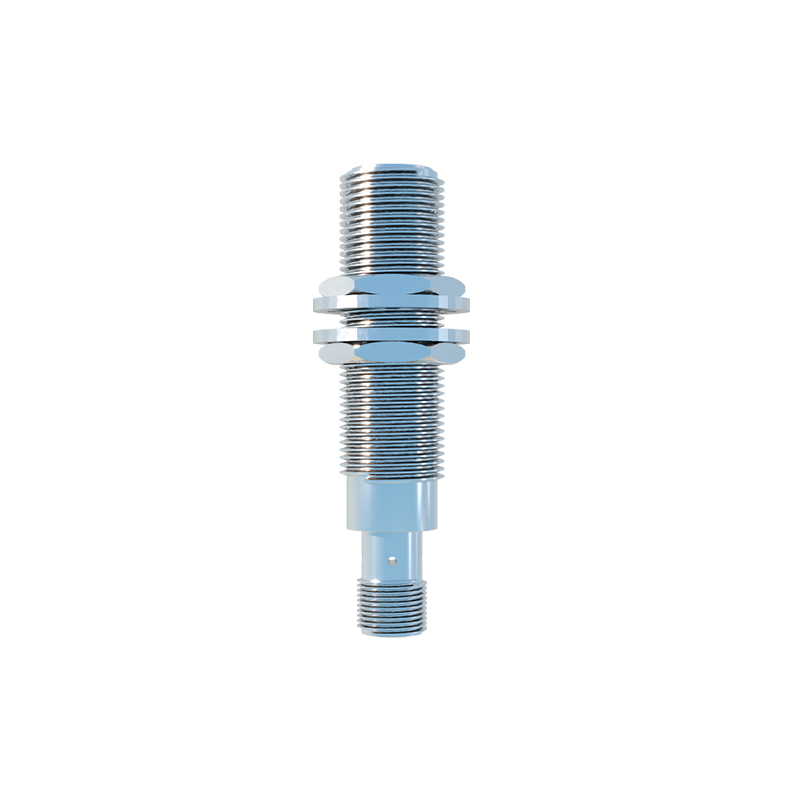
The output configuration is a critical aspect. Modern proximity sensors predominantly feature solid-state semiconductor outputs. The two primary types are DC 3-wire sensors with PNP (sourcing) or NPN (sinking) transistor outputs. PNP sensors switch the positive voltage to the load, while NPN sensors switch the negative or ground side. Understanding the compatibility with the programmable logic controller (PLC) or other control system input cards is essential for correct integration. Additionally, 2-wire AC/DC and 4-wire versions (with both a normally open and normally closed output) are available for specific circuit requirements.
Key performance parameters include the nominal sensing distance (Sn), which is a theoretical value under standardized conditions. The effective or operational sensing distance (Sr) is typically 70-80% of Sn to account for temperature fluctuations and supply voltage variations. Hysteresis is another vital characteristic—a differential distance between the switch-on point as the target approaches and the switch-off point as it recedes. This prevents output chatter when the target is at the boundary of the sensing range, ensuring stable switching. Repeat accuracy defines how consistently the sensor can detect a target at the same point, which is crucial for high-precision positioning tasks.
Applications for proximity positioning sensors are vast. They are indispensable in automated assembly lines for part presence verification, in machine tools for tool positioning and limit control, in material handling for counting and sorting, and in robotics for end-effector position feedback. Their sealed, robust housings (often in IP67 or higher ratings) make them resistant to dust, moisture, oils, and coolants.
In conclusion, proximity switch positioning sensors are sophisticated yet robust devices that form the sensory backbone of modern industrial control systems. Their non-contact operation, based on well-understood electromagnetic principles, offers unparalleled advantages in terms of speed, longevity, and maintenance-free operation. Selecting the correct type—inductive, capacitive, or magnetic—based on the target material and environmental conditions, and properly configuring its electrical interface, are fundamental steps for engineers to ensure precise, reliable, and efficient automation processes.