In the realm of industrial automation, precise and reliable object detection is paramount. Two pivotal technologies enabling this are proximity switches and ultrasonic sensors. While both serve the fundamental purpose of non-contact detection, their operating principles, strengths, and ideal applications differ significantly. Understanding these differences is crucial for engineers and system integrators to optimize performance, reliability, and cost-efficiency in their designs.
Proximity switches, often simply called proximity sensors, are a broad category of devices that detect the presence or absence of a target object without physical contact. The most common types are inductive, capacitive, and photoelectric. Inductive proximity sensors generate an electromagnetic field and detect the eddy current losses caused by metallic targets. They are exceptionally robust, immune to environmental factors like dust or oil, and offer high switching frequencies, making them ideal for detecting metal parts in machinery, such as in CNC machines, conveyor systems, and robotic arms. Capacitive proximity sensors, on the other hand, detect both metallic and non-metallic materials (liquids, plastics, wood, etc.) by sensing changes in capacitance. They are commonly used in level detection for tanks, material handling, and packaging lines. Photoelectric sensors use a light beam (visible, infrared, or laser) and detect interruptions or reflections of that beam. They offer the longest sensing ranges and can detect virtually any material, but their performance can be affected by ambient light, color, and surface properties.
Ultrasonic sensors operate on a fundamentally different principle: sonar. They emit high-frequency sound waves (typically between 20 kHz and several hundred kHz) and measure the time it takes for the echo to return from a target. This time-of-flight measurement allows them to not only detect presence but also precisely determine distance, making them true ranging devices. This capability for continuous analog or digital distance output is a key differentiator. Ultrasonic sensors are highly versatile and can detect objects regardless of material, color, transparency, or surface finish. They perform well in challenging environments with dust, fog, or light smoke, where photoelectric sensors might fail. Common applications include precise level measurement in silos and tanks, palletizing and depalletizing in logistics, loop control in web processing, and even collision avoidance for automated guided vehicles (AGVs).
The choice between a proximity switch and an ultrasonic sensor hinges on specific application requirements. For high-speed, repetitive detection of metallic objects in harsh industrial environments, an inductive proximity sensor is often the most reliable and cost-effective solution. For detecting non-metallic objects at close range, a capacitive sensor is suitable. When long-range detection or recognition of varied materials is needed, photoelectric sensors are a strong contender, provided environmental light conditions are controlled.
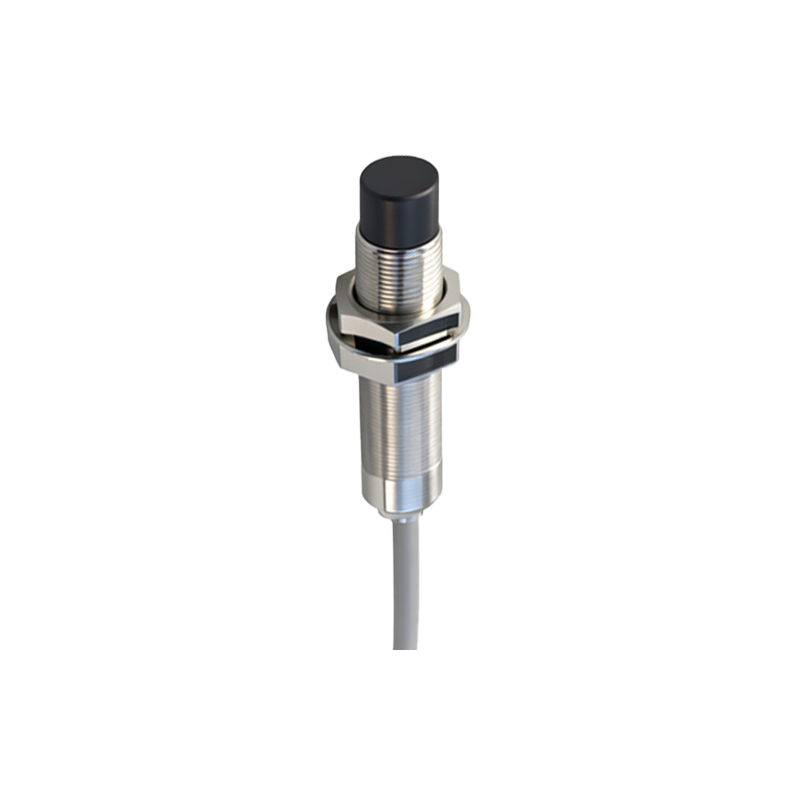
Ultrasonic sensors become the preferred choice when the application demands precise distance measurement, not just binary detection. They excel where the target properties are highly variable or in environments with airborne particulates. However, they have limitations. Their sensing speed (response time) is generally slower than that of inductive or photoelectric sensors due to the sound wave travel time. Factors like temperature fluctuations, wind, and highly absorbent or angled surfaces can also affect accuracy. They typically have a larger minimum sensing distance (dead zone) and may require careful mounting to avoid acoustic interference.
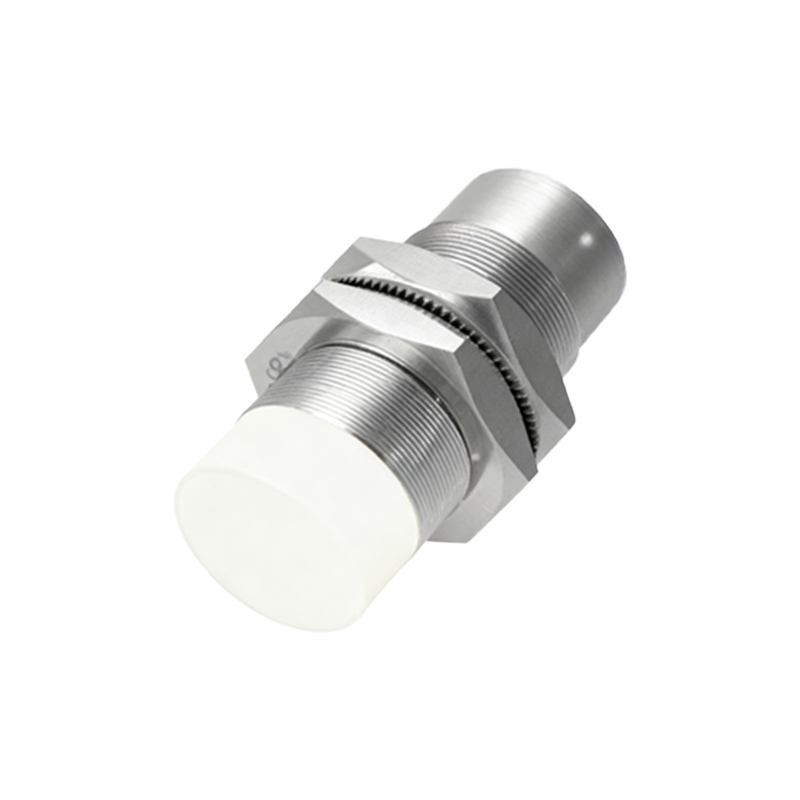
When integrating these sensors, several engineering considerations are vital. For proximity switches, one must account for the sensor's nominal sensing distance (Sn), which is defined under standardized conditions. Real-world sensing distance can be affected by the target material, size, and temperature. Correct mounting, especially flush or non-flush for inductive sensors, is critical to avoid reduced range or false triggers. Electrical characteristics like output type (PNP/NPN, NO/NC), voltage supply, and current rating must match the control system.
For ultrasonic sensors, key parameters include the measuring range, resolution, beam angle, and response time. The beam angle determines the size of the detection cone; a narrower beam allows for more precise targeting but requires more accurate alignment. Temperature compensation is a critical feature for high-precision applications, as the speed of sound varies with air temperature. Advanced models offer analog outputs (4-20 mA, 0-10V), switching outputs, and digital interfaces (IO-Link) for seamless integration into Industry 4.0 networks, providing not just a signal but valuable diagnostic data.
In conclusion, both proximity switches and ultrasonic sensors are indispensable tools in the automation engineer's toolkit. Proximity switches offer robust, fast, and simple on/off detection for well-defined tasks, particularly with metals. Ultrasonic sensors provide versatile, material-independent detection with the added dimension of precise distance measurement, solving more complex application challenges. The optimal selection is not a matter of which technology is superior, but which is most appropriate for the specific operational environment, target characteristics, and performance requirements of the application at