In the realm of industrial automation, proximity sensors play a pivotal role in enhancing operational efficiency and safety. Among these, the DHU018 proximity sensor stands out as a robust and reliable solution designed for demanding environments. This article delves into the technical specifications, operational principles, and diverse applications of the DHU018, providing insights for engineers and industry professionals seeking to optimize their systems.
The DHU018 is an inductive proximity sensor, engineered to detect metallic objects without physical contact. It operates on the principle of electromagnetic induction, where an oscillator generates a high-frequency magnetic field. When a metallic target enters this field, eddy currents are induced, causing a change in the oscillator's amplitude. This alteration is detected by the sensor's circuitry, triggering an output signal. The DHU018 typically offers a sensing range of up to 8 mm, with variations depending on the target material and size. Its housing is constructed from nickel-plated brass or stainless steel, ensuring durability against mechanical stress, vibrations, and harsh conditions such as exposure to oils, coolants, and dust.
Key features of the DHU018 include its high switching frequency, which allows for rapid detection in high-speed applications, and its immunity to environmental interference, thanks to advanced shielding techniques. The sensor is available in both normally open (NO) and normally closed (NC) configurations, with output options including NPN, PNP, and analog signals, catering to different control system requirements. Additionally, it boasts a wide operating voltage range, typically from 10 to 30 V DC, making it compatible with various industrial power supplies. The DHU018 also incorporates short-circuit and reverse polarity protection, minimizing downtime and maintenance costs.
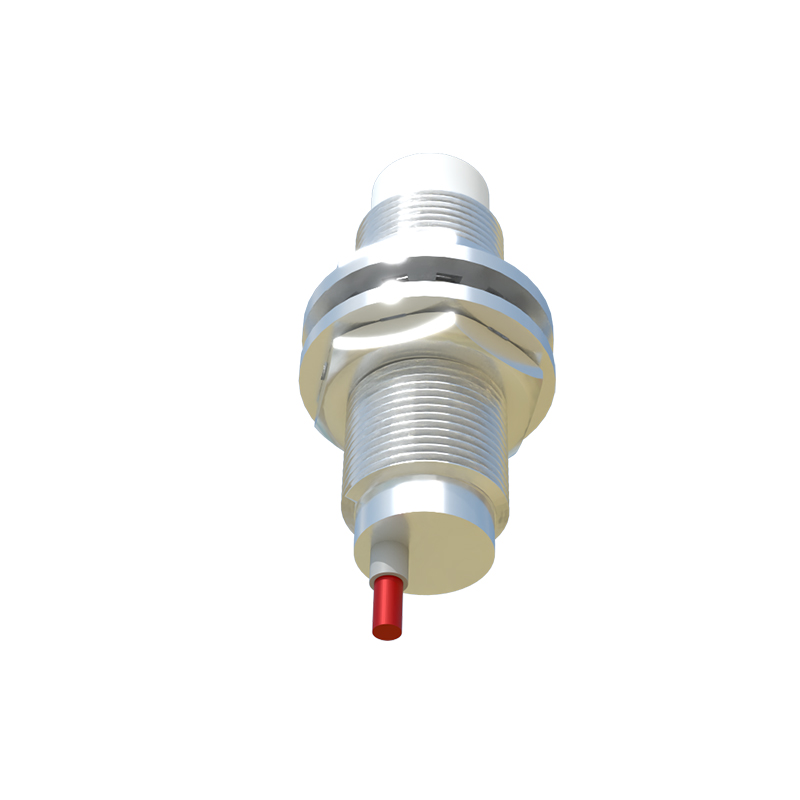
In practical applications, the DHU018 excels across multiple industries. In manufacturing, it is used for position sensing in conveyor systems, detecting the presence of components on assembly lines, and ensuring precise positioning in robotic arms. The automotive sector leverages its reliability for part counting, weld seam monitoring, and safety interlocks on machinery. In packaging, the sensor facilitates label detection and fill-level control, while in material handling, it aids in palletizing and sorting operations. Its robust design makes it suitable for outdoor or washdown environments, such as in food processing or pharmaceutical plants, where hygiene and corrosion resistance are critical.
Installation and maintenance of the DHU018 are straightforward, but attention to detail is essential for optimal performance. Engineers should consider factors like mounting orientation, ambient temperature (typically rated from -25°C to 70°C), and the sensor's inherent hysteresis to avoid false triggers. Regular calibration and cleaning of the sensing face can prolong its lifespan. Compared to capacitive or ultrasonic sensors, the DHU018's inductive nature limits it to metallic targets, but its precision and speed often make it the preferred choice for metal detection tasks.
Looking ahead, advancements in sensor technology may integrate IoT capabilities for predictive maintenance, but the DHU018's core reliability ensures it remains a staple in industrial setups. By understanding its features and applications, professionals can effectively deploy this sensor to enhance automation processes, reduce errors, and improve overall productivity. In summary, the DHU018 proximity sensor represents a blend of durability, accuracy, and versatility, making it an invaluable component in modern industrial ecosystems.