Capacitive proximity sensors are versatile and reliable devices widely used in industrial automation for non-contact detection of both metallic and non-metallic objects. Unlike their inductive counterparts, which only detect metals, capacitive sensors can sense materials like plastics, glass, wood, liquids, and granular substances by measuring changes in capacitance. The core principle involves an oscillator circuit that generates an electrostatic field from the sensor's active surface. When a target object enters this field, it alters the dielectric properties, causing a change in capacitance. This change is detected by the sensor's circuitry, which then triggers an output signal, typically a switching action.
The internal structure of a standard capacitive sensor includes an oscillator, a signal converter, and an output stage. The oscillator creates the high-frequency field, while the converter processes the capacitance variation into an electrical signal. The output stage, which can be NPN, PNP, or analog (e.g., 4-20 mA, 0-10 V), interfaces with control systems like PLCs. A key feature is the sensitivity adjustment potentiometer, allowing users to fine-tune the sensing range to compensate for different material properties or environmental conditions, such as humidity or dust.
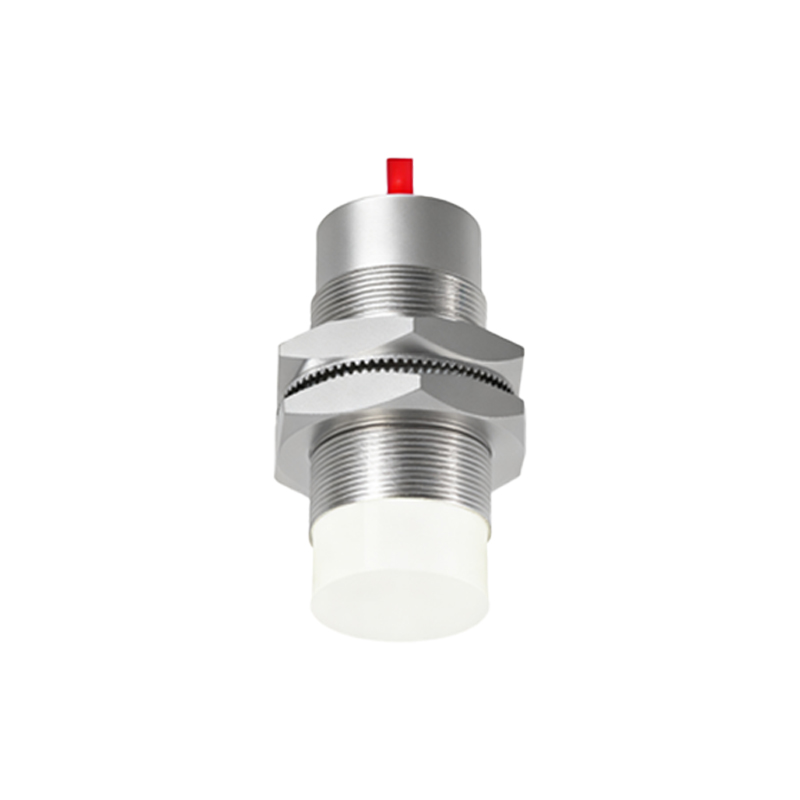
Applications for capacitive sensors are extensive across various industries. In packaging, they detect plastic bottles or foil lids. In food and beverage processing, they monitor liquid levels in non-metallic tanks or detect powder fill levels. In woodworking, they sense wood panels, and in automotive assembly, they verify the presence of non-metal components like gaskets or composite parts. They are also crucial in container content detection, where they identify material presence through thin walls, and in applications involving adhesive or glue bead detection.
Selecting the right capacitive sensor requires careful consideration of several factors. First, determine the target material and its dielectric constant; materials with higher constants (e.g., water) are easier to detect than those with lower ones (e.g., dry plastics). The sensing distance, typically ranging from a few millimeters to about 40 mm, must be chosen based on the application, with a derating factor applied for non-metallic objects. Environmental conditions are critical; sensors with IP67 or IP69K ratings are necessary for washdown areas in food processing, while high-temperature variants withstand harsh industrial settings. Output type should match the control system, with analog outputs preferred for continuous monitoring tasks like level control. Additionally, factors like housing material (e.g., stainless steel for corrosive environments), size, and mounting style (flush or non-flush) influence performance. Non-flush mount sensors offer longer ranges but require more installation space, while flush-mounted types can be embedded without interference from surrounding metal.
Installation and maintenance best practices ensure optimal operation. Avoid mounting sensors near large metal surfaces or other electromagnetic sources to prevent false triggering. Regular cleaning of the active surface is essential, as contamination like grease or moisture can affect sensitivity. When adjusting sensitivity, set it to the lowest reliable level to minimize background interference. For challenging applications, such as detecting very small objects or materials with low dielectric constants, specialized sensors with enhanced sensitivity or shielded designs may be required.
In summary, capacitive proximity sensors offer a flexible solution for diverse detection needs in automation. Their ability to sense a wide range of materials, coupled with robust designs and adjustable features, makes them indispensable in modern industrial systems. By understanding their operating principles and carefully evaluating application requirements, engineers can effectively integrate these sensors to improve process reliability and efficiency. As technology advances, developments in miniaturization, integrated diagnostics, and IoT connectivity are further expanding their capabilities in smart manufacturing environments.