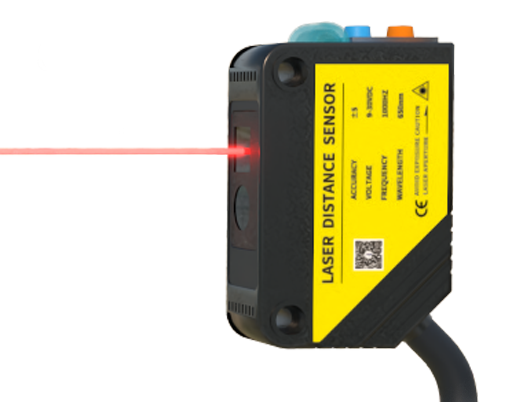
In the realm of industrial automation and precision engineering, laser sensors have emerged as a cornerstone technology for non-contact distance measurement. Their ability to deliver high accuracy, rapid response, and reliability in challenging environments makes them indispensable for a wide array of applications, from robotics and quality control to logistics and safety systems. This article delves into the operational principles, key selection criteria, and practical implementation strategies for laser sensors in distance measurement, or "laser sensor ranging.
At its core, a laser sensor for distance measurement operates primarily on one of two principles: time-of-flight (ToF) or triangulation. Time-of-flight sensors calculate distance by measuring the time interval between the emission of a laser pulse and the reception of its reflection. This method is highly effective for long-range measurements, often spanning several meters, and is commonly used in applications like vehicle LiDAR, warehouse inventory management, and large-scale surveying. The strength of ToF lies in its ability to measure over considerable distances with good accuracy, though environmental factors like ambient light or highly reflective surfaces can sometimes introduce noise.
Conversely, triangulation-based laser sensors are the preferred choice for short to medium-range measurements requiring exceptional precision, often at the micron or sub-millimeter level. Here, a laser diode projects a focused spot onto the target surface. The reflected light is captured by a position-sensitive detector (PSD) or a CMOS/CCD array at a known angle relative to the emitter. By analyzing the position of the reflected spot on the detector, the sensor's internal processor calculates the exact distance to the target via trigonometric principles. This method excels in applications such as thickness gauging of materials, vibration analysis, precise part positioning on assembly lines, and contour profiling.
Selecting the appropriate laser sensor for a specific distance measurement task requires careful consideration of several technical parameters. Range and resolution are paramount; the sensor must cover the required working distance while providing a resolution fine enough to detect the smallest meaningful variation. Repeatability, or the sensor's ability to consistently return the same measurement for a static target, is critical for quality assurance processes. The target's properties—its color, material, surface finish (e.g., matte, glossy, transparent), and even angle—profoundly influence sensor performance. For instance, a dark, matte surface absorbs more light, potentially reducing signal strength, while a shiny surface can create specular reflections that mislead a triangulation sensor. Many modern sensors feature advanced algorithms and adjustable settings to compensate for such variations.

Environmental robustness is another crucial factor. Industrial settings often expose sensors to dust, moisture, oil, mechanical vibrations, and temperature fluctuations. Sensors with high Ingress Protection (IP) ratings (e.g., IP67) are essential for harsh conditions. Furthermore, the response time or sampling rate of the sensor must align with the dynamics of the application; a high-speed packaging line demands a much faster sensor than a slow-moving inspection station.
Implementation and integration extend beyond mere mounting. Proper alignment is fundamental to achieving specified accuracy. Calibration against known standards ensures traceability and validity of measurements. Integrating the sensor into a larger control system—typically via analog outputs (4-20 mA, 0-10 V), digital interfaces (RS-232, RS-485), or industrial network protocols (Ethernet/IP, PROFINET, EtherCAT)—is a key step. This allows for real-time data acquisition, process control, and seamless communication with PLCs (Programmable Logic Controllers) or SCADA (Supervisory Control and Data Acquisition) systems.
A significant trend in laser sensor technology is the integration of smart features and Industry 4.0 connectivity. Modern sensors often include built-in diagnostics, condition monitoring, and the ability to transmit data directly to cloud platforms for predictive maintenance and advanced analytics. This transforms the sensor from a simple measurement device into a node in a intelligent, data-driven ecosystem.
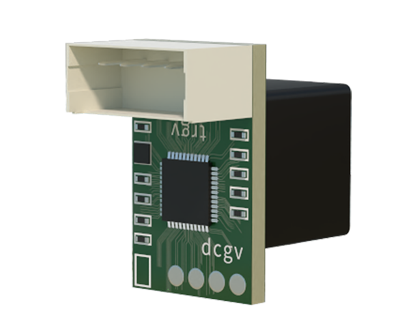
In conclusion, laser sensors provide a powerful and versatile solution for precise distance measurement across industrial sectors. A successful application hinges on a thorough understanding of the measurement principle, a meticulous selection process based on technical specifications and environmental constraints, and careful attention to installation and integration. As technology advances, these sensors are becoming smarter, more robust, and more interconnected, further solidifying their role as critical enablers of automation, quality, and efficiency in modern manufacturing and beyond.