Laser sensors operate on the principle of emitting a focused light beam and measuring the properties of the reflected signal to determine distance, presence, or surface characteristics. A critical, yet often overlooked, factor influencing their performance is the reflective surface area of the target. This parameter directly impacts the intensity and quality of the return signal, thereby affecting measurement accuracy, reliability, and the sensor's effective operating range.
When a laser beam strikes a surface, not all light is reflected back toward the sensor's receiver. The amount of light returned depends on the surface's reflectivity (a material property) and the physical area illuminated. For a given material, a larger reflective surface area within the beam's spot size typically results in a stronger return signal. This is because more photons are intercepted and redirected. Conversely, a target with a very small reflective area, such as a thin wire, a sharp edge, or a small dot, may return only a minuscule fraction of the emitted light. This can lead to a signal strength that falls below the sensor's detection threshold, causing measurement failures or requiring the sensor to be positioned much closer to the target.
The relationship is not purely linear and is mediated by the surface's optical properties. Diffuse reflective surfaces, like white paper or matte paint, scatter light in many directions. Only a small portion travels directly back to the receiver. For these surfaces, a larger area ensures that enough scattered light is captured. Specular (mirror-like) surfaces, such as polished metal or glass, reflect light at a defined angle equal to the angle of incidence. If the sensor is not aligned precisely to catch this reflection, the return signal can be extremely weak regardless of the surface area. Here, the challenge is alignment, not merely area size.

In practical applications, understanding and accounting for reflective surface area is paramount. In automated manufacturing, a sensor tasked with detecting the presence of a small component must be selected and configured based on the component's size and material. A photoelectric sensor with a focused laser might fail on a tiny, dark screw head but work perfectly on a larger, painted panel. In logistics, barcode scanners rely on a sufficient reflective area from the white spaces within the code to contrast with the black bars. A smudged or crumpled label reduces the effective reflective area, leading to read errors.
For distance measurement using time-of-flight or triangulation principles, a consistent and adequate reflective area is crucial for stable readings. Variations in the target's surface geometry can cause fluctuations in signal strength, interpreted as measurement noise or jitter. This is why many laser distance sensors specify a minimum target size for optimal performance. Engineers often use retro-reflective targets—materials covered with tiny corner cubes that reflect light directly back to its source—to dramatically increase the effective signal return from a small area, enabling long-range measurements.
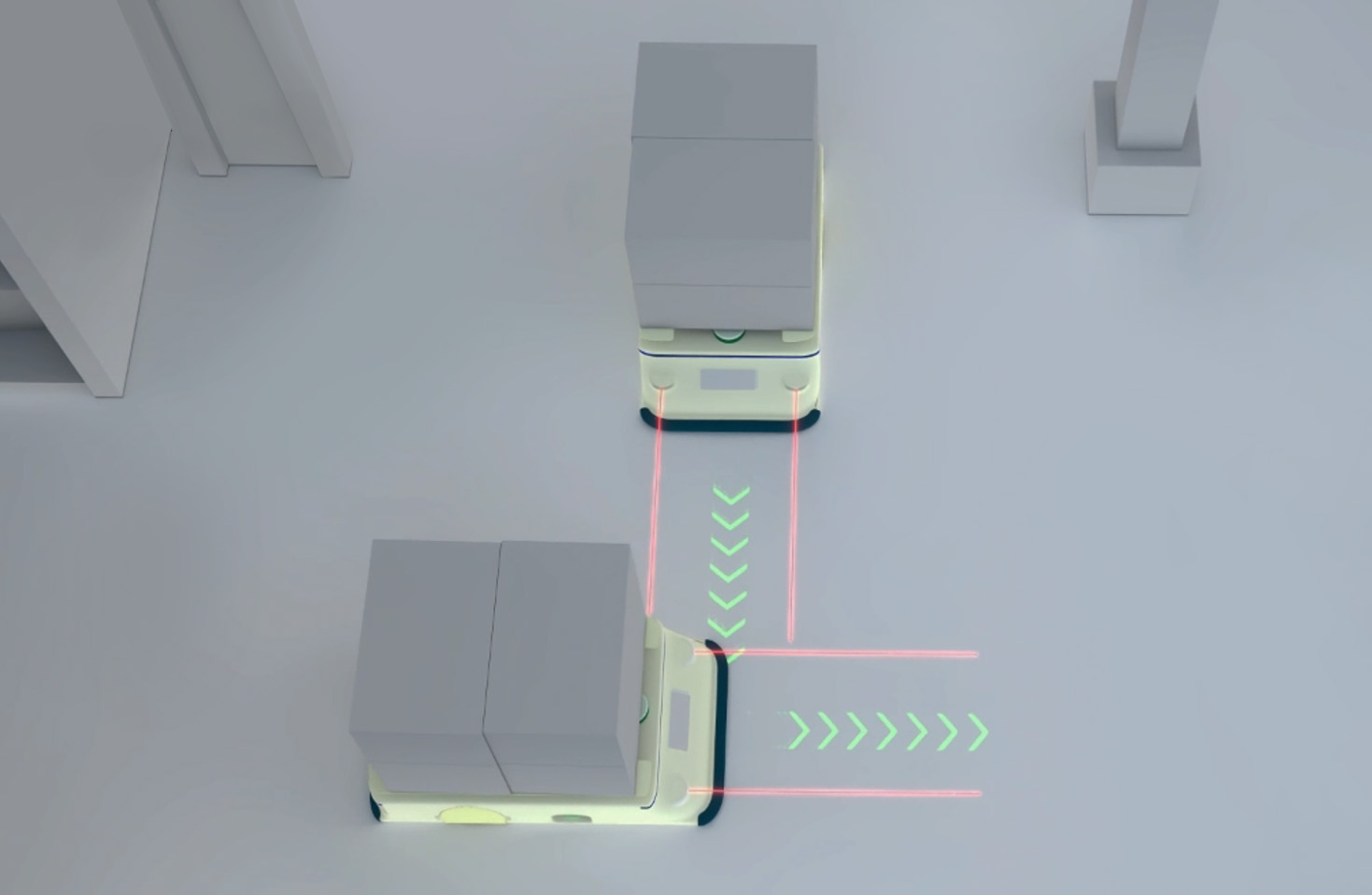
Selecting the right laser sensor involves evaluating the expected minimum reflective surface area of the target. Key sensor specifications to review include the "spot size" at various distances and the "minimum detectable object" rating. A sensor with a very small, precise laser spot might be ideal for detecting fine details but could be overly sensitive to alignment on a specular surface. A sensor with a larger spot or a diffuse laser line might better integrate light from a larger, uneven area, providing a more averaged and stable signal.
Environmental factors also interact with reflective area. Dust, oil, or other contaminants can reduce the effective reflective area of a surface. Ambient light can create noise that overwhelms a weak return signal from a small target. Proper housing, filters, and sometimes the use of modulated laser light (which the sensor is tuned to detect) can help mitigate these issues.
In conclusion, while a laser sensor's specifications often highlight range, accuracy, and speed, the fundamental interplay with the target's reflective surface area forms the bedrock of its functionality. Successful implementation requires a holistic analysis of the target's size, material, orientation, and environment. By carefully matching the sensor's optical characteristics to the reflective properties of the application, engineers can ensure robust, reliable, and precise performance across countless industrial, commercial, and scientific use cases. Ignoring this factor can lead to unexpected system failures, whereas mastering it unlocks the full potential of laser sensing technology.