Analog proximity sensors, particularly those with square-type housings, represent a critical component in modern industrial automation and control systems. These devices are engineered to detect the presence or absence of an object within a specified sensing range without physical contact, providing a continuous output signal proportional to the distance to the target. This article delves into the operational principles, key features, applications, and selection criteria for square analog proximity sensors, offering insights for engineers and technicians in the electrical and automation fields.
Operational Principle and Technology
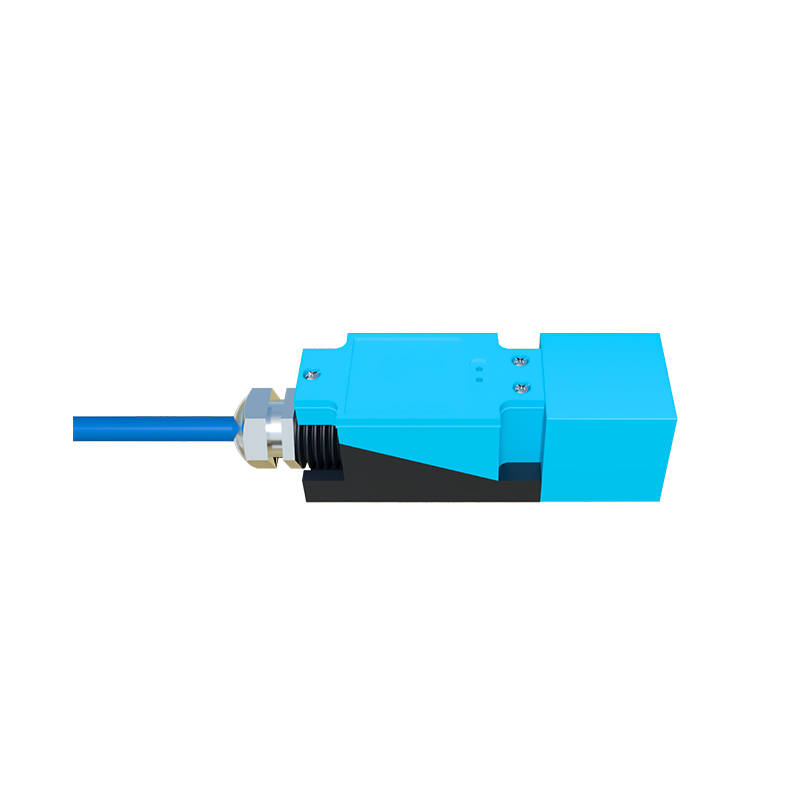
At their core, most square analog proximity sensors operate on the inductive sensing principle. The sensor contains an oscillator circuit that generates a high-frequency electromagnetic field from its active face. When a metallic target enters this field, eddy currents are induced on the target's surface. This causes a change in the oscillation amplitude within the sensor's coil. An internal evaluation circuit continuously monitors this change. Unlike their digital counterparts, which provide a simple ON/OFF signal, analog sensors convert this change into a continuously variable output signal—typically a voltage (e.g., 0-10V) or current (e.g., 4-20mA)—that is linearly proportional to the distance between the sensor and the target. This linear analog output allows for precise measurement of position, displacement, or thickness within the sensor's defined measuring range.
Key Advantages of Square-Type Housings
The square form factor is not merely an aesthetic choice; it offers distinct functional benefits in industrial settings.
Robust Mounting and Stability: The flat sides facilitate secure and stable mounting using standard brackets or directly on machined surfaces, minimizing vibration-induced misalignment.
Space Efficiency: Their shape often allows for tighter packing in control panels or on machinery, optimizing space in compact designs.
Enhanced Sensing Face Options: Square sensors frequently offer a larger active sensing area compared to cylindrical sensors of similar volume, which can be advantageous for detecting smaller or oddly shaped targets.
Durability: The housing is typically constructed from materials like nickel-plated brass, stainless steel, or high-grade PBT plastic, offering excellent resistance to mechanical impact, cutting fluids, oils, and coolants commonly found in manufacturing environments like CNC machining centers, assembly lines, and robotic cells.
Critical Performance Parameters
When specifying a square analog proximity sensor, engineers must evaluate several key parameters:
1. Sensing Range: The nominal operating distance (Sn). It is crucial to note that the effective measuring range for analog output is typically a portion of this (e.g., from 10% to 90% of Sn).
2. Linearity: This defines how accurately the output signal follows a straight line relative to the distance. Lower non-linearity error (e.g.,< ±1% full scale) indicates higher precision.
3. Repeatability: The sensor's ability to consistently return the same output signal for the same target position under identical conditions.
4. Output Type: Voltage output (0-10V, 1-5V) is common for shorter cable runs within control cabinets. Current loop output (4-20mA) is preferred for long-distance transmission due to its inherent noise immunity and ability to indicate a wire break (0mA).
5. Response Time: The speed at which the output can follow a change in distance. This is vital for high-speed applications.
6. Temperature Drift: The change in output characteristics due to ambient temperature fluctuations. High-quality sensors specify minimal drift coefficients.
7. IP Rating (Ingress Protection): Square sensors often achieve high IP ratings (e.g., IP67, IP69K), making them suitable for washdown areas in food & beverage or pharmaceutical industries.
Typical Industrial Applications
The continuous output of analog sensors unlocks applications beyond simple detection:
Position Feedback: Precisely monitoring the position of a cylinder piston, robotic arm joint, or lift platform.
Thickness Gauging: Measuring the thickness of materials like metal sheets, paper, or glass by using two sensors in a differential setup.
Tension Control: Monitoring the sag or position of a web in printing, textile, or converting machinery to maintain proper tension.
Fill Level Monitoring: Providing continuous level measurement in tanks or silos for liquids or granular materials (with appropriate target).
Condition Monitoring: Detecting minute vibrations or runout in rotating machinery by monitoring displacement changes.
Selection and Installation Best Practices
Selecting the right sensor involves matching specifications to the application:
Target Material: Inductive sensors only detect metals. The sensing range is rated for mild steel; for other metals like aluminum, copper, or stainless steel, a reduction factor must be applied.
Environment: Consider temperature extremes, presence of