Metal proximity sensor chips represent a cornerstone technology in modern industrial automation, consumer electronics, and safety systems. These sophisticated integrated circuits (ICs) detect the presence or absence of metallic objects without any physical contact, enabling a wide range of applications from smartphones to factory assembly lines. Their operation is based on fundamental principles of electromagnetism, primarily inductive sensing.
At the heart of a typical inductive metal proximity sensor chip lies an oscillator circuit that generates a high-frequency electromagnetic field via a coil, which is often integrated into the chip's package or connected externally. When a metallic object enters this oscillating field, eddy currents are induced on the surface of the metal. These currents draw energy from the oscillator, causing a measurable change in its amplitude or frequency. The sensor chip's internal circuitry is designed to detect this precise change, process the signal, and provide a clean, digital output indicating the object's presence. The sensing distance depends on factors like the coil size, the oscillator frequency, and the metal's properties, with ferrous metals like iron typically being detected at greater ranges than non-ferrous metals like aluminum or copper due to their higher magnetic permeability.
Modern metal proximity sensor chips are marvels of miniaturization and integration. They pack the oscillator, signal conditioning amplifiers, demodulators, Schmitt triggers for hysteresis (to prevent output chattering), and output drivers into a single, tiny package. Advanced versions include features like programmable sensing thresholds, temperature compensation to ensure stability across operating environments, and short-circuit protection. Some chips even integrate microcontrollers for more sophisticated processing, enabling them to distinguish between different types of metals or measure distance analogously, not just provide a simple on/off signal.
The applications for these chips are vast and critical. In industrial automation, they are ubiquitous for position sensing, end-of-travel detection for cylinders, part counting on conveyor belts, and verifying the presence of metal components in assemblies. Their robustness, with the ability to operate in dirty, oily, or wet environments where optical sensors would fail, makes them indispensable. In the consumer realm, a common application is in smartphones and laptops for detecting when a flip cover with a small magnet is closed, putting the device to sleep. Automotive systems rely heavily on them for gear position sensing, brake wear detection, and various safety interlocks. They also play vital roles in security systems for door and window status monitoring, and in household appliances like dishwashers to detect rack position.
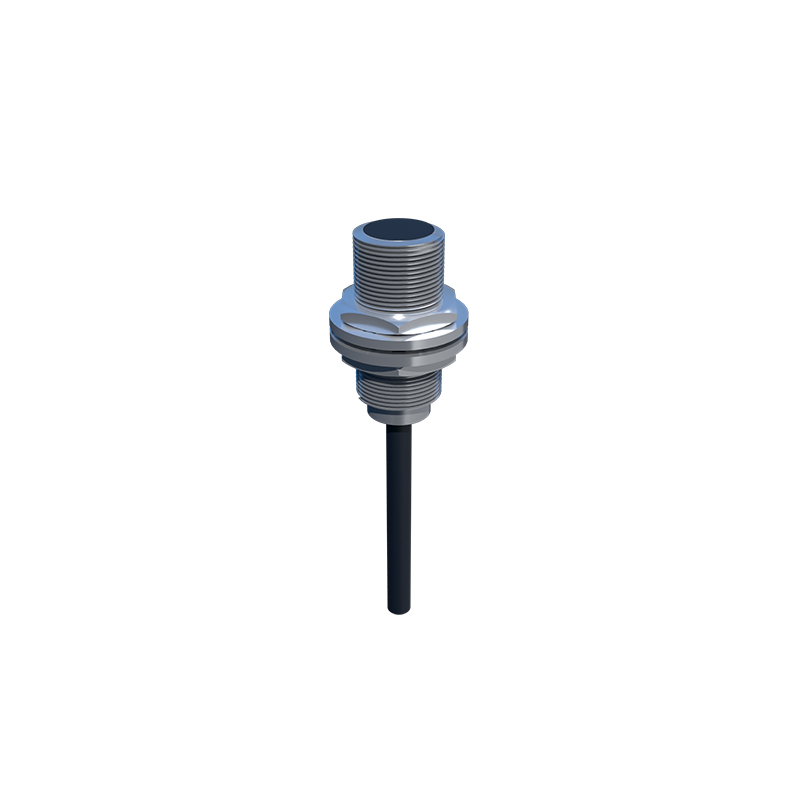
Selecting the right metal proximity sensor chip involves careful consideration of several parameters. The required sensing range, the target metal type, the operating voltage, output type (NPN/PNP transistor, digital I/O, or analog), and package size are primary factors. Environmental conditions such as extreme temperatures, potential exposure to chemicals, or the presence of strong electromagnetic interference must also be accounted for. Designers must pay close attention to the installation and surrounding metal, as mounting the sensor in a metal bracket or having other metal objects nearby can significantly affect its sensitivity and range, often requiring calibration or shielding.
Looking forward, the evolution of metal proximity sensor technology continues. Trends point toward even lower power consumption for battery-operated IoT devices, higher levels of integration that reduce external component counts, and enhanced intelligence at the chip level. The development of sensors capable of more precise discrimination between metal alloys or providing detailed material characterization data is an area of active research. Furthermore, the integration of proximity sensing with other sensor modalities like temperature or pressure sensing on a single chip is creating more versatile and cost-effective solutions for complex systems.
In conclusion, metal proximity sensor chips are a mature yet dynamically advancing technology. Their non-contact, reliable, and durable nature solves fundamental sensing challenges across countless industries. As systems become smarter and more connected, the humble proximity sensor chip will continue to be a critical interface between the physical world of metal objects and the digital world of control and data.