Infrared (IR) laser sensors represent a cornerstone technology in modern industrial automation, offering unparalleled precision, reliability, and versatility for a wide array of sensing tasks. Unlike conventional photoelectric sensors that use visible light, IR laser sensors operate within the infrared spectrum, typically utilizing wavelengths between 850 nm and 1550 nm. This fundamental characteristic grants them distinct advantages, including minimal interference from ambient visible light, the ability to detect objects irrespective of color or surface texture in many applications, and the capacity for highly focused, long-range operation.
The core operating principle hinges on the emission of a modulated infrared laser beam from a laser diode. This coherent, focused beam is directed towards a target. Depending on the sensor type, it detects the presence, distance, or profile of an object by analyzing the properties of the reflected light. The three primary detection methods are through-beam, retro-reflective, and diffuse reflective (proximity) modes. Through-beam sensors, offering the longest range and highest reliability, consist of separate emitter and receiver units. The object is detected when it interrupts the beam. Retro-reflective models use a single housing containing both emitter and receiver, relying on a reflector to bounce the beam back; detection occurs when the beam is blocked. Diffuse reflective sensors detect light reflected directly off the target itself, making them simpler to install but more sensitive to the target's color and surface properties.
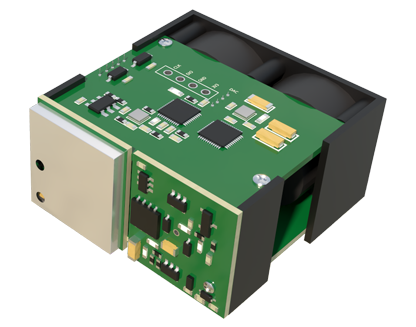
A critical advancement in this field is the Time-of-Flight (ToF) laser sensor. These devices measure the time delay between the emission of a laser pulse and the reception of its reflection. Using the constant speed of light, the sensor calculates the distance to the object with extreme accuracy. This capability has revolutionized applications like level monitoring, bin picking in robotics, and dimension checking, enabling precise, non-contact measurements.
The applications of infrared laser sensors span virtually every industrial sector. In material handling and packaging, they are indispensable for precise object counting, jam detection, and fill-level control. Automotive assembly lines rely on them for robot guidance, part presence verification, and weld seam tracking. In electronics manufacturing, their precision is crucial for wafer handling, component placement, and lead inspection. Furthermore, their robustness in harsh environments—resistant to dust, smoke, and vibrations—makes them ideal for heavy industries like metalworking, lumber, and mining. Safety is another paramount area, where IR laser scanners create invisible protective fields around hazardous machinery, instantly halting operation if a breach is detected.
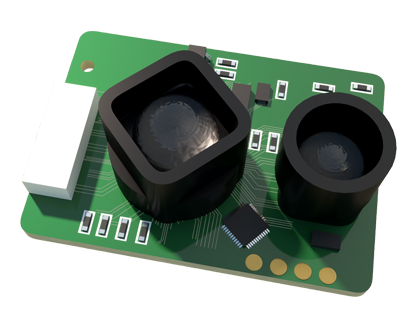
Selecting the appropriate IR laser sensor requires a careful analysis of several key parameters. First, the required sensing range and the minimum detectable object size must be defined. The sensor's spot size, which is exceptionally small with lasers, determines its resolution for small object detection. Environmental factors are crucial; sensors with high IP ratings (e.g., IP67, IP69K) are necessary for washdown or outdoor applications. The response time, often in the microsecond range, must be fast enough for high-speed production lines. For distance measurement tasks, parameters like resolution (smallest detectable distance change), linearity (accuracy across the measuring range), and repeatability are vital. The choice of output type—digital (PNP/NPN), analog (4-20 mA, 0-10 V), or industrial fieldbus protocols (IO-Link, PROFINET, EtherNet/IP)—must align with the control system architecture.
Integration and maintenance are straightforward but demand attention. Proper alignment is critical, especially for through-beam and retro-reflective types. The sensor should be mounted securely to minimize misalignment from vibration. While IR lasers are generally eye-safe for Class 1 or Class 2 devices, it is imperative to verify the laser classification and adhere to all relevant safety standards (e.g., IEC 60825-1). Regular lens cleaning ensures optimal performance by preventing attenuation from dust or oil film buildup.
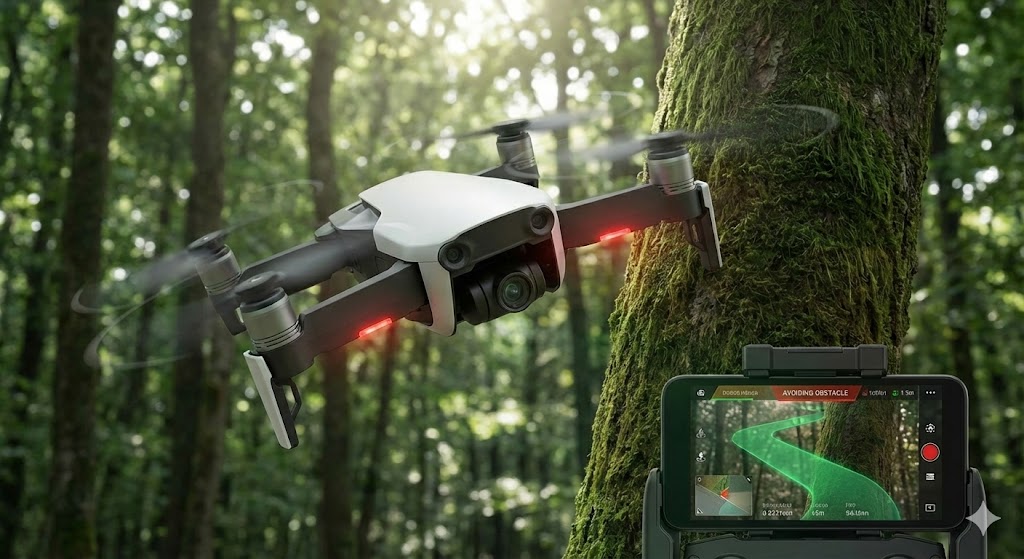
Looking ahead, the evolution of infrared laser sensor technology continues. Trends include miniaturization, enhanced intelligence with integrated processors for edge computing (like condition monitoring and predictive diagnostics), and the fusion of ToF data with 2D/3D vision capabilities. These advancements promise even greater integration into smart factories and Industry 4.0 ecosystems, solidifying the IR laser sensor's role as an essential, intelligent eye for industrial automation, driving efficiency, quality, and safety to new heights.