Laser sensor scanning technology has become a cornerstone of modern industrial automation, offering unparalleled precision, speed, and reliability. At its core, this technology utilizes laser beams to detect, measure, and profile objects with exceptional accuracy. The fundamental principle involves emitting a focused laser beam towards a target. The sensor then analyzes the reflected light, calculating parameters such as distance, presence, dimensions, or surface characteristics based on the time-of-flight, triangulation, or phase-shift measurement methods.
In industrial settings, laser scanners are deployed across a vast array of applications. One of the most critical uses is in dimensional gauging and quality control. On production lines, laser scanners perform non-contact inspections of components, verifying tolerances and detecting defects like warping or incorrect assembly in real-time. This ensures consistent product quality and significantly reduces waste. Another prominent application is in object detection and positioning for robotic guidance systems. Robots equipped with 2D or 3D laser scanners can precisely locate parts, enabling accurate pick-and-place operations, bin picking, and assembly tasks, even in unstructured environments.
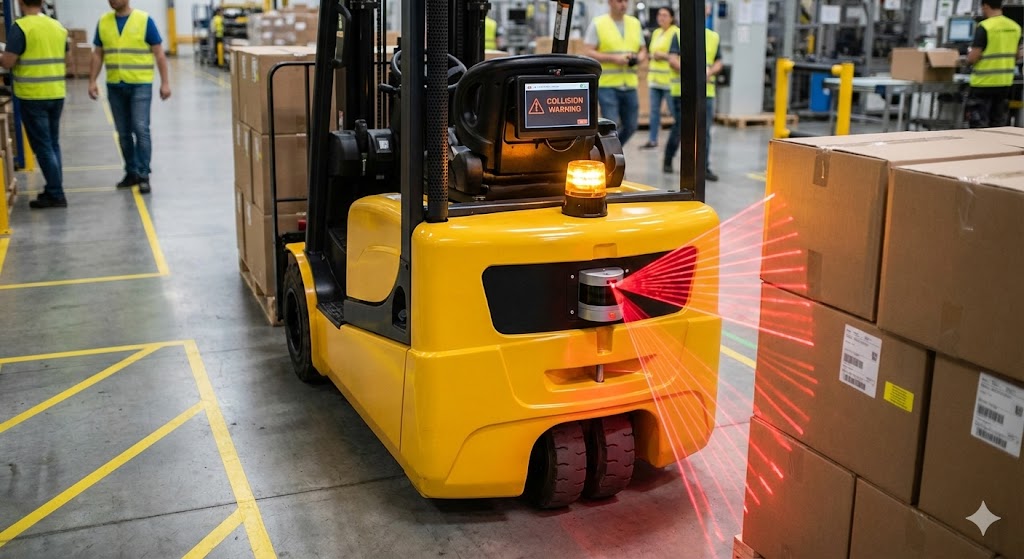
Furthermore, laser scanning is integral to navigation and safety for Automated Guided Vehicles (AGVs) and Autonomous Mobile Robots (AMRs). These vehicles use LiDAR (Light Detection and Ranging) sensors, a type of laser scanner, to create dynamic maps of their surroundings, avoid obstacles, and navigate complex factory floors safely. In logistics and warehousing, laser scanners are the engine behind high-speed barcode and data-matrix reading, facilitating efficient inventory management and parcel sorting at remarkable throughput rates.
The advantages of laser sensors are manifold. They provide high-resolution data unaffected by ambient light conditions when properly shielded, and they can measure dark or shiny surfaces that challenge other optical sensors. Their non-contact nature prevents damage to both the sensor and the delicate objects being measured. Modern laser scanners also offer robust designs with high ingress protection ratings, making them suitable for harsh industrial environments with dust, moisture, or vibration.

When integrating laser scanning systems, engineers must consider several technical factors. The choice between 1D, 2D, and 3D scanning depends on the application's complexity. Selection criteria include required measurement range, scanning speed (often measured in Hertz), resolution, and the laser's wavelength (commonly in the visible red or infrared spectrum). System integration involves careful alignment, calibration, and synchronization with other machinery and control systems like PLCs. Data output, typically via Ethernet/IP, PROFINET, or analog interfaces, must be configured for seamless communication.
Looking ahead, the evolution of laser sensor technology points toward even smarter and more integrated systems. Advancements in solid-state LiDAR, increased processing power for real-time point cloud analysis, and the integration of artificial intelligence for predictive maintenance and adaptive control are shaping the next generation of industrial laser scanners. These developments promise to further enhance operational efficiency, flexibility, and safety in the smart factories of the future. For any engineering professional in automation, manufacturing, or robotics, a deep understanding of laser sensor scanning is not just beneficial—it is essential for driving innovation and maintaining a competitive edge in an increasingly automated world.