In the intricate world of industrial automation and control systems, the unassuming metal proximity sensor stands as a critical component, enabling seamless, efficient, and safe operations. Its primary function is to detect the presence or absence of metallic objects without any physical contact. This non-contact detection capability is the cornerstone of its widespread utility, offering significant advantages over mechanical limit switches, including higher reliability, longer operational life, and faster response times.
At its core, a metal proximity sensor operates on the principle of electromagnetic induction or, in the case of more specialized versions, the eddy current effect. The most common type is the inductive proximity sensor. It contains an oscillator circuit that generates a high-frequency electromagnetic field emanating from its active face. When a metallic object enters this field, eddy currents are induced on the surface of the metal. These eddy currents draw energy from the sensor's oscillator, causing a change in its amplitude. An evaluation circuit within the sensor detects this amplitude change and triggers a solid-state output switch, signaling the presence of the object. This entire process occurs with remarkable speed and precision, making these sensors ideal for high-cycle applications.
The applications of metal proximity sensors are vast and varied across numerous sectors. In manufacturing and assembly lines, they are indispensable for part detection and positioning. For instance, they can verify if a metal component is correctly seated in a fixture before a robotic arm proceeds with welding or assembly, preventing costly errors and machine crashes. They are used for counting metallic products on conveyor belts, monitoring the position of machine tool slides, and controlling the end limits of automated actuators. In the automotive industry, they ensure robotic paint arms maintain a precise distance from the car body or confirm the presence of engine blocks on a transfer line.
Beyond basic detection, these sensors play a vital role in enhancing safety. They are integrated into safety interlock systems on machinery guards; if a guard door is opened, a metal target moves away from the sensor, sending a signal to immediately halt dangerous machine motion. In material handling, they prevent overtravel of cranes and elevators by sensing metallic flags at limit positions. Their robustness, often housed in rugged stainless steel or nickel-plated brass bodies with ratings like IP67 or IP69K for dust and water resistance, allows them to thrive in harsh environments found in metalworking, food processing, and outdoor applications.
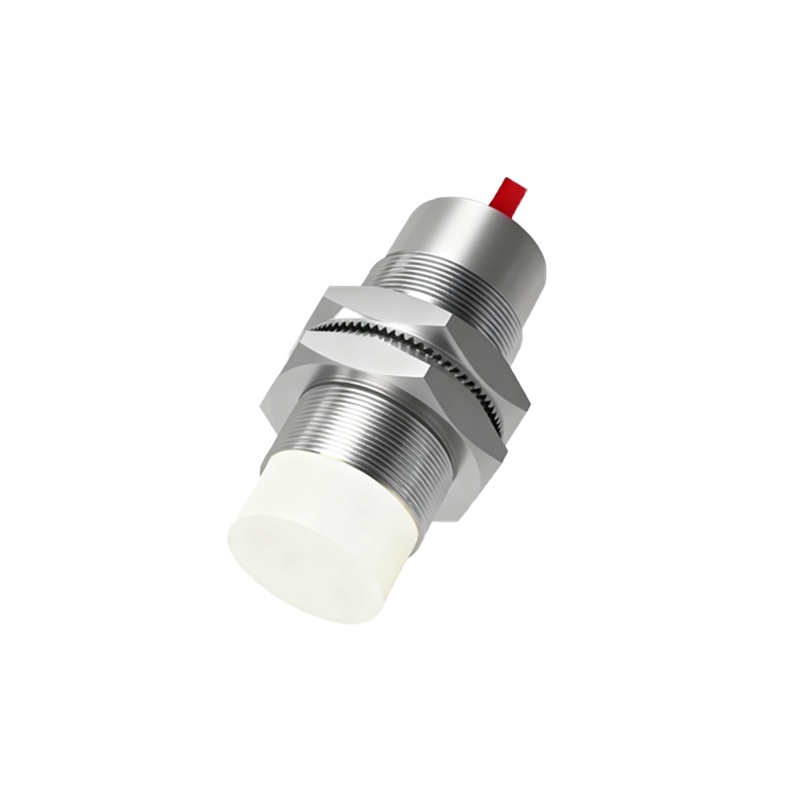
When selecting a metal proximity sensor, engineers must consider several key parameters. The sensing distance, or nominal range, is specified for a standard target (usually mild steel). This effective range can vary for different metals; for example, stainless steel may reduce the sensing distance, while copper or aluminum reduces it even more significantly. The sensor's housing shape—barrel, rectangular, or ring-shaped—is chosen based on installation constraints. Output types include NPN (sinking) or PNP (sourcing) transistor configurations, as well as analog versions that provide a continuous signal proportional to the distance to the target, useful for precision positioning tasks. The choice between shielded (flush-mountable) and unshielded models is also crucial, as shielded sensors can be mounted flush in metal without affecting their sensing field, whereas unshielded types offer a longer range but require non-metallic surroundings.
The evolution of metal proximity sensors continues with advancements in technology. Modern sensors offer increased immunity to electromagnetic interference (EMI), extended temperature ranges, and integrated IO-Link communication. IO-Link transforms a simple digital sensor into a smart device, enabling parameter setting, remote monitoring of operating status, and predictive maintenance data transmission, such as signal strength diagnostics that can warn of mounting misalignment or buildup of metallic debris.
In conclusion, the metal proximity sensor is far more than just a simple switch. It is an enabling technology for automation, providing the essential "eyes" for control systems to interact with the physical metallic world. Its ability to deliver reliable, contactless detection of metal objects forms the backbone of countless processes, driving efficiency, ensuring quality control, and safeguarding both equipment and personnel. From high-speed packaging machines to heavy-duty robotic cells, the silent, consistent operation of these sensors is a fundamental pillar of modern industrial productivity and innovation.