In the realm of civil engineering and structural health monitoring (SHM), the integrity and safety of bridge infrastructure are paramount. Traditional inspection methods, while valuable, often involve manual measurements, are time-consuming, and can be disruptive or even hazardous. The advent of non-contact, high-precision measurement technologies has revolutionized this field. Among these, laser displacement sensors have emerged as a critical tool for engineers. This article delves into the operational principles, key applications, and essential selection criteria for laser displacement sensors in bridge monitoring.
Fundamental Operating Principle
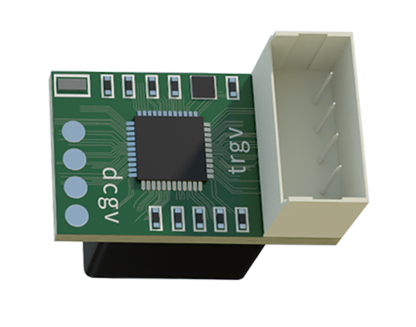
A laser displacement sensor operates on the principle of optical triangulation or time-of-flight measurement. For most bridge monitoring applications requiring high precision at relatively short to medium ranges, the triangulation method is predominant. The sensor projects a focused laser beam onto the target surface—be it a bridge girder, pier, deck, or bearing. The reflected light is captured by a receiving lens at a known angle and focused onto a position-sensitive detector, typically a CCD or CMOS array. Any minute displacement of the target surface causes a shift in the position of the reflected light spot on the detector. This shift is precisely calculated by the sensor's internal processor to determine the exact distance or displacement change with micron-level accuracy. This non-contact method ensures no additional load is applied to the structure, and measurements can be taken from a safe, remote location.
Core Applications in Bridge Engineering
The applications of laser displacement sensors in bridge monitoring are diverse and address several critical parameters:
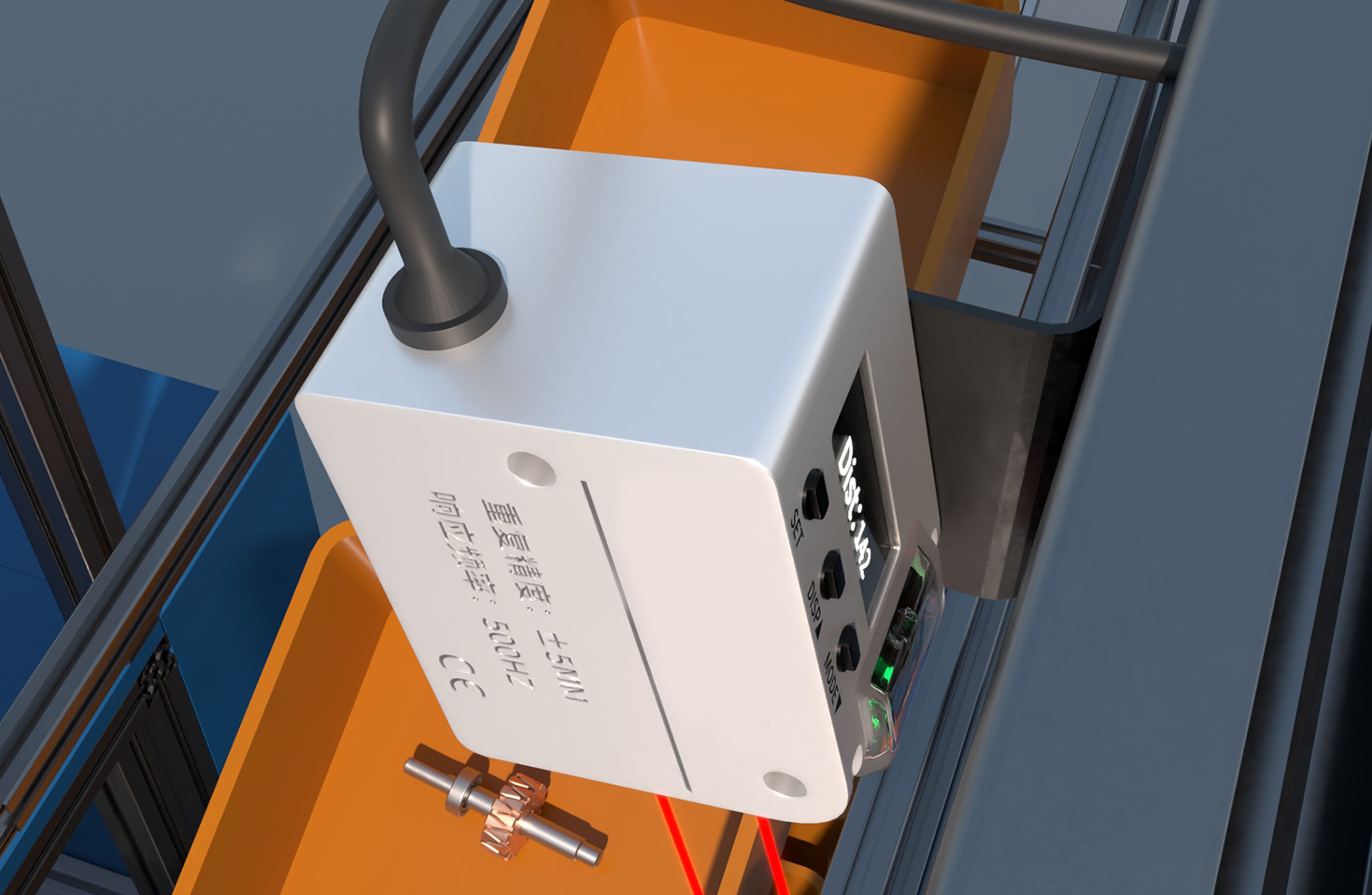
1. Deflection and Vibration Measurement: This is the most common application. Sensors mounted on fixed reference points (like the ground or an adjacent pier) can continuously measure the vertical deflection of a bridge deck under live loads from traffic, wind, or seismic activity. By analyzing the dynamic displacement data, engineers can assess stiffness, damping ratios, and natural frequencies, which are vital for evaluating structural performance and detecting anomalies.
2. Bearing Displacement Monitoring: Expansion bearings and joints are designed to accommodate thermal expansion, contraction, and rotational movements. Laser sensors can precisely monitor the horizontal and vertical movements of these bearings. Excessive or restricted movement can indicate bearing failure, misalignment, or unanticipated thermal stresses, providing early warning for maintenance.
3. Crack and Fracture Propagation: While not a replacement for visual inspection, laser sensors can be deployed to monitor the width of known critical cracks over time. By setting up sensors on either side of a crack, any widening or closing due to load cycles or seasonal changes can be tracked with extreme precision, informing decisions on repair urgency.
4. Pier and Abutment Tilt/Settlement: Long-term monitoring of foundational elements is crucial. Inclination or settlement of piers can be indirectly measured by monitoring the relative displacement between different points on the pier structure using multiple laser sensors. This data is essential for geotechnical assessment.
5. Dynamic Load Testing: During controlled load tests, an array of laser displacement sensors provides a full-field, real-time map of structural response. This data is invaluable for calibrating finite element models (FEM) and verifying that the bridge behaves as designed.
Critical Selection Criteria for Engineers
Choosing the right laser displacement sensor for a bridge project is not a one-size-fits-all decision. Key technical parameters must be evaluated:
* Measuring Range: The distance from the sensor to the target. It must accommodate the expected maximum displacement plus a safety margin. For deck deflection, ranges of 0.5m to 10m are common.
* Accuracy and Resolution: Stated as a percentage of full-scale or a fixed value (e.g., ±0.05% of F.S. or ±10 µm). For SHM, high resolution is often more critical than absolute accuracy to detect subtle trends.
* Sampling Rate: The speed at which the sensor takes measurements. For static or slow thermal movements, a low rate suffices. For capturing vibration modes from traffic, a high sampling rate (500 Hz to several kHz) is necessary to avoid aliasing.
* Laser Spot Size and Type: A small, focused spot is needed for precise point measurement. Visible red lasers are common, but for long-range outdoor use, Class 1 or Class 2 infrared lasers offer better performance in varying light conditions.
* Environmental Robustness: Bridge sites are harsh. Sensors require high Ingress Protection (IP) ratings (e.g., IP67, IP68) for dust and water resistance, wide operating temperature ranges, and robust housing to withstand vibration, humidity, and corrosive atmospheres.
* Output Interface and Power: Standard analog outputs (4-20mA, ±10V) or digital interfaces (RS-485, Ethernet, EtherCAT) must be compatible with the data acquisition system. Power requirements should align with the site's available infrastructure, often requiring low-power or PoE (Power over Ethernet) designs.
Integration and Data Analysis
Successful deployment extends beyond the sensor itself. It involves secure mechanical mounting to minimize sensor vibration, careful alignment, and integration with a robust data acquisition (DAQ) system. The real value is unlocked in data analysis. Time-series data is processed to filter noise, extract static displacements, and perform spectral analysis for dynamic characteristics. Trends are analyzed over days, months, and years to distinguish between normal cyclic behavior (thermal expansion) and potentially dangerous long-term creep or settlement.
Conclusion
Laser displacement sensors represent a paradigm shift in bridge structural health monitoring. They provide engineers with accurate, continuous, and quantitative data that is simply unattainable through periodic manual inspections alone. By enabling the transition from reactive to predictive maintenance, these sensors play a crucial role in extending bridge service life, optimizing maintenance budgets, and, most importantly, ensuring public safety. As sensor technology continues to advance, offering greater accuracy, wireless capabilities, and lower costs, their adoption in bridge engineering and asset management is set to become even more widespread and indispensable.