In modern industrial operations, maintaining optimal coolant levels is critical for preventing equipment freeze-ups, ensuring operational continuity, and safeguarding costly machinery. Traditional float switches or conductive probes have long been used for coolant level monitoring, but they come with limitations such as mechanical wear, sensitivity to fluid contamination, and calibration drift. The advent of laser-based coolant level sensors represents a significant technological leap, offering non-contact, high-precision measurement ideal for harsh industrial environments, particularly in freeze protection applications.
Laser coolant level sensors operate on the principle of time-of-flight (ToF) or triangulation measurement. A laser diode emits a focused beam of light toward the coolant surface. The sensor's photodetector then captures the reflected light. By calculating the time delay between emission and reception (ToF method) or the angle of the reflected beam (triangulation method), the sensor precisely determines the distance to the liquid surface, thereby calculating the coolant level. This non-contact methodology eliminates any physical interaction with the coolant, preventing sensor fouling, corrosion, or damage from fluid properties like high viscosity or the presence of particulates.
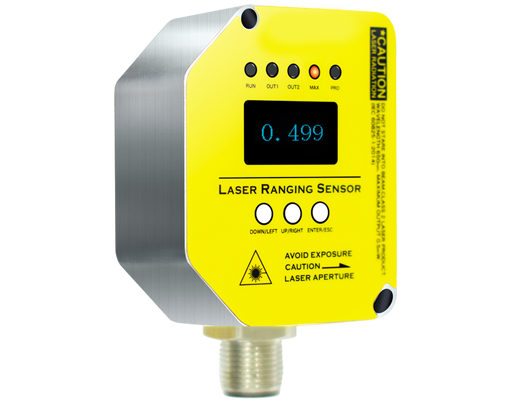
The core advantage of laser sensors in freeze protection systems is their exceptional accuracy and reliability. They can detect minute level changes—often with sub-millimeter resolution—enabling proactive alerts long before coolant drops to a critical threshold where freezing risk becomes imminent. In climates subject to sub-zero temperatures, this early warning is invaluable. For instance, in power generation plants, data centers using liquid cooling, or automotive test facilities, a sudden drop in glycol-based coolant level can lead to pipe bursts and catastrophic system failure. A laser sensor integrated into a supervisory control and data acquisition (SCADA) system can trigger automatic top-up valves or activate alarm sequences, allowing for intervention before temperatures plunge.
Furthermore, laser sensors are largely immune to the dielectric constant variations that plague capacitive sensors or the density changes that affect float devices. Whether monitoring ethylene glycol, propylene glycol, or specialized industrial coolants, the laser measurement remains consistent. Their design often includes robust housings rated IP67 or higher, making them resistant to dust, moisture, and high-pressure washdowns common in industrial settings. Many models feature integrated temperature compensation, ensuring readings stay accurate across the wide operational temperature ranges typical of outdoor or unheated enclosures.
Installation and integration are straightforward. These sensors typically offer analog outputs (4-20 mA, 0-10 V) or digital interfaces (IO-Link, Modbus), allowing seamless connection to programmable logic controllers (PLCs) and industrial networks. Configuration via software enables easy setting of high/low-level setpoints without physical adjustment. Maintenance is minimal, primarily involving periodic lens cleaning to ensure optical clarity, a simple task compared to the disassembly and replacement often required for mechanical sensors.
In conclusion, laser coolant level sensors provide a superior solution for industrial freeze protection. Their precision, non-contact operation, and durability translate into enhanced system reliability, reduced downtime, and prevention of expensive freeze-related damage. As industries increasingly prioritize predictive maintenance and operational resilience, adopting advanced laser sensing technology for critical coolant monitoring is a strategic investment in long-term asset protection and operational efficiency.