Laser confocal sensors represent a significant advancement in non-contact, high-precision measurement technology. Unlike conventional optical sensors, these devices utilize a unique confocal principle to achieve exceptional accuracy and resolution, making them indispensable tools across various industrial sectors, from semiconductor manufacturing to biomedical engineering. This article delves into the operational principles, key applications, and distinct advantages of laser confocal sensors.
The fundamental principle behind a laser confocal sensor is based on confocal microscopy. A point light source, typically a laser diode, emits light that is focused onto the target surface by an objective lens. The same lens collects the light reflected from the target. A critical component is a pinhole aperture placed in front of the detector, precisely conjugate to the focal point (hence "confocal"). Only the light reflected from the exact focal plane passes efficiently through this pinhole and reaches the detector. Light reflected from points above or below the focal plane is largely blocked. By rapidly oscillating the focal point or the objective lens along the optical axis (a process known as axial scanning), the sensor can determine the exact distance to the target surface—the point where the detected light intensity is at its maximum corresponds to the target's position. This spatial filtering effect is what grants confocal sensors their superior axial resolution and strong suppression of stray light from out-of-focus regions.
The applications for laser confocal sensors are vast and growing. In the electronics industry, they are crucial for measuring the thickness of thin films, wafer bow, and the profile of microstructures with nanometer-level precision. Automotive manufacturers employ them for inline inspection of engine components, ensuring precise tolerances for pistons, fuel injector nozzles, and gear teeth. In precision machining, they measure surface roughness, step heights, and the geometry of tiny drilled holes. Furthermore, their ability to measure transparent or multi-layered objects, such as glass thickness or coating layers, sets them apart from other optical methods. In life sciences, adapted confocal systems are used for 3D imaging of biological specimens, though industrial sensors are optimized for speed and robustness in harsh environments.
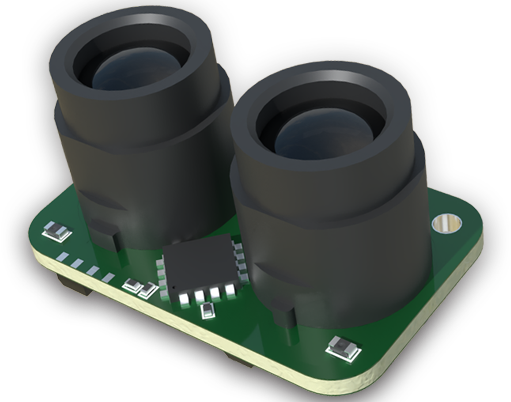
Several key advantages define laser confocal sensors. First is their high resolution, capable of detecting height changes in the sub-micron or even nanometer range. Second, they exhibit excellent measurement stability, largely immune to variations in target color, reflectivity, or ambient light due to the confocal principle. They can measure a wide range of materials, including shiny metals, dark plastics, transparent glass, and even liquids. The non-contact nature eliminates any risk of damaging delicate surfaces. Modern laser confocal sensors also offer high sampling speeds, making them suitable for dynamic measurements and high-throughput production lines. Their compact probe designs allow for integration into complex machinery and hard-to-reach areas.
When selecting a laser confocal sensor, engineers must consider parameters such as measurement range, stand-off distance, spot size, linearity, and sampling rate. The choice depends on the specific application: a large range for profile scanning versus a small spot size for measuring fine features. Integration with automation systems via standard interfaces like Ethernet or analog outputs is also a standard requirement.
In conclusion, laser confocal sensors provide a powerful solution for demanding measurement tasks where extreme accuracy, reliability, and versatility are paramount. Their unique optical design overcomes many limitations of traditional triangulation or interferometry-based sensors. As manufacturing tolerances continue to shrink and quality control standards rise, the adoption of laser confocal sensing technology is poised to expand further, driving innovation and ensuring precision in the factories of the future. Ongoing developments aim to increase speed, reduce sensor size, and enhance software capabilities for real-time data analysis and AI-driven inspection.