In the realm of industrial measurement and control, achieving high-precision, reliable, and non-contact distance measurement is a persistent challenge. Traditional methods often fall short in harsh environments involving extreme temperatures, electromagnetic interference (EMI), or hazardous conditions. This is where fiber optic laser distance sensors emerge as a superior solution, leveraging the unique properties of light and optical fibers to deliver exceptional performance where other technologies cannot.
At its core, a fiber optic laser distance sensor operates on the principle of optical triangulation or time-of-flight (ToF) measurement, transmitted through a flexible fiber optic cable. In a typical triangulation-based sensor, a laser diode emits a focused beam of light through the transmitting fiber onto the target surface. The reflected light is then captured by a separate receiving fiber or fiber bundle and directed onto a position-sensitive detector (PSD) or a CMOS/CCD array. The position of the reflected light spot on the detector shifts proportionally to the change in the target's distance. This analog shift is processed by the sensor's electronics to calculate and output a precise distance value. For longer ranges, phase-shift or pulsed ToF methods are employed, measuring the time delay of a modulated laser signal traveling to the target and back through the fiber.
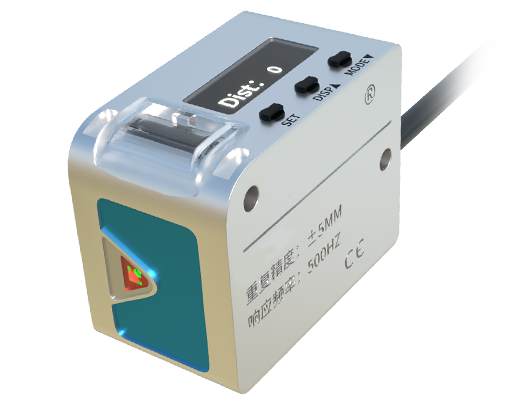
The integration of fiber optics is the key differentiator. The optical fiber acts as a passive conduit for the laser light, separating the sensitive electronic processing unit from the measurement point. This architecture confers several critical advantages. First, it provides exceptional immunity to EMI, radio frequency interference (RFI), and electrical noise, making these sensors ideal for use near variable frequency drives, welding equipment, or high-power machinery. Second, the sensor head can be extremely small and lightweight, enabling measurements in confined spaces. Third, the remote electronics can be placed in a benign control cabinet, while the fiber-optic probe withstands extreme environments—including temperatures ranging from cryogenic levels up to several hundred degrees Celsius, high vacuum, corrosive atmospheres, or areas with high explosion risk (intrinsically safe design). Furthermore, fibers offer flexibility in installation, allowing the probe to be routed around obstacles to reach difficult or hazardous measurement points.

The applications for fiber optic laser distance sensors are vast and span numerous industries. In semiconductor manufacturing, they measure wafer warpage, film thickness, and robot arm positioning in cleanrooms, unaffected by static charges. In the automotive sector, they are used for precision gap and flush measurement on assembly lines, inspection of brake disc thickness, and monitoring of robotic welding torch height. Within heavy industry and metallurgy, they provide continuous measurement of hot slab dimensions in rolling mills, refractory wear in furnaces, and vibration analysis on turbines, all in the presence of intense heat and dust. They are also indispensable in pharmaceutical packaging for fill-level control and in renewable energy for monitoring blade deflection on wind turbines.
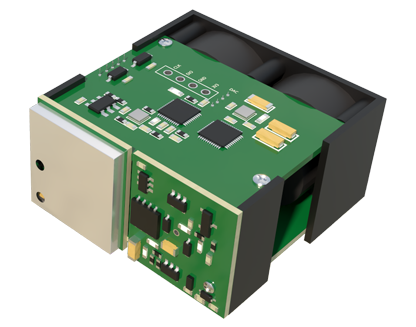
Selecting the appropriate fiber optic laser sensor requires careful consideration of several parameters. The primary specification is the measuring range, which can vary from sub-millimeter spans for ultra-precise micro-measurements to several meters for larger-scale positioning. Resolution and linearity define the sensor's accuracy and must be matched to the application's tolerance requirements. The spot size of the laser on the target is crucial; a small spot allows for precise measurement of specific features, while performance can be affected by the target's color, material, and surface texture. Most sensors feature automatic background suppression or teach-in functions to compensate for these variations. The choice of fiber type (single-core, bundle), connector, and probe tip geometry (straight, right-angle) depends on the installation constraints. Finally, the output signal (analog voltage/current, digital IO-Link, RS-485) must be compatible with the existing control system.
In conclusion, fiber optic laser distance sensors represent a sophisticated fusion of photonics and fiber optic technology, engineered to solve complex measurement problems in demanding industrial environments. Their ability to deliver micron-level precision remotely, immune to environmental adversities, makes them not just an alternative but often the only viable choice for mission-critical applications. For engineers designing advanced automation, quality control, and condition monitoring systems, understanding and leveraging the capabilities of these sensors is essential for enhancing process reliability, product quality, and operational safety.