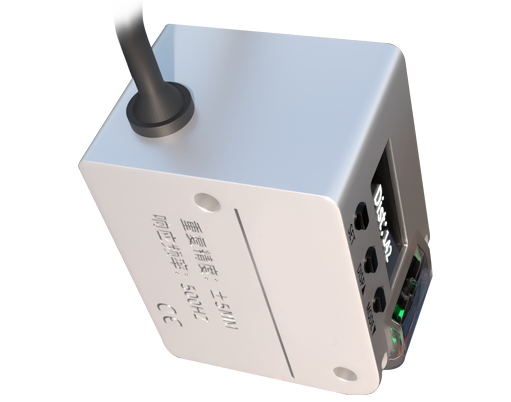
In modern industrial automation and robotics, laser sensors have become indispensable tools for precise dynamic distance measurement. These devices operate on the principle of emitting laser beams toward a target and analyzing the reflected light to calculate distance in real-time. Unlike static measurement systems, dynamic distance measurement involves continuously tracking moving objects, which is critical for applications such as assembly line monitoring, autonomous vehicle navigation, and quality control in manufacturing.
Laser sensors for dynamic measurement typically utilize time-of-flight (ToF) or triangulation methods. Time-of-flight sensors measure the round-trip time of a laser pulse to determine distance, offering high accuracy over long ranges—often up to several meters. This makes them suitable for large-scale environments like warehouse logistics or construction sites. Triangulation-based sensors, on the other hand, use geometric calculations with a laser emitter and a receiver positioned at an angle. They excel in short-range applications requiring micron-level precision, such as inspecting surface defects or monitoring robotic arm movements.
The advantages of laser sensors in dynamic scenarios are manifold. They provide non-contact measurement, eliminating wear and tear and allowing for high-speed data acquisition—some models can capture thousands of measurements per second. This speed is essential for real-time feedback in closed-loop control systems, where delays could lead to errors or accidents. Additionally, laser sensors are largely unaffected by ambient light or environmental factors like dust and humidity, thanks to advanced filtering technologies and narrow-wavelength laser sources. For instance, in automotive manufacturing, laser sensors dynamically measure the gap between car body panels during assembly, ensuring consistent quality without physical contact.
However, challenges persist in dynamic distance measurement. Moving targets with varying reflectivity or complex surfaces can cause signal noise or dropout. Engineers address this by integrating adaptive algorithms that adjust sensor parameters on-the-fly or by using multiple sensors in fusion setups. For example, in robotic pick-and-place operations, laser sensors combined with inertial measurement units (IMUs) can track objects in 3D space, compensating for sudden movements. Moreover, safety considerations are paramount, especially with Class 2 or higher lasers; proper shielding and compliance with standards like IEC 60825 are necessary to prevent ocular hazards.
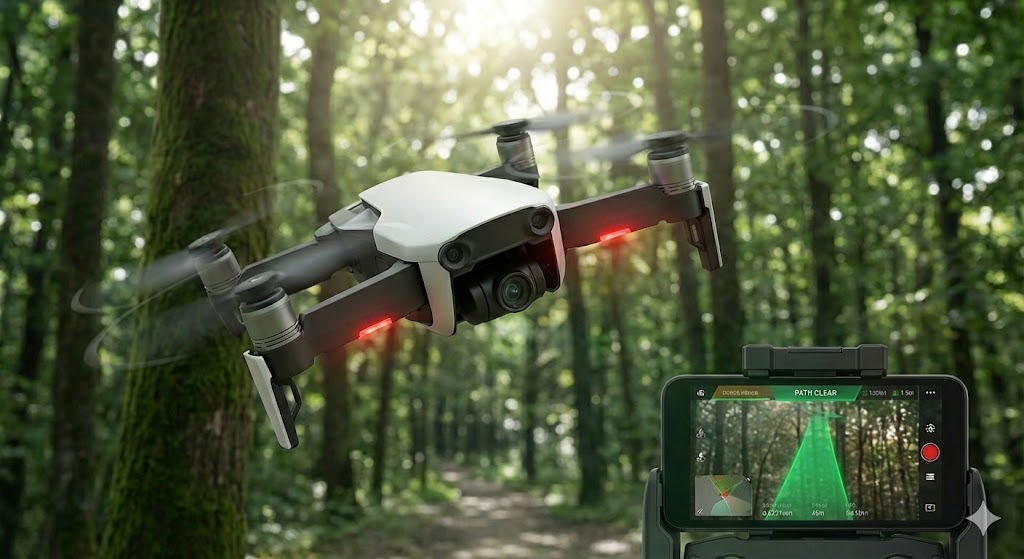
Looking ahead, trends in laser sensor technology focus on enhancing integration and intelligence. Miniaturization allows embedding sensors into compact devices like drones or wearable tech, while AI-driven analytics enable predictive maintenance by detecting anomalies in distance data. In smart factories, laser sensors networked via IoT platforms facilitate real-time monitoring across production lines, boosting efficiency. As industries embrace Industry 4.0, the role of laser sensors in dynamic distance measurement will only expand, driven by demands for higher precision, faster response, and seamless automation.
In summary, laser sensors offer a robust solution for dynamic distance measurement, balancing accuracy, speed, and reliability. By understanding their working principles and applications, engineers can leverage these tools to optimize industrial processes, from precision machining to autonomous systems, paving the way for more innovative and efficient operations.