In the landscape of modern industrial automation and quality control, precision measurement is not merely an advantage—it is an absolute necessity. Among the suite of advanced sensing technologies, laser-based sensors, specifically laser height sensors and laser plane sensors, have emerged as critical tools for achieving unparalleled accuracy, speed, and reliability. These devices operate on non-contact principles, projecting a focused laser beam onto a target surface and analyzing the reflected light to determine distance or profile with micron-level precision.
Laser height sensors, often referred to as laser displacement sensors, are designed to measure the distance from the sensor head to a single point on a target object. The core technology typically involves triangulation or time-of-flight principles. In triangulation, a laser diode emits a beam that strikes the target. The reflected light is focused onto a position-sensitive detector (PSD) or a CMOS/CCD array. Any change in the target's distance causes the reflected spot to shift position on the detector, allowing the sensor's processor to calculate the exact height or displacement. This method is exceptionally fast and suitable for applications requiring high-speed inspection of component thickness, warp, vibration, or precise positioning. Time-of-flight sensors measure the round-trip time of a laser pulse, making them ideal for longer ranges, though often with slightly lower resolution compared to triangulation at short distances.
The applications for laser height sensors are vast and integral to manufacturing. On assembly lines, they verify the correct placement of components, such as ensuring a chip is properly seated on a circuit board or checking the fill level in containers without physical contact. In robotics, they provide crucial feedback for precise end-effector positioning and obstacle avoidance. Furthermore, in industries like semiconductor and electronics manufacturing, these sensors are indispensable for measuring wafer warpage, solder paste height, and micro-component profiles, where even a micron of deviation can lead to product failure.
While laser height sensors excel at point measurement, many industrial challenges require profiling an entire surface or aligning multiple points simultaneously. This is where laser plane sensors, also known as laser line sensors or profile scanners, come into play. Instead of a single point, these sensors project a thin, fan-shaped laser line onto the target object. A high-resolution camera, positioned at a known angle to the laser emitter, captures the deformation of this line. Sophisticated software then analyzes this captured line profile. Any variation in the target's surface topography—a groove, a step, a bulge—causes a distinct distortion in the laser line. By processing this image in three dimensions, the system can reconstruct a complete cross-sectional profile of the object.
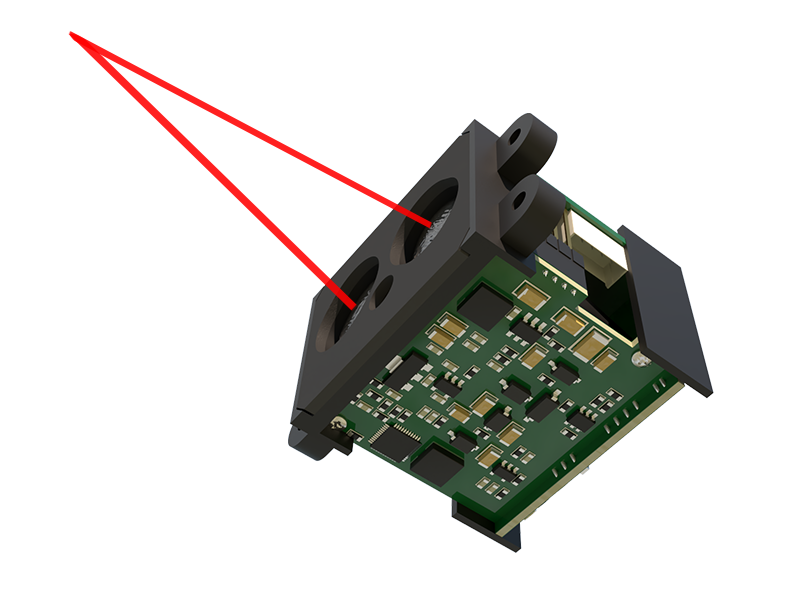
The power of laser plane sensors lies in their ability to perform 2D and 3D inspections at high speeds. They are the workhorses of dimensional quality control. For instance, in automotive manufacturing, a laser plane sensor can scan the entire profile of a tire tread, a welded seam, or a car body panel to detect gaps, flushness, or surface defects in real-time. In logistics, they are used for volume measurement of packages on conveyor belts. In metalworking, they inspect the straightness of extruded profiles or the dimensions of machined parts. The data generated is not just a set of measurements but a comprehensive digital twin of the object's contour, enabling statistical process control and predictive maintenance.
The selection between a laser height sensor and a laser plane sensor depends fundamentally on the application's requirements. Key decision factors include the required measurement range, resolution, speed, and the nature of the target (e.g., material, color, surface finish). Highly reflective or transparent surfaces can pose challenges for some laser sensors, often necessitating specialized models with adjustable sensitivity or different wavelength lasers. Environmental factors like ambient light, dust, and vibration must also be considered, with many industrial-grade sensors featuring robust housings (IP67 ratings are common) and built-in algorithms to compensate for interference.
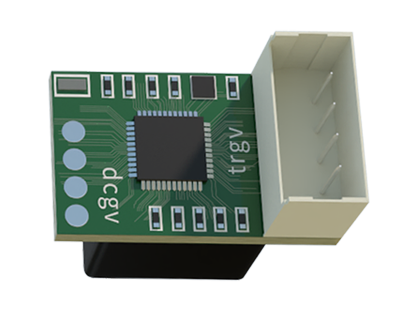
Integration of these sensors into a larger control system is seamless, thanks to standard digital and analog outputs (Ethernet, EtherCAT, PROFINET, 4-20mA, 0-10V). This allows them to communicate directly with PLCs, PCs, or robotic controllers, triggering actions like part acceptance/rejection or initiating machine adjustments without human intervention. The trend is moving towards smarter sensors with embedded processing capabilities, reducing the load on central controllers and enabling decentralized, real-time decision-making at the edge of the network.
In conclusion, laser height and plane sensors represent a cornerstone of Industry 4.0 and smart factory initiatives. They transform physical attributes into precise, actionable digital data, closing the loop in automated processes and ensuring consistent product quality. As manufacturing tolerances become tighter and production speeds increase, the demand for these advanced optical measurement solutions will only grow. Their continued evolution, including improvements in resolution, faster data rates, and enhanced software analytics, will further empower engineers to solve complex measurement challenges, driving efficiency and innovation across the electrical, automotive, aerospace, and consumer goods industries. The future of precision manufacturing is, quite literally, illuminated by laser light.