In the rapidly evolving landscape of industrial automation, smart infrastructure, and IoT-enabled devices, proximity sensors have become indispensable components. Their ability to detect the presence or absence of an object without physical contact underpins countless applications, from assembly line robotics and automotive safety systems to consumer electronics and smart appliances. The performance, reliability, and cost-effectiveness of these sensors on a mass-production scale are intrinsically linked to the specific raw materials employed in their construction. This article delves into the critical raw materials that form the backbone of large-scale proximity sensor manufacturing, examining their properties, roles, and the technical considerations driving material selection for different sensing technologies.
The core functionality of a proximity sensor is defined by its underlying technology, with inductive, capacitive, and photoelectric (optical) sensors being the most prevalent in industrial settings. Each type imposes distinct material requirements. For inductive sensors, which detect metallic objects through electromagnetic field disturbances, the primary raw material is a high-permeability ferrite core. This core, often composed of manganese-zinc (MnZn) or nickel-zinc (NiZn) ferrites, is crucial for concentrating the magnetic flux generated by a copper wire coil. The coil itself is typically made from high-purity, enamel-coated copper wire to ensure efficient conductivity and minimal energy loss. The housing that encapsulates the coil and core must provide robust mechanical protection and electromagnetic shielding. For this, engineering plastics like Polyamide (PA, e.g., Nylon) or Polybutylene Terephthalate (PBT) are standard, often filled with glass fibers for enhanced strength and thermal stability. Metallic housings, usually from brass or stainless steel, are used in harsh environments requiring superior shielding and durability.
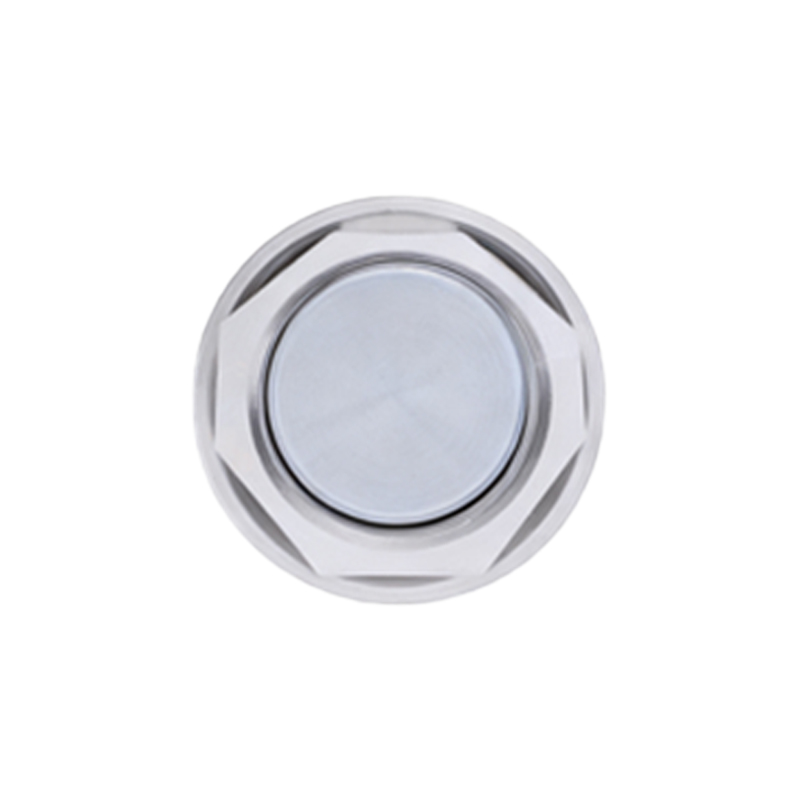
Capacitive sensors, capable of detecting both metallic and non-metallic materials by measuring changes in capacitance, share some material commonalities with inductive types but have key differences. The sensing face is a critical electrode, frequently made from a corrosion-resistant metal like gold-plated brass or stainless steel to maintain a stable surface potential. The oscillator and circuitry within require high-quality substrates. While traditional printed circuit boards (PCBs) use FR-4 glass epoxy, advanced or miniaturized sensors may employ ceramics (e.g., Alumina) for superior stability and thermal management. The housing materials must have controlled dielectric properties to prevent unwanted field interference. Plastics such as PBT, Polycarbonate (PC), or Acrylonitrile Butadiene Styrene (ABS) are commonly selected, sometimes with specific additives to tailor their dielectric constant.
Photoelectric sensors, which operate on the principle of light transmission and reception, present the most diverse material palette. The heart of these sensors is the optoelectronic pair: an emitter (usually an Infrared LED or Laser Diode) and a receiver (a phototransistor or photodiode). The semiconductor materials for these components are primarily Gallium Arsenide (GaAs) for IR LEDs and Silicon (Si) or Germanium (Ge) for receivers. The optical path demands materials with exceptional clarity and environmental resistance. Lenses and windows are predominantly made from optical-grade polymers like Poly(methyl methacrylate) or PMMA (Acrylic) or Polycarbonate. For high-temperature or abrasive applications, fused silica or specialty glasses are used. The housing must block ambient light interference, leading to the use of opaque, often black-pigmented plastics like PA or PBT, with careful internal baffling design.
Beyond these technology-specific materials, several universal raw materials are vital across all sensor categories. Conductive elements like copper for internal wiring and gold or tin-lead alloys for connector plating ensure signal integrity. Encapsulation compounds, typically epoxy resins or silicone gels, protect delicate internal electronics from moisture, vibration, and chemical exposure. Finally, the trend towards miniaturization and enhanced functionality is driving the adoption of advanced materials. These include Low-Temperature Co-fired Ceramics (LTCC) for multi-layer, integrated sensor modules, and specialized composite plastics with inherent shielding or sensing properties.
The selection process for these raw materials is a complex engineering trade-off involving electrical properties (permeability, permittivity, conductivity), mechanical strength, thermal expansion coefficients, environmental resistance (to oils, chemicals, UV radiation), long-term stability, and, crucially, cost and availability for high-volume manufacturing. A shift in a material specification can significantly impact sensor range, response time, operating temperature window, and lifecycle cost. As Industry 4.0 demands smarter, more connected, and more robust sensing solutions, material science continues to be a primary innovation frontier. Developments in nano-materials, organic electronics, and sustainable, recyclable polymers are poised to shape the next generation of proximity sensors, enabling them to perform in more challenging environments while becoming more integrated and cost-effective for global, large-scale deployment.