In the realm of industrial automation and smart systems, the ability to detect the presence, absence, or position of an object without physical contact is paramount. Photoelectric proximity sensors stand as a cornerstone technology enabling this capability. These devices operate on a simple yet powerful principle: they emit a beam of light and detect changes in the received light signal caused by the presence of an object within their sensing range. This non-contact detection method offers significant advantages over mechanical switches, including higher reliability, longer operational life, and the ability to sense a wide variety of materials.
The fundamental working principle involves three core components: an emitter (light source), a receiver (photodetector), and associated signal processing circuitry. The emitter, typically a Light Emitting Diode (LED), projects a beam of modulated light—often infrared, visible red, or laser light. The receiver is tuned to detect this specific light signal. When an object interrupts or reflects this beam (depending on the sensor type), the change in the light intensity at the receiver is converted into an electrical signal, which is then processed to trigger a switch-like output.
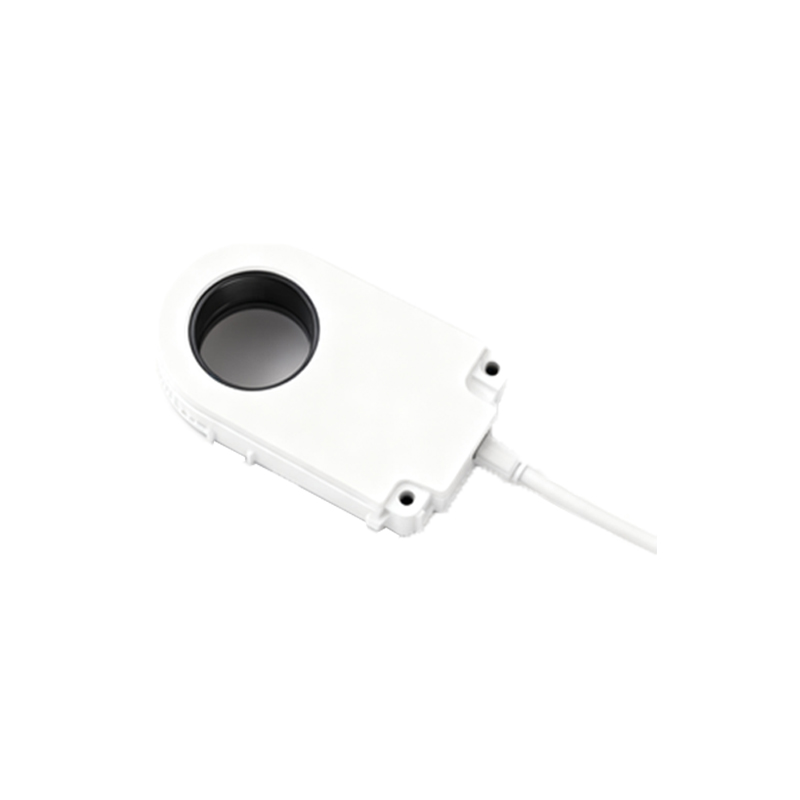
Photoelectric sensors are primarily categorized into three main types based on their optical design and detection method. The first type is the through-beam sensor, also known as the opposed mode sensor. It consists of two separate units: a transmitter and a receiver, positioned opposite each other. Detection occurs when an object breaks the light beam traveling from the emitter to the receiver. This configuration offers the longest sensing distances and high reliability, as it is largely immune to the object's color, surface finish, or angle. Common applications include part counting on conveyor belts, break detection in packaging machinery, and safety curtains.
The second major type is the retro-reflective sensor. Here, both the emitter and receiver are housed in a single unit. The sensor works in conjunction with a reflector, usually a corner-cube prism, which reflects the emitted light beam directly back to the receiver. An object is detected when it interrupts this reflected beam. This design provides a practical compromise, offering longer ranges than diffuse sensors and easier installation than through-beam systems, as it requires wiring only on one side. A key feature is the ability to ignore shiny objects through polarization filters, preventing false triggers.
The third and most versatile category is the diffuse reflective sensor, or proximity mode sensor. In this design, the emitter and receiver are also in one housing, but it does not require a separate reflector. Instead, it detects an object by the light diffusely reflected from the object's own surface. The sensing distance depends heavily on the object's size, color, and surface texture—lighter, matte surfaces reflect more light and can be detected from farther away. These sensors are ideal for applications where mounting a reflector or a separate receiver is impractical, such as detecting objects on a conveyor or sensing the level of bulk materials.
Beyond these core types, specialized variants like background suppression and convergent beam sensors offer solutions for challenging detection tasks. Background suppression sensors use triangulation to detect objects only within a precise, defined range, ignoring more distant backgrounds. Convergent beam sensors focus the emitted light to a specific point, allowing for precise detection of small objects or edges.
The applications of photoelectric proximity sensors span virtually every industry. In manufacturing, they are ubiquitous for part positioning, jam detection, and robotic guidance. In logistics and packaging, they control filling levels, count items, and verify label presence. They ensure safety by monitoring guard door positions and creating light barriers. In the automotive sector, they are used in assembly lines for precise component placement. Their robustness, speed, and flexibility make them indispensable in creating efficient, automated, and intelligent systems. When selecting a sensor, engineers must consider factors such as required sensing distance, target material properties, environmental conditions (like dust, fog, or ambient light), response time, and output configuration to ensure optimal performance and reliability.