In modern industrial and commercial environments, the ability to accurately detect human presence or proximity is crucial for safety, automation, and energy efficiency. Proximity sensors, designed to identify the approach of personnel without physical contact, rely on various physical principles to achieve this function. This article explores the primary sensor technologies used for human proximity detection, their operational mechanisms, and practical applications across different sectors.
One of the most common technologies is the infrared (IR) sensor, which operates by emitting infrared light and measuring its reflection. Passive infrared (PIR) sensors, in particular, detect changes in infrared radiation emitted by warm objects, such as the human body. When a person moves within the sensor's field of view, the variation in IR levels triggers an output signal. These sensors are widely used in lighting control, security systems, and automatic doors due to their cost-effectiveness and reliability. However, they may have limitations in environments with extreme temperatures or where fine detection granularity is required.
Capacitive proximity sensors offer another approach by detecting changes in capacitance caused by the presence of a conductive object, including the human body. These sensors generate an electrostatic field and monitor disturbances when a person approaches. They are highly sensitive and can detect through non-metallic materials, making them suitable for applications like touch-sensitive switches and industrial safety barriers. However, they can be influenced by environmental factors such as humidity and require careful calibration to avoid false triggers.
Ultrasonic sensors utilize sound waves beyond the human hearing range to measure distance. By emitting ultrasonic pulses and calculating the time taken for echoes to return, these sensors can determine the presence and proximity of objects, including people. They are effective in harsh environments where dust, smoke, or varying light conditions might impair other sensors. Common uses include occupancy detection in buildings, robotic navigation, and vehicle parking assistance. Despite their versatility, ultrasonic sensors may face challenges with soft materials that absorb sound waves or in noisy acoustic settings.
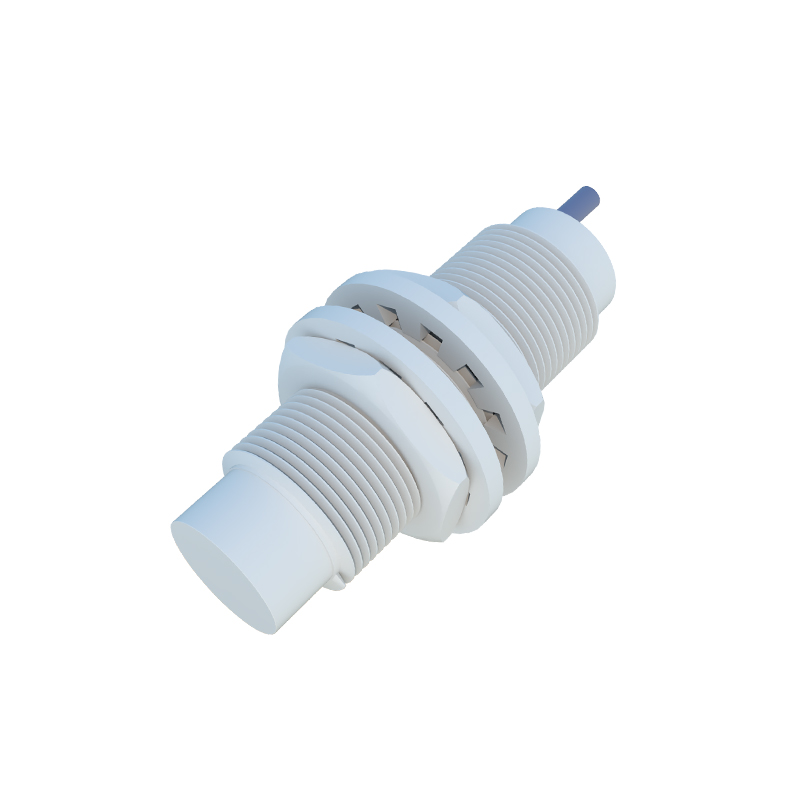
Microwave sensors work by emitting continuous microwave signals and analyzing the Doppler shift caused by moving objects. When a person approaches, the frequency of the reflected wave changes, allowing the sensor to detect motion. These sensors are highly sensitive and can cover larger areas compared to IR or ultrasonic types. They are often employed in advanced security systems, automatic lighting, and traffic monitoring. However, they may penetrate walls and detect movement beyond intended areas, requiring precise installation to minimize interference.
Recent advancements have led to the integration of multiple sensing technologies, such as combining PIR with ultrasonic or microwave sensors, to enhance accuracy and reduce false alarms. Additionally, the rise of smart sensors with embedded algorithms and connectivity enables real-time data processing and integration into IoT (Internet of Things) systems. For instance, in smart buildings, proximity sensors can adjust lighting and HVAC systems based on occupancy, optimizing energy use while maintaining comfort.
In industrial settings, proximity detection plays a vital role in safety protocols. Sensors are deployed around machinery to create safety zones, automatically halting equipment when a worker enters a hazardous area. This application is critical in preventing accidents and complying with occupational safety regulations. Moreover, in retail and hospitality, sensors enable interactive displays and automated services, improving customer experience without manual intervention.
When selecting a sensor for human proximity detection, factors such as detection range, environmental conditions, power consumption, and cost must be considered. Each technology has its strengths and limitations, and the choice often depends on the specific application requirements. For example, IR sensors are ideal for indoor lighting control, while ultrasonic sensors might be preferred for outdoor or industrial environments with obstructions.
In conclusion, sensors for judging human proximity leverage diverse physical principles to enable safe, efficient, and automated operations. As technology evolves, we can expect further improvements in sensitivity, miniaturization, and intelligence, driving innovation across industries from manufacturing to smart cities. Understanding these technologies helps engineers and designers implement effective solutions tailored to their needs.