This experiment report details the programming and functional testing of inductive proximity sensors in a controlled industrial automation environment. The primary objective was to evaluate sensor response characteristics, interface programming logic with a programmable logic controller (PLC), and troubleshoot common integration issues.
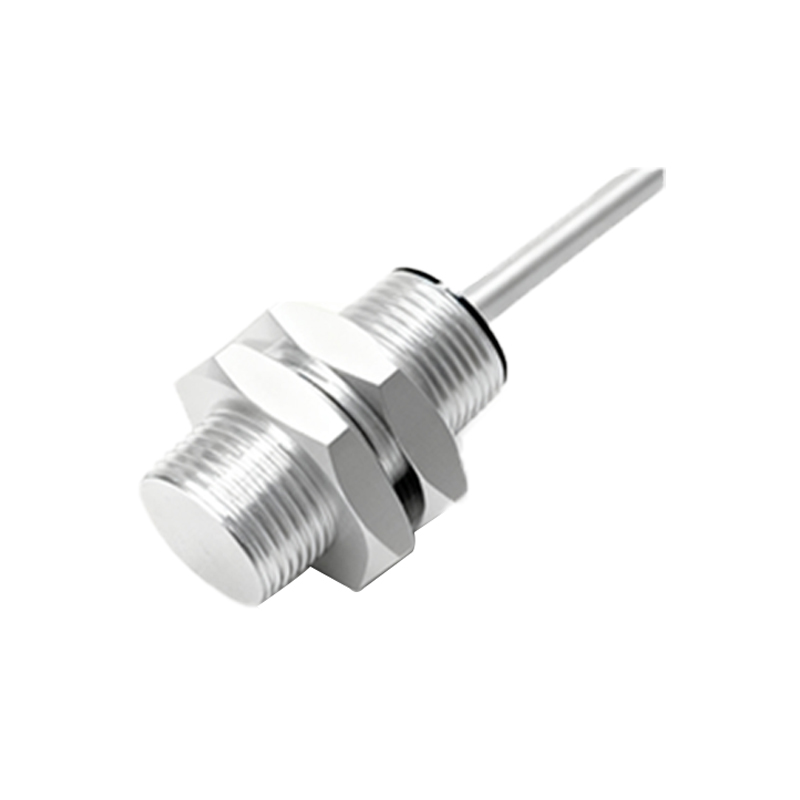
The experimental setup comprised a standard 24V DC, normally open (NO) inductive proximity sensor (model PRX-18M30), an Allen-Bradley MicroLogix 1400 PLC, a small metallic test actuator (steel, 15mm x 15mm), and a conveyor belt simulator. The sensor was mounted on a fixed bracket, and its sensing face was positioned parallel to the path of the actuator. The PLC was programmed using RSLogix 500 software with ladder logic.
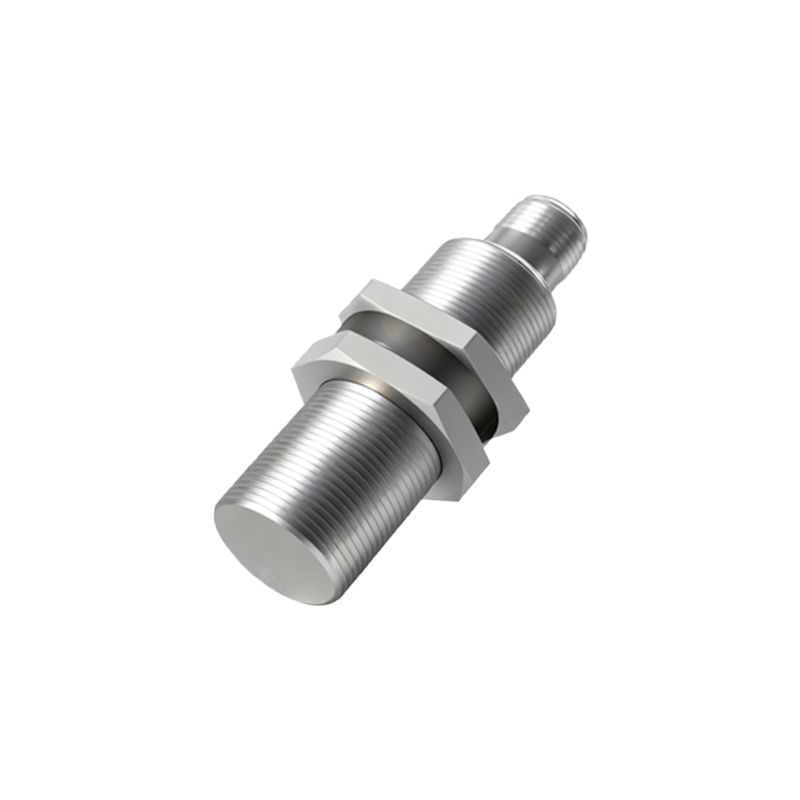
The core programming logic involved configuring a discrete input channel on the PLC to receive the sensor's signal. The sensor's brown wire was connected to the 24V DC supply positive, the blue wire to the supply common/negative, and the black output wire to the PLC's input terminal I:0/0. A simple rung was created where input I:0/0 directly controlled an output coil O:0/0, which was linked to a pilot light for visual confirmation. The program was then downloaded to the PLC processor.
During the testing phase, the metallic actuator was moved toward the sensor's sensing face at varying speeds. The sensor's specified sensing distance was 8mm. Experimental data was recorded, noting the actual detection distance, the consistency of the output signal, and the PLC's response time. At the rated 8mm distance, the sensor reliably triggered the PLC input, illuminating the pilot light. The response was consistent across multiple trials. However, it was observed that when the actuator approached at a very high velocity (>1 m/s), occasional signal chatter was detected by the PLC input module, requiring a debounce routine in the ladder logic.
To address this, a timer-off-delay (TOF) instruction was added to the ladder logic rung. The timer prevented the output O:0/0 from de-energizing until a preset time (e.g., 50 milliseconds) had elapsed after input I:0/0 turned off. This effectively filtered out brief signal losses caused by rapid object movement or minor vibration, ensuring a stable output.
Further tests examined environmental factors. Bringing a non-target aluminum object within the sensing field did not trigger the sensor, confirming the inductive sensor's specificity for ferrous metals. Electrical noise simulation, by running a high-current relay coil nearby, initially caused sporadic false triggers. This was mitigated by using shielded cable for the sensor's output signal and ensuring proper grounding of the sensor housing and the PLC common.
The experiment successfully demonstrated the fundamental steps for integrating a proximity sensor with a PLC system. Key findings include the importance of programming debounce logic for high-speed applications, the necessity of using shielded cabling in electrically noisy environments, and verifying the sensor's detection specificity for the intended target material. The programmed system proved robust and reliable for basic object detection tasks. Recommendations for future work include experimenting with different sensor types (e.g., capacitive, ultrasonic), implementing more complex PLC logic for counting or positioning, and testing sensor performance under extreme temperature variations.