In the realm of industrial automation, the reliable detection of objects without physical contact is a fundamental requirement. Among the various sensing technologies available, 24V DC proximity sensors stand out as a cornerstone component, prized for their robustness, versatility, and compatibility with standard industrial control systems. This article delves into the operational principles, key types, selection criteria, and application best practices for these ubiquitous devices.
At its core, a proximity sensor is a device that detects the presence or absence of an object within a specified range. The 24V DC designation refers to its operating voltage, which has become the de facto standard in factory automation environments. This voltage level offers an optimal balance between safety (being classified as extra-low voltage in many regions) and the ability to drive sufficient current for reliable switching and noise immunity over typical cable runs in industrial settings.
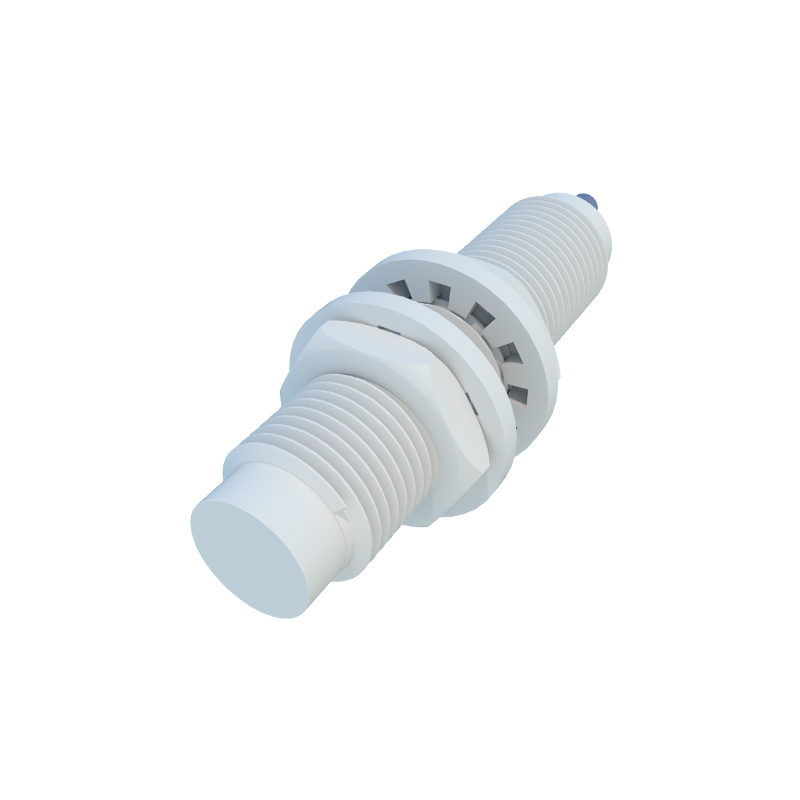
Proximity sensors operating on 24V DC primarily utilize one of two sensing technologies: inductive or capacitive. Inductive proximity sensors are the most common type used for detecting metallic objects. They generate an electromagnetic field from a coil driven by an oscillator. When a ferrous or non-ferrous metal target enters this field, it induces eddy currents, causing a change in the oscillation amplitude. This change is detected by the sensor's circuitry, which subsequently triggers a solid-state output switch. These sensors are ideal for detecting machine parts, tools, and metal components on conveyors, offering excellent repeatability and resistance to environmental contaminants like oil, dust, and coolant.
Capacitive proximity sensors, on the other hand, can detect both metallic and non-metallic materials, including liquids, plastics, wood, and granules. They function by generating an electrostatic field. The presence of any material with a dielectric constant different from air alters the capacitance of the sensor's circuit, triggering the output. This makes them invaluable in applications such as level detection in tanks, material handling of non-metallic products, and presence detection of packaging materials.
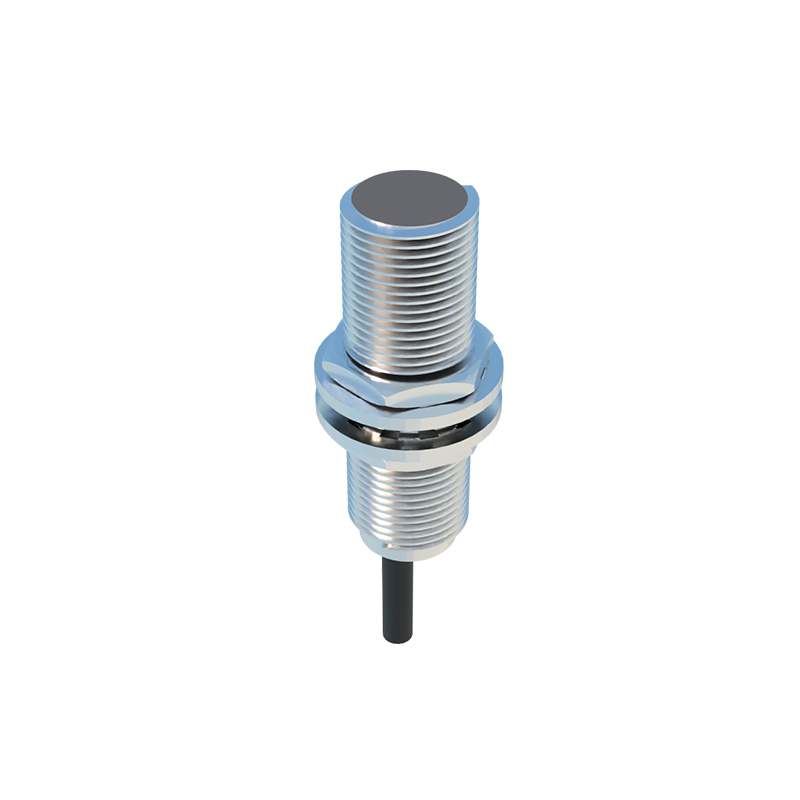
When selecting a 24V DC proximity sensor for an application, several critical parameters must be considered. The sensing distance, or nominal range, is specified by the manufacturer and is typically calibrated for a standard mild steel target. For non-standard materials, a correction factor must be applied. The housing style is another vital choice; cylindrical threaded barrels (e.g., M8, M12, M18, M30) are common for easy mounting, while rectangular or block-style housings may be used for specialized applications. The output configuration is equally important: NPN (sinking) and PNP (sourcing) are the two primary transistor output types, with PNP being more prevalent in many European and modern global designs. Some sensors also offer analog (4-20mA or 0-10V) or IO-Link outputs for distance-proportional data. Environmental ratings, particularly the Ingress Protection (IP) code (e.g., IP67, IP69K), are non-negotiable for ensuring reliable operation in harsh conditions involving water, dust, or high-pressure washdowns.
Installation and wiring are straightforward but require attention to detail. A typical three-wire 24V DC sensor has connections for brown (24V+), blue (0V common), and black (output signal). Proper shielding and routing of cables away from high-power lines are essential to prevent electromagnetic interference. It is also crucial to respect the specified mounting conditions; for instance, flush-mountable sensors can be installed flush with a metal surface without losing their sensing range, whereas non-flush types require a clear zone around the sensing face.
The applications for 24V DC proximity sensors are virtually limitless within automation. They serve as primary inputs for Programmable Logic Controllers (PLCs) for tasks like position sensing on linear actuators, rotary speed monitoring on shafts via gear teeth detection, part counting on assembly lines, and end-of-travel limit detection. Their solid-state nature, with no moving mechanical parts, grants them a long operational life, often rated in millions of cycles, making them significantly more reliable than traditional mechanical limit switches.
In conclusion, the 24V DC proximity sensor is an indispensable workhorse in modern industrial control. Its standardization, reliability, and adaptability make it the first choice for engineers designing robust and efficient automated systems. A thorough understanding of its types, specifications, and application nuances is key to leveraging its full potential, ensuring seamless integration, and maximizing uptime in demanding production environments.