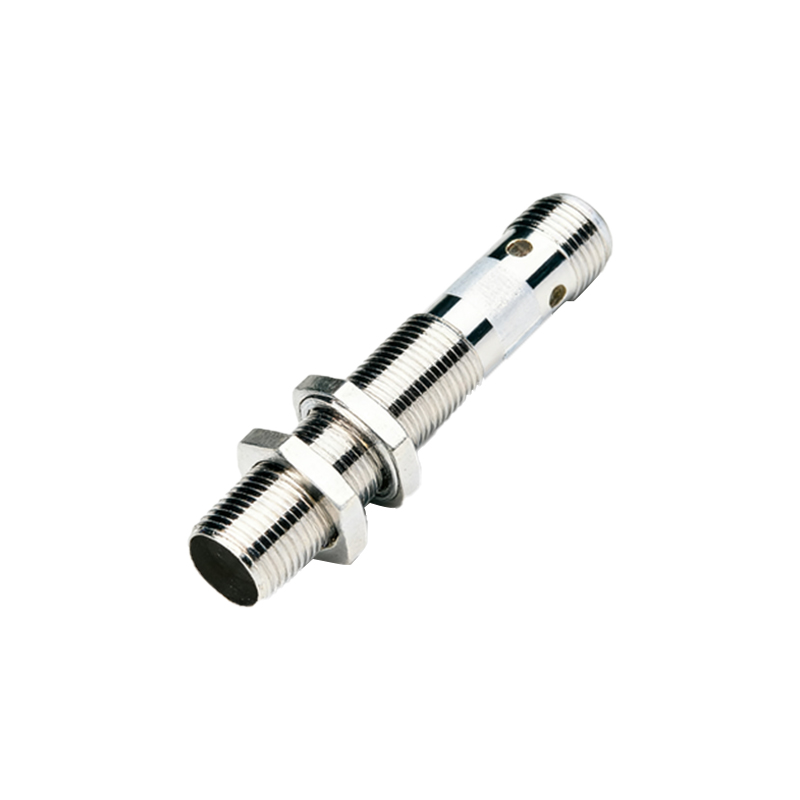
Magnetic proximity sensors are fundamental components in modern industrial automation, offering reliable, non-contact detection of ferromagnetic objects. Their operation hinges on the interaction between a sensor's internal magnetic field and a target object. Unlike inductive or capacitive sensors that detect a broader range of materials, magnetic sensors are specifically tuned to respond to changes in magnetic flux, typically caused by the presence of a permanent magnet or a ferrous metal object. This specificity makes them invaluable in harsh environments where dirt, oil, or non-metallic debris might interfere with other sensing technologies.
The core principle involves a magneto-sensitive element, most commonly a Reed switch or a Hall-effect integrated circuit (IC). A Reed switch is a simple, hermetically sealed glass capsule containing two ferromagnetic reeds. In the presence of a sufficient external magnetic field from a target magnet, the reeds become magnetically polarized, attract each other, and make physical contact, closing an electrical circuit. When the magnetic field is removed, the reeds' spring force separates them, opening the circuit. This binary action provides a clear, switch-like signal. While robust and cost-effective, Reed switches have limitations in switching speed and mechanical lifespan due to moving parts.
The Hall-effect sensor represents a more advanced, solid-state approach. It utilizes a thin semiconductor plate (the Hall element). When a control current is applied across this plate and it is exposed to a perpendicular magnetic field, the Lorentz force deflects the charge carriers. This deflection generates a measurable voltage difference perpendicular to both the current and the field—the Hall voltage. Modern Hall-effect ICs incorporate signal conditioning circuitry (amplifiers, Schmitt triggers, and voltage regulators) directly on the chip. This allows them to provide a clean, digital output signal (e.g., PNP/NPN) or a precise analog voltage proportional to magnetic field strength. They offer superior durability, high switching frequencies, and the ability to sense both the presence and strength of a magnetic field.
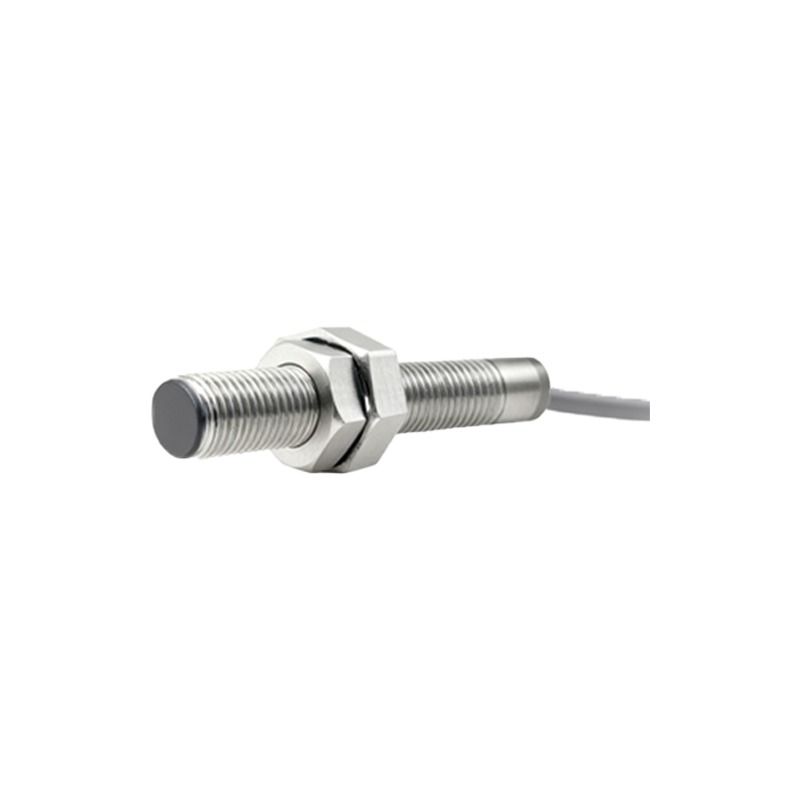
A third, highly sensitive technology is the magnetoresistive (MR) sensor. Certain materials change their electrical resistance in the presence of a magnetic field. Anisotropic Magnetoresistive (AMR) sensors exploit this property, offering excellent sensitivity for detecting very small changes in magnetic field direction or strength, useful in precision position sensing.
The practical application involves integrating the sensing element into a housing. A permanent magnet is often embedded in the sensor body or is part of the target itself (e.g., a magnet on a cylinder piston). When a ferrous target or a magnet approaches the active face of the sensor, it distorts or intensifies the magnetic field at the sensing element. For a Reed switch, this causes closure; for a Hall-effect IC, it triggers a change in output state. The sensing distance depends on the magnet's strength, the sensor's sensitivity, and the target's size and material. Shielding is often employed to make the sensor directionally sensitive, ignoring magnetic influences from the sides or rear.
Key advantages of magnetic proximity sensors include their immunity to contaminants, ability to operate through non-ferrous materials (like plastic or aluminum walls), and exceptional reliability in wet, dusty, or vibratory conditions. They are extensively used for end-position detection in pneumatic and hydraulic cylinders, rotary speed sensing (via gear teeth or encoder rings), door and lid position detection, and in safety systems as limit switches. Selection criteria involve choosing between Reed, Hall-effect, or MR technologies based on required sensing distance, switching frequency, output type (digital/analog), environmental robustness, and cost considerations. Their solid-state nature and precise magnetic coupling ensure long-term stability, making them a cornerstone of dependable machine control.